September 14, 2026 • Roxanne Flair • 12 min reading time • Prices verified June 4, 2026
Standalone DJ Turntables Above $400: Pioneer PLX-1000, Reloop RP-7000 MK2, and the Technics Question
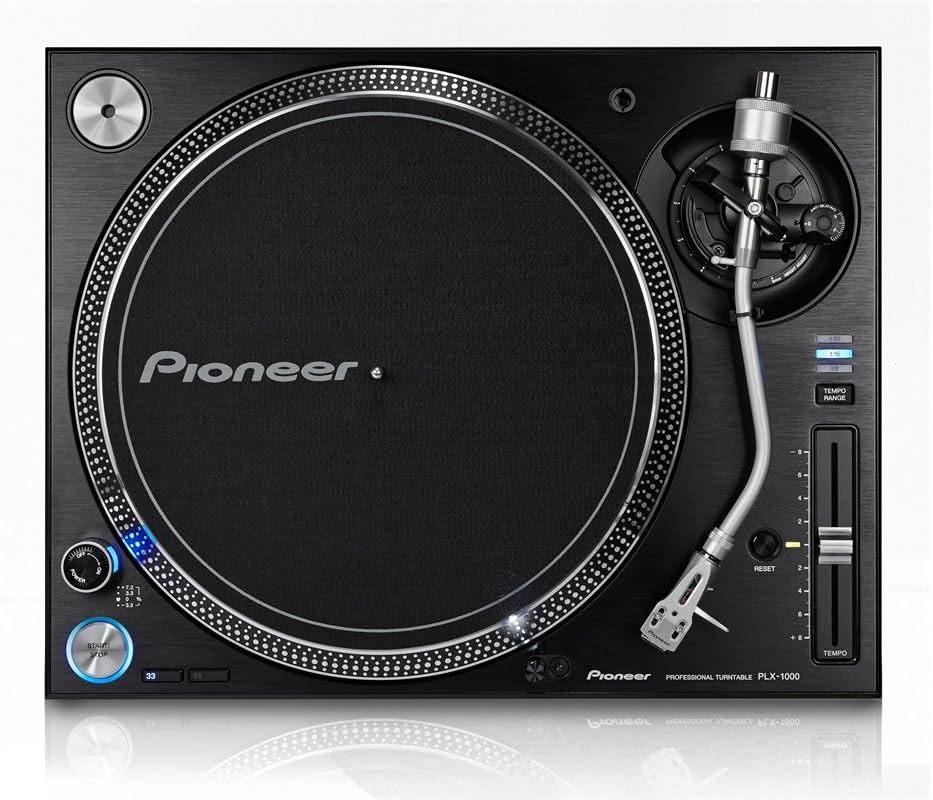
If you’ve been DJing for a year or two and you’re still spinning on entry-level gear — or you’re building a setup from scratch and want to do it once, correctly — the turntable question comes up fast. A turntable in this context is a motorized platter that spins vinyl records (or, in some cases, just a control disc) so you can play, blend, and manipulate music. Above the $400 mark, you’re leaving the beginner tier behind and entering gear that working DJs and serious vinyl collectors both take seriously. This guide covers three real contenders in that bracket — the Pioneer PLX-1000, the Reloop RP-7000 MK2, and the RANE Twelve MKII — plus an honest look at whether the legendary Technics SL-1200 (either vintage or the current MK7) is still the obvious answer. We’ll name the tradeoffs, show the math where it matters, and end with clear “if this, then that” decisions.
| EDITOR'S PICKPioneer DJ PLX-1000 Professiona… | Mid-tierReloop RP-7000 MK2 Professional… | Budget pickReloop RP-2000 MK2 Direct Drive… | |
|---|---|---|---|
| Torque | — | Upper Torque | — |
| Color | — | Black | — |
| Dimensions | 10.80 x 18.60 x 22.30 | — | — |
| System Type | — | Turntable System | — |
| Series | PLX-1000 | RP-7000 MK2 | RP-2000 MK2 |
| Price | $879.90 | $679.99 | $279.99 |
| See on Amazon → | See on Amazon → | See on Amazon → |
The Field in 2026: What You’re Actually Choosing Between
The above-$400 standalone turntable market has quietly stabilized around a few credible options. Pioneer DJ’s PLX-1000 has been the workhorse recommendation for years — it was designed as a Technics SL-1200 form-factor clone targeting DJs who couldn’t justify the SL-1200’s price at launch. The Reloop RP-7000 MK2 targets the same buyer but skews toward the technically obsessive, with a spec sheet that generates unusually detailed owner commentary. The RANE Twelve MKII occupies a separate lane entirely: it is a motorized turntable controller, meaning it is designed specifically for DVS (Digital Vinyl System) use — controlling software like Serato or Rekordbox through a special control record rather than playing conventional vinyl. And then there’s the Technics question, which never fully goes away.
By the numbers — street prices as of mid-2026:
| Model | Approx. Street Price | Primary Use Case |
|---|---|---|
| Pioneer PLX-1000 | ~$700 | DJ performance + audiophile crossover |
| Reloop RP-7000 MK2 | ~$549–$599 | DJ performance, spec-forward buyers |
| RANE Twelve MKII | ~$849 | DVS controller, no vinyl required |
| Technics SL-1200MK7 | ~$1,599 | Reference standard, collector + pro |
These reflect aggregated retailer pricing in the current market, where supply has normalized post-pandemic but the MK7 still commands its premium without apology.
Head-to-Head: The Three Primary Contenders
Pioneer PLX-1000: The Sensible Default, Interrogated
The PLX-1000 has earned its default status through sheer consistency across long-run professional reviews. It hits the SL-1200 form factor almost exactly — same platter diameter, same tonearm geometry, same layout muscle memory — which matters if you’ve trained on Technics or are buying for a venue where staff need to get up to speed fast. The motor delivers a high-torque direct-drive system (direct-drive means the motor connects straight to the platter with no belt intermediary, which is what gives DJ turntables their speed stability and resistance to back-cueing).
Sound On Sound’s review of the Pioneer PLX-1000 places the deck in positive territory across both DJ performance and home listening contexts, noting that its build quality and tonearm implementation exceed what its DJ-market positioning might suggest. Analog Planet’s DJ turntable overview feature reinforces that audiophile crossover signal, consistently placing the PLX-1000 in conversations about accessible high-fidelity vinyl playback rather than limiting it to the DJ category.
One honest technical caveat: quartz speed regulation on the PLX-1000 is not confirmed in Pioneer’s published specifications the way it is on the SL-1200. Quartz regulation means the motor locks to a crystal-controlled frequency reference — the gold standard for speed consistency. For DJ use, where you’re actively manipulating pitch anyway, this is essentially a non-issue. For a dedicated audiophile listening room where perfect pitch stability on slow-moving orchestral passages matters, the Technics SL-1200MK7’s confirmed quartz regulation becomes more relevant.
Cartridge pairing note: Reviewers across Sound On Sound’s PLX-1000 coverage and Analog Planet’s turntable feature consistently recommend stepping up from the stock cartridge. The most frequently cited upgrades are the Ortofon Concorde DJ series for performance use and the Ortofon 2M Red or Audio-Technica AT-VM95E for home listening. Sound On Sound notes that the PLX-1000’s tonearm responds well to mid-grade cartridge upgrades — the arm doesn’t impose a ceiling that kills the upgrade path early.
Reloop
$679.99
In stock on Amazon
Check price on AmazonReloop RP-7000 MK2: The Spec-Forward Alternative
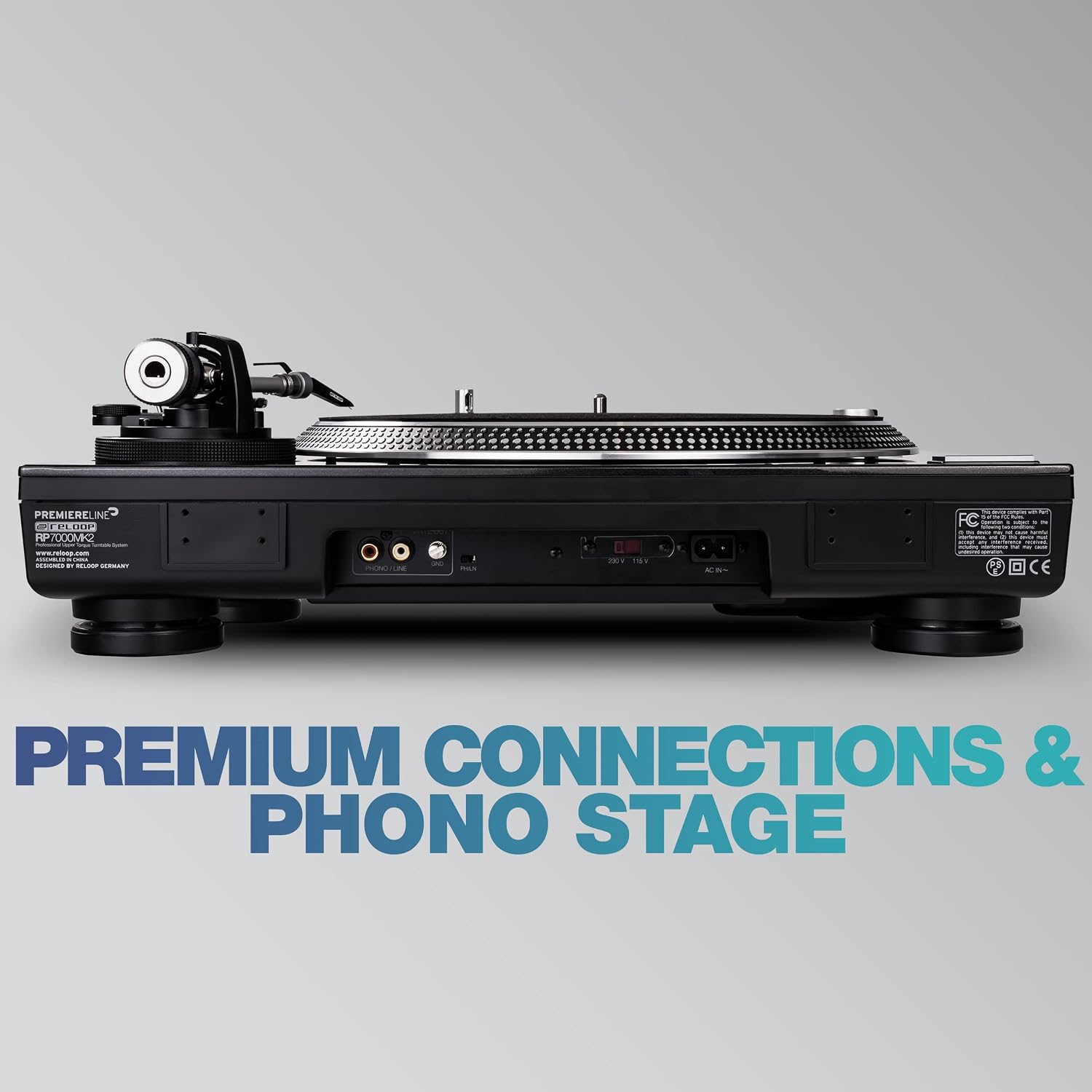
The Reloop RP-7000 MK2 generates the most technically detailed positive coverage of any deck in this tier. DJ Mag’s gear review of the RP-7000 MK2 praises its build quality and motor response while documenting a spec sheet that attracts buyers who research before purchasing — torque figures, platter weight, tonearm geometry, and anti-skate mechanism all receive explicit treatment. That pattern of technically rigorous positive coverage is a meaningful signal: this deck is built for buyers who do their homework, and it does not disappoint them.
The RP-7000 MK2 runs at 33, 45, and 78 RPM. The 78 RPM speed is a legitimate differentiator in this price range — most DJ turntables omit it entirely because there is no DJ application for it. Its inclusion positions the RP-7000 MK2 for collectors who spin shellac 78s alongside modern vinyl, or for archivists. It requires a compatible 78 RPM stylus (the groove geometry is different and a standard stylus will damage shellac records), but the speed being available at all separates it from the PLX-1000.
A practical logistics note worth naming explicitly: DJ Mag’s coverage of Reloop products acknowledges that North American distribution sometimes lags European availability. If you’re sourcing this deck for an event deadline or a specific gig date, order with a two-week timeline buffer or source through a dedicated DJ retail channel rather than a general fulfillment platform. This is a distribution reality, not a product problem.
At roughly $549–$599, the RP-7000 MK2 undercuts the PLX-1000 by $100–$150. That delta matters if you’re outfitting two turntables at once, which most DJ setups require. Two RP-7000 MK2s versus two PLX-1000s is a $200–$300 difference you could redirect toward a better cartridge pair or a mixer upgrade.
Reloop
$679.99
In stock on Amazon
Check price on AmazonRANE Twelve MKII: The Hybrid DVS Case
The RANE Twelve MKII is categorically different from the other two decks, and it is worth being precise about that. It is a motorized platter controller. Its primary function is to manipulate DJ software via DVS using a spinning control record — a specially pressed vinyl disc that sends timecode signals to the software, which then maps your physical platter movements to digital audio files. The motor is high-torque and the feel mimics a real turntable convincingly, but the hardware is purpose-built for the software workflow.
Resident Advisor’s hardware overview of the RANE Twelve MKII describes the unit as designed explicitly for the software-forward DJ who wants the tactile feel of a real turntable without requiring a vinyl library. That framing is accurate and useful: the Twelve MKII ships with a timecode control disc, and that is all you need to operate it as a DVS controller. You do not need a conventional vinyl collection.
A hybrid DVS-plus-real-vinyl configuration is a legitimate and underappreciated setup for gigging DJs with real vinyl collections. One deck runs Serato or Rekordbox with a control record for digital library benefits — instant cue points, looping, software effects — while a second deck plays actual vinyl for records where the analog source matters, such as rare pressings or original pressings from specialty labels where the source quality is the point. That combination rewards DJs who have spent years building a physical collection and don’t want to abandon it when they add software to the workflow.
At approximately $849, the Twelve MKII is the most expensive option in this comparison before you reach the Technics SL-1200MK7. The price is justified only if your workflow genuinely requires DVS integration. If you are primarily a vinyl DJ who wants the best standalone platter in this price range, the PLX-1000 or RP-7000 MK2 is the correct frame.
Pioneer
$879.90
In stock on Amazon
Check price on AmazonThe Technics Question
No comparison in this tier is honest without addressing it directly. The Technics SL-1200MK7, at approximately $1,599, is not the same class of purchasing decision as the $549–$849 alternatives above. It has true quartz-direct-drive speed regulation, confirmed and measured. It has decades of professional residency data across clubs worldwide. Stereophile’s coverage of the SL-1200 lineage treats the MK7 as a genuine audiophile reference at its price point — not merely a DJ tool that audiophiles tolerate, but a legitimately engineered listening deck.
The decision frame is simple: if budget allows and you are making a single turntable purchase intended to last a decade in a professional or serious home context, the MK7 price premium buys confirmed engineering and resale liquidity. Vintage SL-1200 units from prior generations continue to hold meaningful resale value on the used market — the lineage provides genuine exit value that the PLX-1000 and RP-7000 MK2 do not match.
If you are outfitting two decks for mobile gigs or building a practice rig where the budget ceiling matters, the PLX-1000 is the honest practical answer. The Technics form-factor familiarity is there. The playback quality is validated across diverse reviewer profiles in Sound On Sound and Analog Planet coverage. It does not require the SL-1200’s capital commitment.
A note on the Reloop RP-2000 MK2, which sits below all of these at a lower price point: for home playback with a good cartridge and phono preamp, the audible gap between the RP-2000 MK2 and higher-tier decks is modest for most listeners on most music. But the RP-2000 MK2 has a lighter platter and lower motor torque than the RP-7000 MK2, which matters for DJ performance use — scratch response, back-cue resistance under stress — but matters very little for sitting down and listening to records at home.
Frequently Asked Questions
Is the Pioneer PLX-1000 quartz-regulated, and does it matter for DJ use? Pioneer’s published specifications for the PLX-1000 do not explicitly confirm quartz lock speed regulation in the way the Technics SL-1200 spec sheet does. Sound On Sound’s PLX-1000 review does not flag audible wow or flutter as a practical concern. For DJ use — where you are actively manipulating pitch anyway — this is a non-issue. For a dedicated audiophile listening room where confirmed pitch stability on slow-moving passages matters, the Technics SL-1200MK7’s explicitly documented quartz regulation is worth the premium.
Can the Reloop RP-7000 MK2 play 78 RPM records? Yes. The RP-7000 MK2 includes a 78 RPM speed setting, which the PLX-1000 does not offer. You will need a 78 RPM stylus — the groove geometry on shellac 78s is wider and requires a different tip profile than modern microgroove vinyl. The deck supports the speed natively.
What cartridge upgrades do reviewers recommend for the PLX-1000? For DJ performance use, the Ortofon Concorde DJ MKII series is the most frequently cited upgrade in Sound On Sound’s coverage and Analog Planet’s turntable feature. For home listening, the Ortofon 2M Red and the Audio-Technica AT-VM95E both appear consistently as natural pairings with the PLX-1000’s tonearm. Sound On Sound notes the arm does not impose an early ceiling on cartridge upgrades.
Does the RANE Twelve MKII work without any vinyl records at all? Yes. As covered in Resident Advisor’s hardware overview of the RANE Twelve MKII, the unit ships with a timecode control disc and is designed to operate entirely as a DVS controller. You do not need a conventional vinyl library. The motor runs, the platter spins, and the timecode disc sends position data to Serato or Rekordbox.
How does the PLX-1000 compare to a Technics SL-1200 for home audiophile listening? Analog Planet’s DJ turntable overview feature places the PLX-1000 in genuine audiophile listening conversations — not just DJ use. Stereophile’s coverage of the SL-1200 lineage treats the MK7 as a more thoroughly engineered option with confirmed quartz regulation and a more rigorously spec’d tonearm. The audible gap for most listeners on most music is modest, and if the budget is fixed at the PLX-1000’s price range, it is not a meaningful compromise for home listening.
Is the Reloop RP-2000 MK2 a realistic budget alternative to the RP-7000 MK2? For home playback only, yes — with a good cartridge and phono preamp, the RP-2000 MK2 closes the audible gap considerably. The RP-2000 MK2 has a lighter platter and lower motor torque than the RP-7000 MK2, per DJ Mag’s Reloop product coverage, which matters for performance technique but matters very little for home listening. If your application is home playback exclusively, the RP-2000 MK2 is worth considering. If you are DJing live or practicing performance technique, the RP-7000 MK2’s heavier platter and higher-torque motor are worth the step up.
The Decision Frame
Here is where we land:
-
If you are a mobile or club DJ who needs a reliable workhorse that performs like a Technics without the Technics price: the Pioneer PLX-1000 is the pick. The form factor familiarity is there, Sound On Sound and Analog Planet coverage confirms it is not a compromise deck, and the cartridge upgrade path is clear.
-
If you are outfitting two decks and the budget delta matters, or you want 78 RPM capability for a vinyl collection that includes shellac: the Reloop RP-7000 MK2 earns its place. Order with a two-week timeline buffer if you are not using a dedicated DJ retailer.
-
If your workflow is DVS-primary and you want the best motorized controller in the bracket: the RANE Twelve MKII is purpose-built for exactly that use case. Do not buy it to play conventional vinyl as a primary function — that is not what it is optimized for.
-
If this is a long-term professional or audiophile investment and you are buying one pair of turntables for the next decade: save for the Technics SL-1200MK7 and buy it once. Stereophile’s coverage of the lineage makes the engineering case clearly.
The Technics is never the wrong answer. It is just not always the necessary one.