September 20, 2026 • Roxanne Flair • 10 min reading time • Prices verified June 4, 2026
Scratch DJ Controllers: The Numark M2, DDJ-REV1, and the Battle-Style Buying Decision
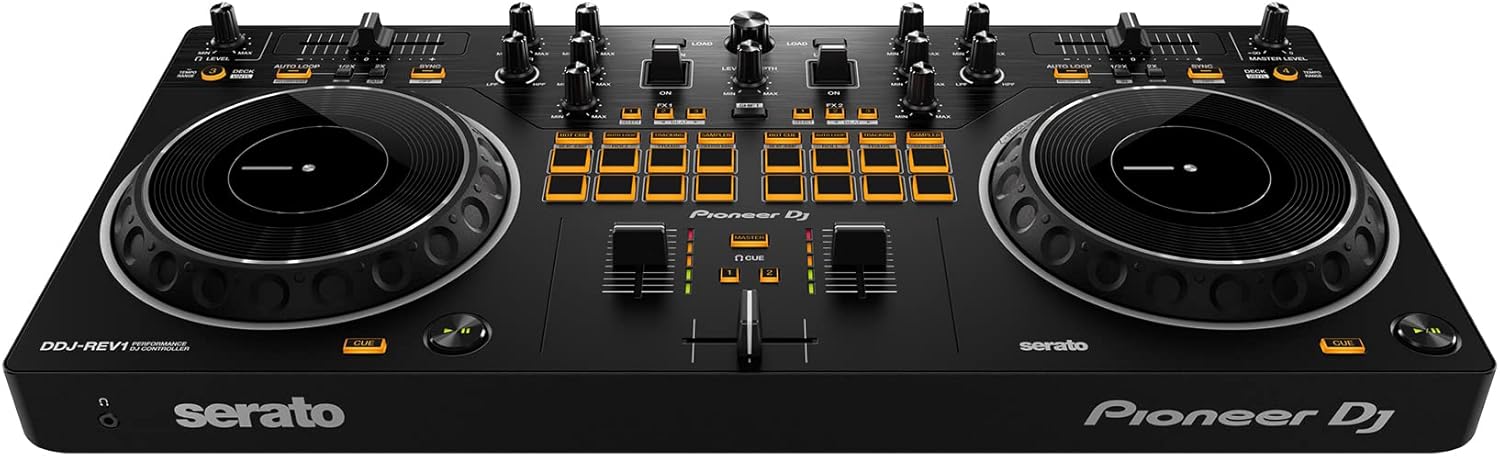
If you’ve ever watched a DJ work a crowd and thought, “how are they doing that spinning-record trick on what looks like a laptop setup?” — you’ve already intuited the core problem this article solves. A scratch DJ controller is a piece of hardware that mimics the feel and layout of the classic two-turntable-and-mixer setup, but packages it into a single unit you can connect to a laptop. The “battle-style” part refers to a specific layout: the mixer sits in the center, the two decks flank it on either side — the same configuration scratch and hip-hop DJs have used since the 1970s. It’s built for performance, not bedroom beatmatching.
This guide compares three products that often end up in the same shopping cart search: the Numark M2 (and its bigger sibling the M6), the Pioneer DJ DDJ-REV1, and the RANE Twelve MKII. These aren’t all the same type of product — which is exactly why buyers keep comparing them and getting confused. By the end, you’ll have a clear decision frame: which one fits your workflow, your budget, and where you actually want to take your skills.
What You’re Actually Choosing Between: Controller vs. Mixer vs. DVS Controller
Before comparing specs, it helps to name what each of these things is, because they solve meaningfully different problems.
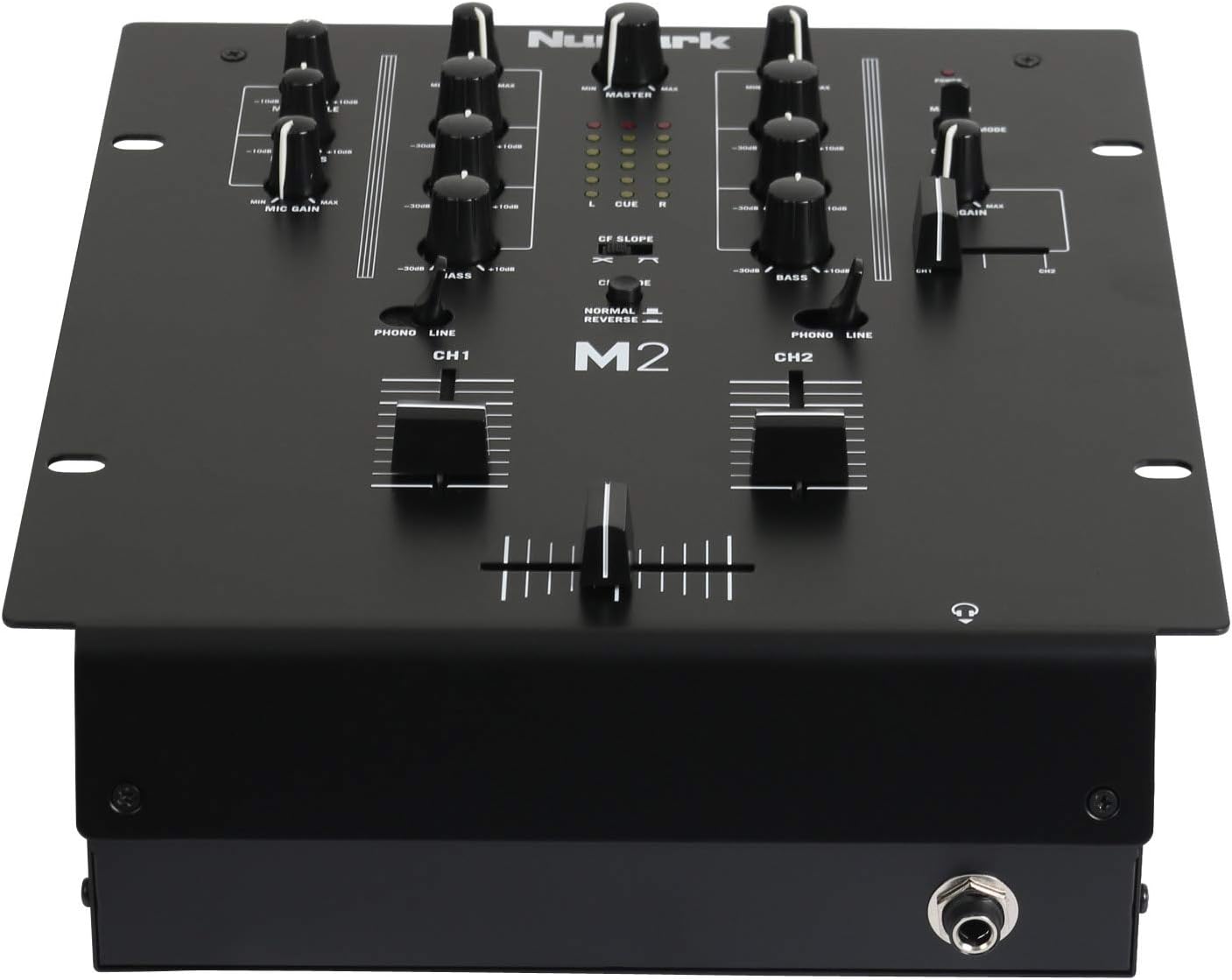
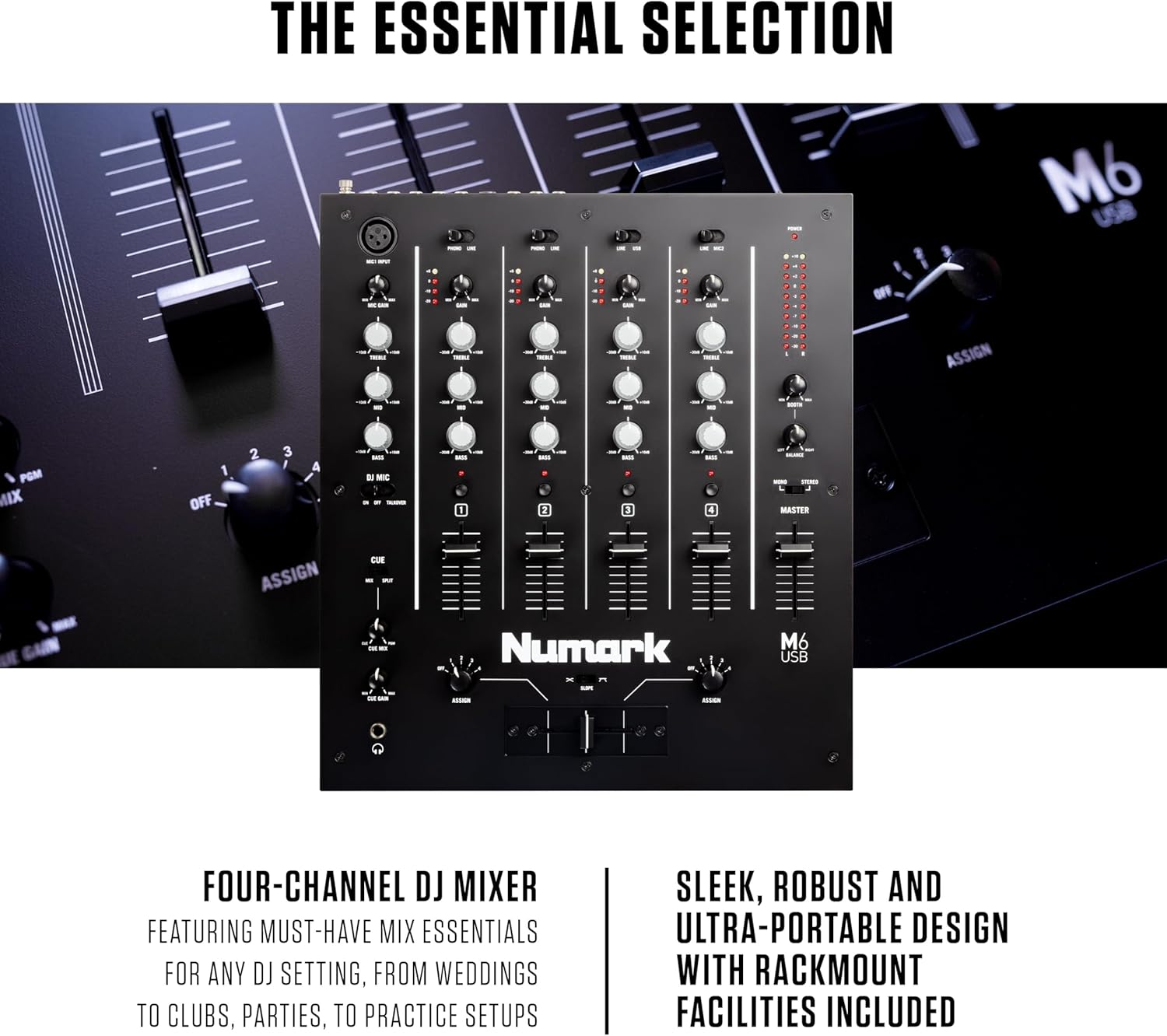
The Numark M2 and M6 are standalone DJ mixers — hardware units with physical inputs and outputs that sit between your audio sources (turntables, CDJs, phones, tablets, game consoles) and your speakers. They don’t need a laptop to function. One well-documented use pattern for the M2 involves routing multiple home entertainment devices — a game console, a tablet, a handheld — through the mixer as an audio hub. That tells you a lot about the product’s actual user base: it’s a flexible analog routing device that happens to be used by DJs. The M6 is the four-channel version, and it consistently anchors the market as the lowest-cost entry point into a 12-inch 4-stereo-channel DJ mixer — a specific and useful framing for budget-constrained buyers who need real channel count without professional pricing.
The Pioneer DJ DDJ-REV1 is a controller — it has a built-in audio interface, motorless jog wheels (the platters you scratch on), and sends MIDI data to a laptop running DJ software (Serato DJ Lite ships with it). It needs a computer to make sound. Critically, it’s a 2-deck controller despite having a layout that looks like a 4-channel mixer — more on that in the FAQ.
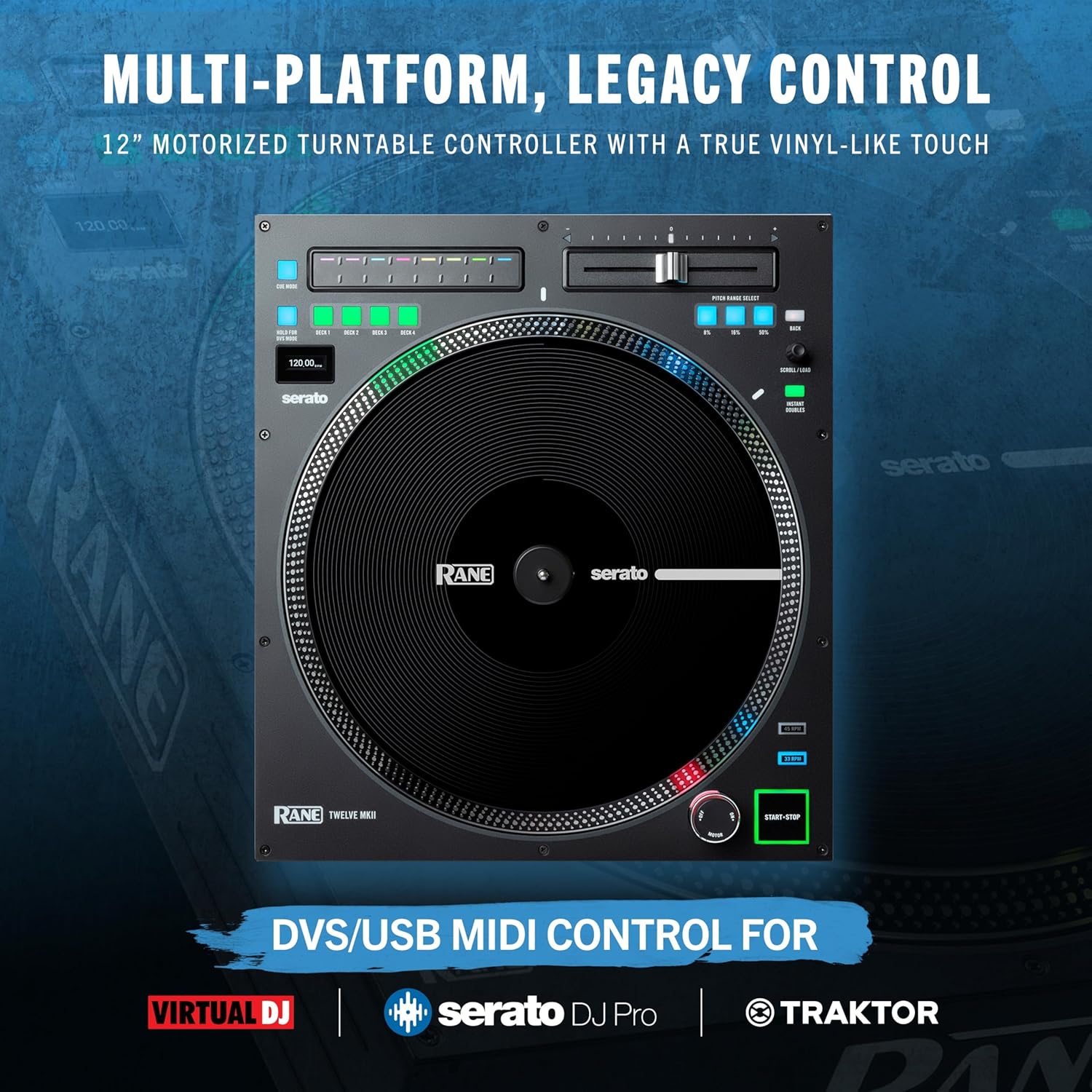
The RANE Twelve MKII is neither of those things. It’s a motorized DVS controller — a standalone platter unit designed to replace, or pair with, a conventional turntable for use with DVS (Digital Vinyl System) software. DVS means your DJ software reads timecode signals from a spinning surface — either a vinyl record or a motorized platter like the Twelve MKII — and translates the physical movement into digital playback. Sound On Sound’s review of the RANE Twelve MKII, published in Sound On Sound magazine, describes this pairing workflow in detail, noting that the unit’s motorized platter produces the same resistance and response characteristics operators expect from a 1200-style deck, and that it can sit alongside a conventional turntable in a DVS chain — a setup most buyers in this tier won’t have encountered before and genuinely need explained.
The Three Products, Head to Head
Pioneer DJ DDJ-REV1: Best Entry-Level Scratch Controller
DJ Mag’s review of the Pioneer DJ DDJ-REV1, published in DJ Mag’s hardware reviews section, notes that the unit was explicitly designed to echo the visual language of the vintage battle setup — the scratch-mixer-in-the-center layout, the fader placement, the color palette. What’s interesting is how consistently this shows up in owner experience as a real purchase driver, not a throwaway comment. Multiple owners independently describe “the old school look” as something that pushed them from browsing to buying. That’s not vanity — it’s a signal that the DDJ-REV1 is positioning itself as an aspirational on-ramp for a specific subculture. If you’re motivated by wanting to feel like you’re performing in a hip-hop tradition, not just learning to beatmatch, that aesthetic alignment matters to your practice.
On the functional side, the DDJ-REV1 ships with Serato DJ Lite and offers a clear upgrade path to Serato DJ Pro. The jog wheels are responsive enough for basic scratching technique, and Mixmag’s battle mixer buyer’s guide, published in Mixmag’s gear section, notes that Pioneer’s implementation of its “Mag Three” jog wheel technology in this price range gives entry-level scratch students tactile feedback closer to vinyl than most budget controllers manage. The durability picture is reassuring for a sub-$300 controller: the unit has a documented track record of multi-year owner use without reported functional degradation — a meaningful signal for buyers nervous about investing in entry-level hardware.
The trade-off is ceiling. If you advance past fundamentals, you will outgrow the DDJ-REV1’s jog wheels. They’re not motorized, and serious scratch technique eventually demands either motorized platters or real vinyl.
Numark
$119.00
In stock on Amazon
Check price on AmazonNumark M2 and M6: Best Standalone Mixer for Budget and Flexibility
The M2 and M6 occupy a different lane entirely. Because they’re standalone mixers, they work with anything that outputs audio — including your phone, a CDJ, a tablet, or a conventional turntable. That home entertainment routing pattern isn’t a quirky edge case; it reflects the M2’s genuine utility as an audio hub for people who don’t want to be locked into a laptop-dependent DJ workflow.
For the DJ-specific use case, the M6’s positioning as the most affordable entry point into a “real” 4-channel 12-inch mixer is a legitimate value anchor. A recurring complaint across owner accounts is crossfader stiffness out of the box — the crossfader in particular requires break-in time before it moves freely. For scratch technique, this matters: a stiff crossfader creates inconsistent crab and flare patterns while you’re still developing muscle memory. The upside is that the M6 uses a standard crossfader format, which means aftermarket replacement faders — the Innofader being the most cited upgrade in the scratch community — are a realistic option if the stock unit doesn’t satisfy.
The M2 covers 2-channel use cases, including non-DJ applications, while the M6 steps up to four channels for buyers who need to run multiple sources simultaneously. Neither requires a laptop; both accept any line-level stereo source.
Numark
$219.00
In stock on Amazon
Check price on AmazonRANE Twelve MKII: Best DVS Platter for Established Technique
The RANE Twelve MKII is the most technically sophisticated product in this comparison. Resident Advisor’s feature on DVS and the modern turntablist setup, published in RA’s tech features section, explains the core appeal: DVS (Digital Vinyl System) allows a DJ to control digital audio files with the physical motion of a spinning surface — scratching, back-cueing, needle drops — by having software interpret timecode audio fed from the platter or vinyl. The Twelve MKII is a motorized platter unit: it spins, it has the mass and resistance of a real turntable deck, and it connects to a laptop running Serato or Traktor.
A hybrid rig pairing the Twelve MKII with a conventional turntable — both feeding into a DVS-capable mixer — is the kind of setup serious turntablists use to get full tactile control across digital and analog sources simultaneously. It’s genuinely powerful, and it’s genuinely not for buyers who are still learning scratching fundamentals. The RANE Twelve MKII is for someone who already has technique and wants to transfer it to a digital-file workflow without surrendering the physical feedback of vinyl.
The price point reflects that ceiling. The Twelve MKII sits at a significant multiple of the DDJ-REV1, and it requires a separate mixer — a RANE Seventy-Two or similar battle mixer is the obvious pairing. Budget accordingly: this is a two-component minimum purchase.
RANE
$798.40
In stock on Amazon
Check price on AmazonComparison at a Glance
| Product | Type | Channels | Motorized Platter | Laptop Required | Tier |
|---|---|---|---|---|---|
| Numark M2 | Standalone mixer | 2-channel | No | No | Budget |
| Numark M6 | Standalone mixer | 4-channel | No | No | Mid-tier |
| Pioneer DJ DDJ-REV1 | DJ controller | 2-deck | No | Yes | Budget |
| RANE Twelve MKII | DVS platter controller | Pairs with mixer | Yes | Yes (DVS software) | Premium |
The Decision Frame
If you’re sitting with a buying decision pending, here’s the clean logic:
If you’re learning scratch fundamentals and want an all-in-one entry point: The DDJ-REV1 is the right starting controller. It ships with software, it fits a backpack, and it has years of owner use on record. The aesthetic motivation is real and valid — gear you want to use gets used more.
If you need a standalone mixer that works without a laptop — or you’re routing multiple sources: The Numark M6 is the budget-anchored answer for 4-channel needs, and the M2 covers 2-channel use cases including non-DJ applications. Factor in crossfader break-in time, and keep the Innofader upgrade in your back pocket if the stock fader feel becomes a limiting factor.
If you already have scratch technique and want DVS with full tactile control: The RANE Twelve MKII is the serious-collector and working-performer choice. Pair it with a proper battle mixer and DVS software. Don’t buy this as a learning tool — it’s a performance rig for technique you’ve already built.
Frequently Asked Questions
What is the difference between a DJ mixer and a DJ controller? A DJ mixer is a standalone piece of hardware that routes and blends audio signals from external sources — turntables, CDJs, phones. It works without a computer. A DJ controller contains its own audio interface and sends MIDI control data to software on a laptop; it needs the computer to produce sound.
Can I use the Numark M2 or M6 without turntables — just with phones or tablets? Yes. Both accept any stereo audio source through their line-level inputs. The home entertainment use case — routing a game console, tablet, and other devices through the M2 — is a confirmed real-world workflow, not a workaround.
What does DVS mean and how does the RANE Twelve MKII fit into a turntable setup? DVS stands for Digital Vinyl System. It uses special timecode audio — played from vinyl or a motorized platter — to tell DJ software exactly how a physical surface is moving, translating that into digital playback. The RANE Twelve MKII is a motorized platter that generates this timecode signal, so you get physical vinyl-like control over digital files. It can sit alongside a conventional turntable in the same setup, with both feeding into a DVS-capable mixer. Resident Advisor’s feature on DVS and the modern turntablist setup covers this hybrid rig configuration in detail.
Is the DDJ-REV1 really a 4-channel controller or a 2-deck controller? It’s a 2-deck controller with a layout that visually resembles a 4-channel battle mixer. You control two decks of audio, not four independent channels. The visual design echoes 4-channel hardware — that’s part of the intentional aesthetic — but the functional channel count is two.
Can the Numark M6 crossfader be replaced if it wears out or feels too stiff? Yes. The M6 uses a standard crossfader slot compatible with aftermarket units. The Innofader is the most frequently cited upgrade in scratch community discussions and is a known, practical fix for buyers who find the stock fader too stiff or imprecise for clean scratch technique.
Which of these is the right starting point for someone who wants to learn scratching? The DDJ-REV1 is the clearest entry point: it includes software, it has a battle-style layout that builds correct muscle memory habits, and it carries a documented track record of multi-year owner use. Upgrade to motorized platters or a standalone DVS setup once your technique justifies the investment. DJ Mag’s hardware review of the DDJ-REV1 and Mixmag’s battle mixer buyer’s guide both support this sequencing for new practitioners.