September 19, 2026 • Roxanne Flair • 11 min reading time • Prices verified June 4, 2026
Rechargeable vs. Corded Par Lights: The Mobile DJ's Real Battery Math
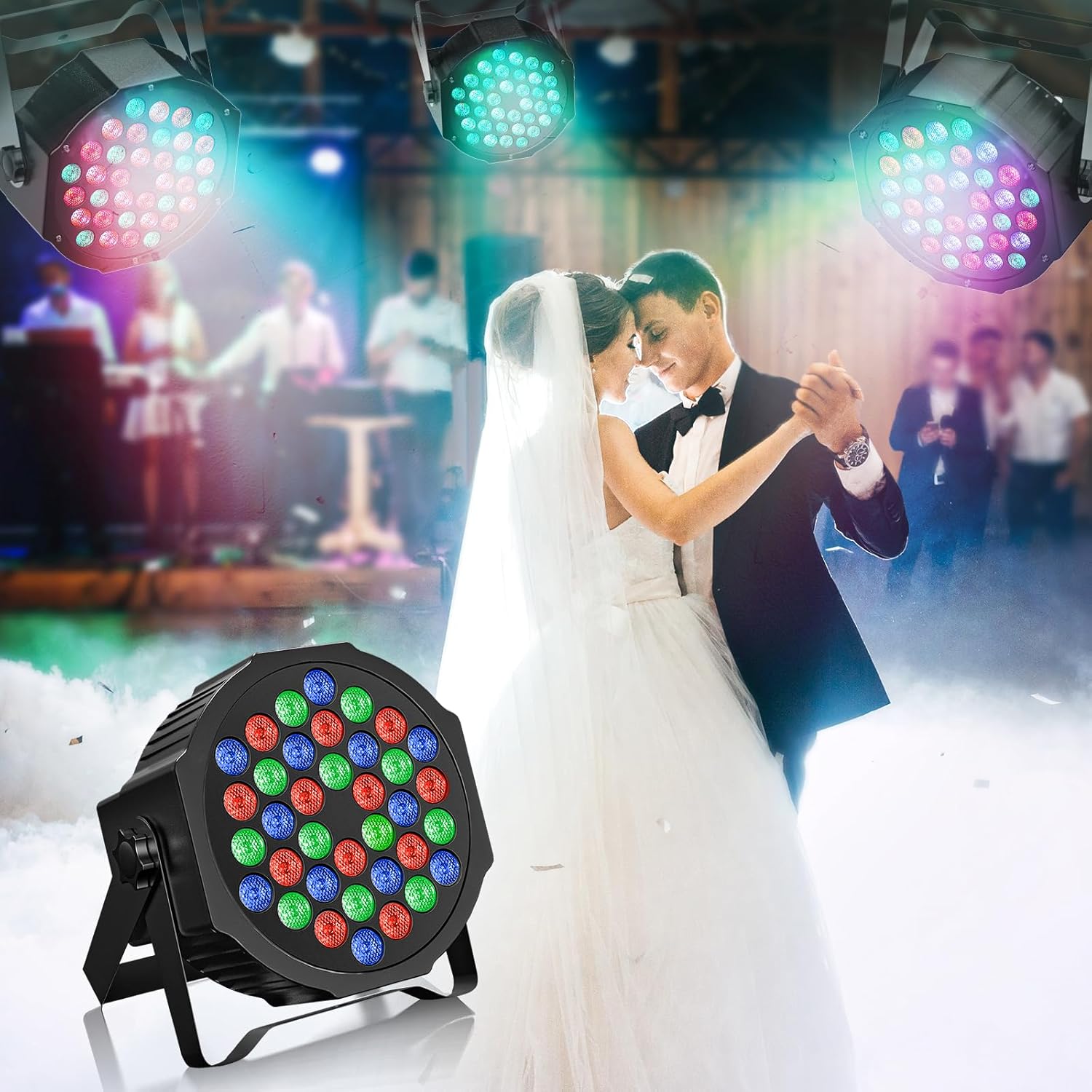
If you’ve ever set up lights for a party or wedding, you already know the basic idea: par lights (short for “parabolic aluminized reflector” — essentially a flat, disk-shaped fixture that throws a wash of colored LED light across a wall or floor) are the workhorses of event uplighting. The question that splits mobile DJs into two camps is whether those fixtures should plug into a wall outlet or run on an internal rechargeable battery. Corded pars are cheaper and never die on you mid-reception, but they require an outlet within reach of every fixture — and in a lot of real venues, that reach simply doesn’t exist. Battery pars solve the outlet problem but introduce a new one: what happens when the charge runs out at hour five of a six-hour event? This guide runs the actual math on runtime, cost, and the DMX sync pitfalls that experienced owners keep flagging, so you can make a confident call before your next gear purchase.
| EDITOR'S PICKRechargeable Par Can Lights U`K… | Mid-tierBattery Powered Uplights Rechar… | Budget pick36LEDs RGB Stage Par Lights - O… | |
|---|---|---|---|
| Pack size | 4 Pack | 1Pc | — |
| Power source | Rechargeable | Rechargeable | Corded |
| LED wattage | 36W | 6x18W | 36W |
| Battery capacity | — | 9600 mAh | — |
| Control | — | APP/Remote/DMX512 | Remote DMX |
| Color modes | RGB | RGBWA+UV | RGB |
| Price | $199.99 | $159.99 | $69.99 |
| See on Amazon → | See on Amazon → | See on Amazon → |
Why Venue Power (or the Lack of It) Makes This Decision for You
A wedding DJ with twelve years of uplight experience puts it plainly: the outlet question isn’t a minor consideration, it’s often the whole decision. Hotel ballrooms with older electrical infrastructure, historic barns, outdoor pavilions, and even newer banquet halls with fixed furniture arrangements can leave you with zero accessible wall outlets along the perimeter walls where uplights actually need to go. Running extension cords across a dance floor is a trip hazard, a liability problem, and it looks unprofessional in the photographs that clients will tag you in for years.
If your regular venues have accessible perimeter power, corded pars at their price point make strong economic sense — you’re looking at roughly half the upfront cost for comparable light output and zero battery management overhead. If your venues are even occasionally power-constrained, that calculus flips fast. The question then becomes which battery pars are actually reliable over a full event, and what you need to know about their quirks before you commit.
The three tiers worth comparing in depth are budget battery pars (sub-$80 per fixture), mid-tier battery pars ($80–$160 per fixture), and premium or professional-grade options ($160 and above, including the corded Chauvet DJ reference fixtures that anchor the high end of the affordable professional market). Each tier has a different risk-reward profile depending on how often you gig, how large your venues are, and how much battery failure you can absorb before it becomes a reputation problem.
The Runtime Question: What “8-Hour Battery” Actually Means in the Field
Manufacturer runtime claims and real-world runtime are almost always different numbers, and the gap depends on one variable above all others: brightness level. Running a fixture at 100% RGBWA+UV output — RGBWA+UV means Red, Green, Blue, White, Amber, and Ultraviolet LEDs in a single fixture — draws significantly more current than running it at 40–60% for ambient uplighting, which is where most wedding and event DJs actually set their levels.
Aggregated owner reviews of HOLDLAMP rechargeable par lights (compiled from verified purchase reviewers on major retail platforms, 2024–2025) report 8-plus hours of continuous runtime at moderate output levels in hotel event settings — a result consistent with the manufacturer’s published specifications when the fixture isn’t being pushed to full intensity. That’s enough headroom to cover a five-to-six-hour event with a buffer for setup and teardown.
Battery consistency across a fleet, however, is a documented concern. Multiple owners running eight-fixture sets at weddings and quinceañeras flagged in their reviews that two of eight units were draining noticeably faster than the rest after roughly a year of regular use. This is a real pattern with lithium battery packs in high-cycle professional use: cells degrade at slightly different rates, and in a fleet of eight or more fixtures, you will eventually have outliers. The operational implication is straightforward — rotate your fixtures across positions so that no single unit always gets assigned to the longest runtime slot, and do a charge audit before any event over four hours.
Runtime at a glance:
| Scenario | Estimated Runtime | Risk Level |
|---|---|---|
| 40–60% brightness, ambient uplight | 7–9 hours | Low |
| 80–100% brightness, full RGBWA+UV mix | 3–5 hours | Medium-High |
| Mixed fleet, 1+ year of weekly gigs | Variable — audit required | High without rotation |
Comparing the Three Tiers: Budget, Mid-Range, and Premium
Addressing the fixture tiers systematically matters here because the buying decision isn’t binary (corded vs. battery) — it’s a three-way choice that includes where in the battery par market you land, or whether you skip battery fixtures entirely in favor of corded gear at the professional reference price point.
Budget Battery Pars: U’King and Similar Sub-$80 Fixtures
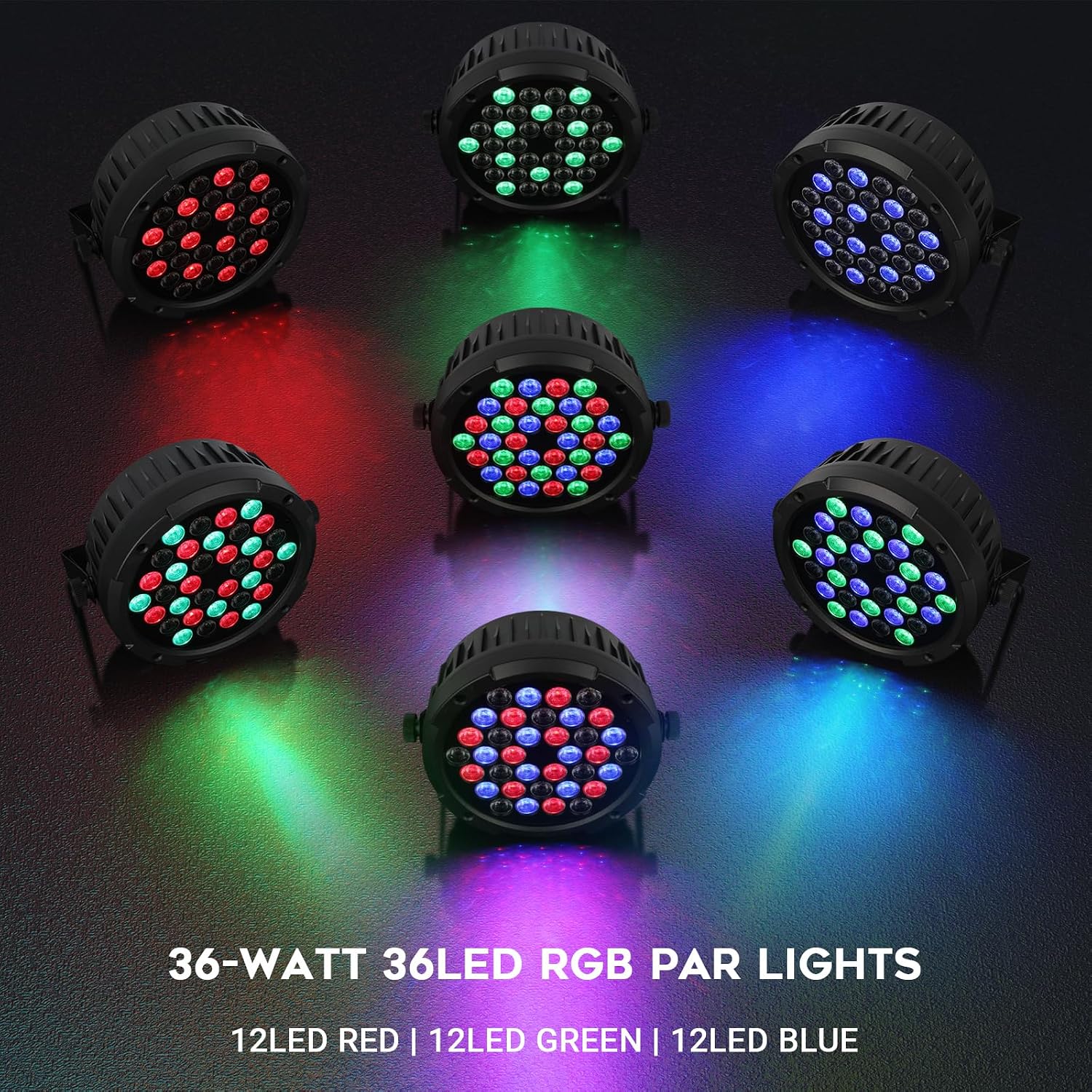
36LEDs
$69.99
In stock on Amazon
Check price on AmazonU’King battery par lights appear consistently in the under-$80-per-fixture conversation, and owners who migrated from Chauvet SlimPar corded setups report solid output — competitive brightness and acceptable battery life for shorter gigs. Aggregated owner reviews of U’King battery par lights (compiled from verified purchase reviewers on major retail platforms, 2024–2025) identify one consistently flagged limitation: the wireless remote range has a practical ceiling of roughly 20 feet before control becomes unreliable.
In a small venue or private dining room, 20 feet is workable. In a hotel ballroom where the DJ booth sits 50 feet from the far wall of uplights, you’re either walking to fixtures manually or running a DMX cable to the battery units — which partly defeats the wireless flexibility you bought them for. The practical workaround most experienced DJs land on is a dedicated DMX wireless transmitter (a separate device that sends DMX control signals over radio frequency) rather than relying on the fixture’s built-in remote. This adds cost and complexity but gives reliable, full-venue control without cable runs.
Budget pars in this tier are best suited to DJs doing smaller private events — home parties, corporate breakroom gatherings, restaurant buyouts — where venue footprints are compact and the remote range constraint doesn’t become a liability.
36LEDs
$69.99
In stock on Amazon
Check price on AmazonMid-Tier Battery Pars: OPPSK 36W and 60W Fixtures
Battery
$159.99
In stock on Amazon
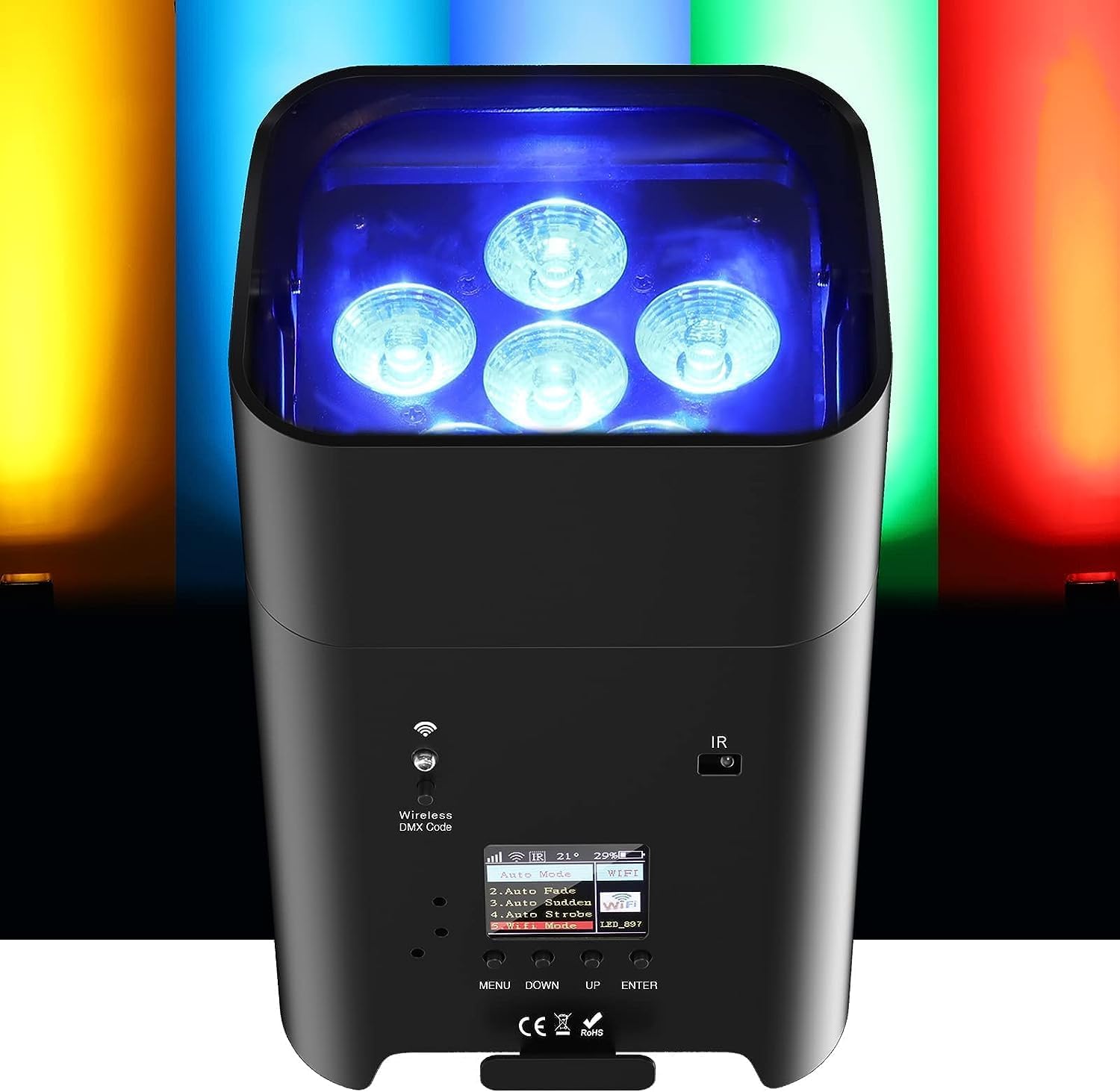
Check price on AmazonOPPSK battery pars occupy the $80–$160 range and earn consistent praise for output. Aggregated owner reviews of OPPSK 60W and 36W 7-channel par lights (compiled from verified purchase reviewers on major retail platforms, 2024–2025) include comparison testers who found the 60W OPPSK brighter than competitors at equivalent wattage ratings — a meaningful advantage when you’re uplighting a large ballroom and need the wash to read cleanly in photographs.
Here is the problem that the same review pool surfaces, and it’s a professionally costly one: the 60W 7-channel OPPSK pars do not share the same DMX channel mapping as the 36W 7-channel pars from the same brand. DMX (Digital Multiplex) is the industry-standard protocol that lets a controller send simultaneous instructions to multiple fixtures — channel 1 might be master dimmer, channel 2 red intensity, and so on. When two fixtures that both advertise “7-channel mode” use different channel assignments for the same functions, daisy-chaining them on the same DMX address creates desynchronized looks: one fixture interprets the “color” command differently than the other, and your carefully programmed scene turns into an unintended light show.
The rule for buyers in this tier is simple: do not mix wattage classes within the same brand line unless you’ve verified — from the actual printed or PDF manual, not the product listing — that the channel maps are identical. This isn’t unique to OPPSK; it’s a general hazard with mid-tier fixtures where product lines evolve faster than documentation keeps up. OPPSK mid-tier pars are well-suited to DJs doing weddings and quinceañeras in medium to large ballrooms, provided the fleet is built from a single wattage class throughout.
Battery
$159.99
In stock on Amazon
Check price on AmazonPremium and Corded Reference Fixtures: Chauvet DJ SlimPAR Line
Rechargeable
$199.99
In stock on Amazon
Check price on AmazonChauvet DJ product specification sheets, published by Chauvet DJ for the SlimPAR and related product lines (2025), document what experienced DJs already know from years of use: the SlimPAR series delivers reliable DMX behavior, well-documented channel maps, consistent output, and a price point that lands significantly lower than equivalent battery fixtures on a per-fixture basis. These are corded fixtures, which means every placement requires an outlet within reach — but what you gain is zero battery degradation risk over a multi-year fleet life and predictable DMX behavior that doesn’t require cross-referencing competing manuals.
The economic frame that clarifies the premium tier decision: rechargeable battery pars carry a per-fixture cost premium of roughly 40–70% over comparable corded fixtures at this level. Across eight fixtures, that premium funds a solid DMX controller upgrade or a second atmospheric effect unit. You are paying for venue flexibility with battery pars, and the honest question is how often you actually need it.
For DJs whose venue mix consistently provides accessible perimeter power, the Chauvet DJ SlimPAR line and its equivalents represent the clearest value. For DJs who need wireless flexibility but want professional-grade DMX reliability, the path is a mid-tier battery par fleet built from a single wattage class, supplemented by a wireless DMX transmitter.
Rechargeable
$199.99
In stock on Amazon
Check price on AmazonRGBWA+UV: Is the Color-Channel Premium Justified?
Standard RGB pars (Red, Green, Blue only) can mix a wide spectrum of colors, but they have known weaknesses: they struggle to produce clean white without a warm color cast, and they can’t generate the ultraviolet “black light” effect that makes white and neon fabrics glow. RGBWA+UV fixtures add dedicated White and Amber LEDs for true, flat white output and warmer amber tones, plus an ultraviolet LED channel.
For wedding uplighting in particular — where clients are often requesting warm white or champagne tones that match table linens and floral arrangements — the White and Amber channels are genuinely useful, not just a spec sheet addition. For quinceañera and party work where UV glow is part of the visual brief, the ultraviolet channel earns its keep. The premium over basic RGB fixtures typically runs $20–$50 per fixture at the battery par price tier, and across a fleet of eight to twelve fixtures, that’s a meaningful but not prohibitive difference.
If your event mix includes a significant share of weddings or formal events where clients specify warm white uplighting, RGBWA+UV is worth the premium. If you’re primarily doing club nights, DJ showcases, and parties where saturated color mixes are the whole point, standard RGB or RGBA gets you 90% of the result at lower cost.
Frequently Asked Questions
How many hours do rechargeable par lights actually last at full brightness? At full brightness — 100% output across all channels — expect 3–5 hours from most battery par fixtures in the sub-$160 tier. Aggregated owner reviews of HOLDLAMP rechargeable par lights report 8-plus hours at moderate output levels in hotel event settings. The practical rule: if your event runs longer than four hours, don’t plan on running battery pars at full intensity throughout.
Can I mix corded and battery par lights in the same DMX setup? Yes, with caveats. Battery pars that accept DMX input can sit on the same DMX chain as corded fixtures. The challenge is confirming that their channel maps align — a 7-channel battery par and a 7-channel corded par from different brands, or even different wattage lines from the same brand, may assign different functions to the same channel numbers. Always cross-reference the actual user manuals, not the product listings.
What happens when battery par lights die mid-event? The lights go dark — there is no graceful fade, just an off state. The professional mitigation: charge to full before every event, run a 30-minute load test the day before for any event over four hours, and if you’re running a large fleet regularly, keep one or two spare charged units in your vehicle. The pattern of individual units draining faster after a year of weekly use is documented in aggregated owner reviews; audit your batteries every few months.
Why do my par lights from the same brand not sync properly when daisy-chained? Almost certainly a DMX channel mapping mismatch. As documented in aggregated owner reviews of OPPSK 60W and 36W 7-channel par lights, fixtures with the same channel count from the same manufacturer can use entirely different channel assignments if they come from different product generations or wattage classes. Pull both manuals, compare channel-by-channel, and either separate mismatched fixtures onto different DMX addresses or set the conflicting fixture to a personality that aligns with your controller programming.
The Decision Frame
If your venues regularly lack perimeter power outlets: battery pars are worth the premium, and HOLDLAMP and OPPSK both have real-world support from owner review pools at longer runtimes. Buy within a single wattage class to avoid the DMX mapping problem, plan a wireless DMX transmitter into your budget if your venues are large, and build a pre-event charge audit into your setup routine.
If your venues reliably have accessible wall power: corded pars at the Chauvet DJ SlimPAR price tier give you more fixture-per-dollar, predictable DMX behavior, and zero battery degradation risk over a multi-year fleet life. Save the rechargeable premium for the specific gigs where it solves a real problem — and consider owning a small battery fleet as a supplement rather than a wholesale replacement for your corded rig.