May 30, 2026 • Roxanne Flair • 8 min reading time • Prices verified June 4, 2026
Direct-Drive Turntables for Serious DJs: Torque, Platter Weight, and the Technics Gap
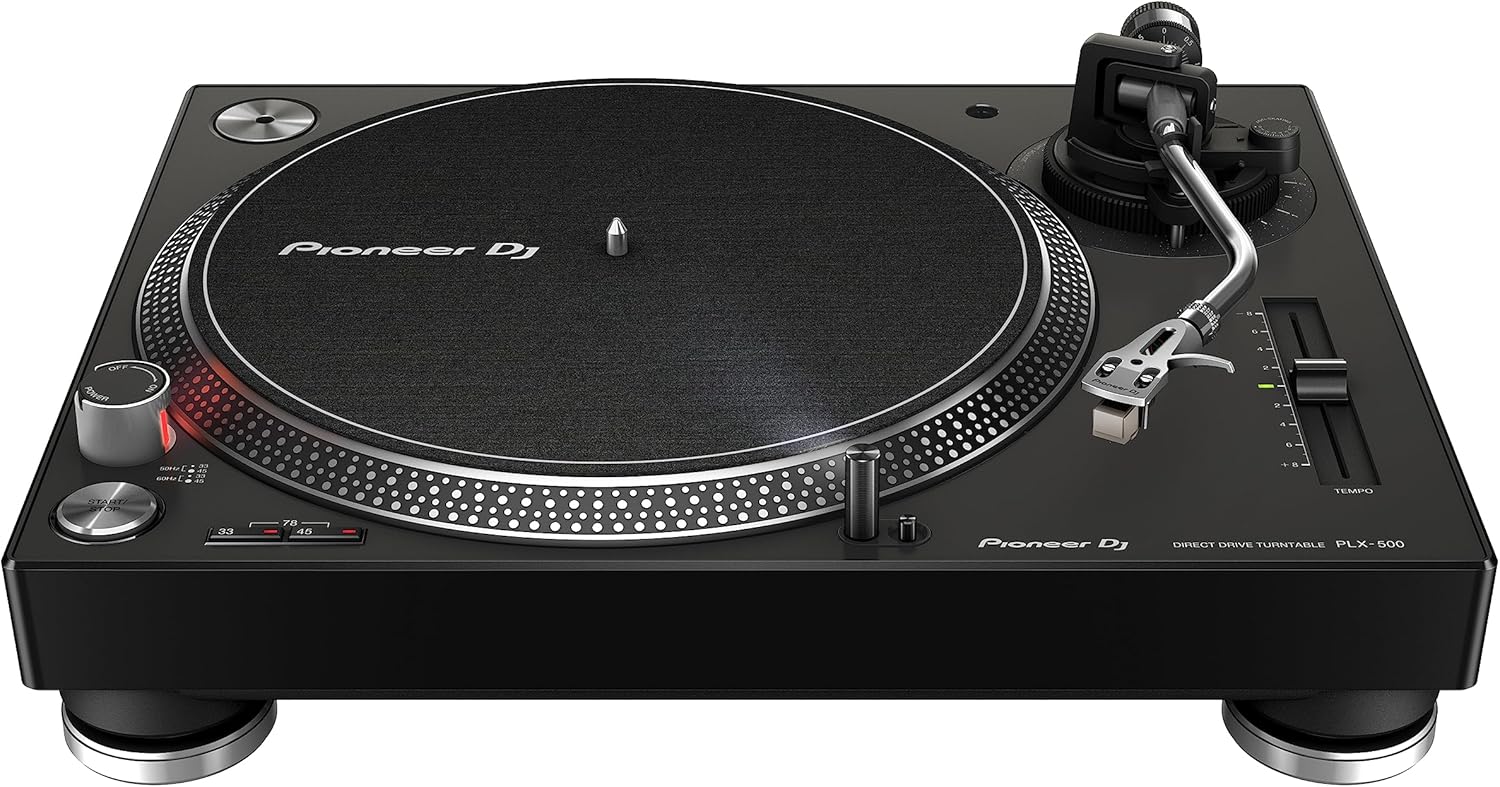
A turntable is, at its most basic, a spinning platform that moves a vinyl record past a needle — and that needle reads the grooves and turns them into sound. Simple enough. But the way the platter (the spinning disc your record sits on) gets driven makes an enormous difference in how a turntable performs under DJ conditions. The two main approaches are belt-drive — where a rubber band-like belt connects the motor to the platter — and direct-drive, where the motor sits directly beneath the platter and spins it straight. For DJs, direct-drive almost universally wins, because it spins up to full speed faster, recovers quicker when you manually slow or stop the record, and holds its speed more consistently under the physical stress of scratching, cueing, and back-spinning. This guide is about direct-drive turntables specifically: what separates an entry-level deck from a professional one, why the Technics SL-1200 series casts such a long shadow over every competitor, and where the real decision points are when you’re spending anywhere from $300 to $3,500.
Why Torque and Platter Weight Actually Matter (and How to Think About Them Together)
If you’ve spent any time reading turntable specs, you’ve seen the term starting torque — typically measured in kilogram-centimeters (kg·cm). This number describes how quickly and forcefully the motor can bring the platter from a dead stop up to playback speed (33⅓ or 45 RPM). For a home listener, torque barely matters. For a DJ who’s constantly starting, stopping, and manipulating the platter by hand, it’s one of the most consequential specs on the sheet.
Here’s the tradeoff that forum threads and review breakdowns consistently raise but rarely frame cleanly: high torque and heavy platters are not the same thing, and they don’t always want the same things from you.
A high-torque motor snaps to speed fast — good for precise cuing and for recovering quickly after a scratch. But a heavier platter stores more rotational energy (called angular momentum), which means it resists speed changes more stubbornly once it’s moving. That stability is great for playback consistency and resists minor vibration, but it means your manual slow-down and stop techniques require more physical effort.
The Technics SL-1200MK7’s platter weighs approximately 2.5 kg with a die-cast aluminum construction, and its motor is rated at 1.5 kg·cm of starting torque — spec data confirmed in Sound On Sound’s in-depth coverage of the MK7. That combination gives it what DJs describe as a planted, authoritative feel: the platter moves when it decides to move, not when ambient vibration nudges it. At the other end of the market, budget direct-drive decks — typically in the $200–$350 range — tend to have lighter platters (often under 1 kg) and lower torque ratings, which feels floaty by comparison, especially during heavy scratch technique.
The Vinyl Factory’s explainer on direct-drive versus belt-drive notes that platter mass and motor torque together determine a turntable’s wow and flutter performance — the tiny speed variations that, when high, make sustained notes sound wobbly. Professional decks target 0.01–0.025% wow and flutter. Budget decks often land at 0.035% or higher, which is audible to trained ears on sustained piano or sustained synth patches.
The Technics Gap: What Makes the SL-1200 Line the Benchmark
Resident Advisor’s retrospective on Technics’ return to production describes the SL-1200 series as “the turntable that essentially defined professional DJ culture from the mid-1970s forward” — and that framing isn’t hyperbole when you look at the installed base. Clubs, broadcast studios, and touring DJs standardized on the 1200 platform because it was consistent, repairable, and sonically transparent.
The current production flagship, the SL-1200MK7, retails around $1,499 as of mid-2026. Stereophile’s coverage of the closely related SL-1200GR emphasizes the coreless direct-drive motor design, which eliminates the cogging effect (a subtle rhythmic drag caused by the motor’s magnetic poles) that affects many competitors at lower price points. DJ Mag’s MK7 review calls the speed stability “essentially beyond criticism” in normal DJ use.
What you’re paying for at that $1,499 price:
- Coreless direct-drive motor — smooth, no cogging
- Aluminum die-cast platter at ~2.5 kg
- Pitch control range of ±8% and ±16% (with the wider range available for hip-hop and turntablism work)
- Decades of aftermarket support — replacement headshells, tonearm wires, mats, slipmats, and dustcovers are abundantly available
- Resale value that holds remarkably well on Reverb and Discogs dealer listings
The SL-1200GR, the audiophile-tilted sibling, adds a higher-mass platter and refined tonearm but costs around $1,699–$1,799 and is optimized more for listening than club performance. For working DJs, the MK7 is the correct call in the Technics line.
By the Numbers: Key Spec Comparison
| Deck | Starting Torque | Platter Weight | Wow & Flutter | Street Price (2026) |
|---|---|---|---|---|
| Technics SL-1200MK7 | 1.5 kg·cm | ~2.5 kg | ≤0.025% | ~$1,499 |
| Rega Planar 1 (belt-drive, for reference) | N/A | ~1.0 kg | 0.07% | ~$495 |
| Audio-Technica AT-LP140XP | 1.6 kg·cm | ~0.9 kg (mat+platter) | 0.05% | ~$349 |
| Reloop RP-8000 MK2 | 4.5 kg·cm | ~1.6 kg | 0.01% | ~$699 |
Sources: manufacturer spec sheets; Analog Planet’s AT-LP140XP coverage; Reloop published specifications.
The Realistic Alternatives at Each Budget Tier
Entry Practitioner: $300–$450
The Audio-Technica AT-LP140XP consistently appears in the conversation as the most credible entry into serious direct-drive use. Analog Planet’s coverage describes it as “a legitimate step up from casual listening decks” with a higher starting torque rating (1.6 kg·cm, per manufacturer specs) than the SL-1200MK7 on paper — though owners in long-run forum aggregations and review threads note the lighter platter means that torque translates into snappy starts rather than the planted stability of the Technics. For a DJ learning scratch technique or building out a mobile rig where budget matters, this is the honest entry point.
What you give up versus the Technics:
- Lighter platter = less angular momentum = more susceptible to speed blip under aggressive technique
- Tonearm bearing quality is noticeably lower under heavy stylus pressure
- Wow and flutter at ~0.05% is measurably higher, per published specs
What you keep:
- Standard S-tonearm accepts the same headshells as every professional deck
- Direct-drive motor behaves correctly for cuing and scratching
- Price leaves room for a quality cartridge, which matters enormously for tracking
Mid-Tier Working DJ: $600–$800
The Reloop RP-8000 MK2 occupies a genuinely useful slot for working mobile DJs and scratch practitioners. Its published torque spec of 4.5 kg·cm is the highest in this tier and is specifically designed for turntablism — the fast response helps with precise technique work. DJ Mag’s coverage of the RP-8000 line highlights its MIDI integration, which allows direct control of DJ software without a separate interface, making it attractive for hybrid setups. The platter at ~1.6 kg lands between the AT and the Technics, and owners report speed stability that holds up in venue conditions.
The honest tradeoff: the RP-8000 MK2’s tonearm and bearing system doesn’t match the Technics build quality at the pivots and counterweight — reviewers note that the long-term wear characteristics under daily professional use favor Technics for longevity. For a DJ doing 2–4 gigs monthly rather than nightly residencies, this gap is probably not decisive within a 3–5 year horizon.
Professional Standard: $1,400–$1,700
This is Technics territory, and there’s no credible challenger at equivalent build quality from a non-Technics brand at this price point as of mid-2026. The SL-1200MK7 is the call for any DJ who is:
- Doing regular paid gigs where equipment failure has financial consequences
- Building a permanent listening or performance setup
- Investing with resale in mind — MK7 units on Reverb hold 70–80% of retail in good condition, based on current active listings
- Committed to vinyl-forward technique over hybrid digital setups
The Cartridge Multiplier: Why Your Deck Choice Sets Your Cartridge Budget
One thing the spec comparison tables can’t capture: the cartridge you mount matters as much as the deck itself in terms of what you actually hear and how the stylus tracks the groove under DJ conditions.
The standard professional pairing for the SL-1200MK7 in DJ use is the Ortofon Concorde series — the Concorde Mix or Concorde DJ S at roughly $150–$250, or the Concorde Night Club E series at $250–$350 for heavier scratch work. These use a plug-in headshell design that makes swapping faster during a gig. For the audiophile listening configuration, the Concorde Mono MkII (~$450–$550) gets mentioned regularly in Stereophile and Analog Planet coverage as a genuinely high-resolution option.
The rule of thumb that holds across forum aggregates and professional reviews: don’t put a $50 cartridge on a $1,500 deck. A budget cartridge will perform to budget standards regardless of what’s underneath it. Conversely, a quality cartridge on a well-maintained AT-LP140XP will outperform a poor cartridge on a Technics — the deck sets the ceiling, but the cartridge determines how close you get to it.
The Decision Frame: If X, Then Y
If you’re building your first serious direct-drive setup on a sub-$500 budget: the AT-LP140XP is the honest answer. Pair it with an Ortofon Concorde Mix cartridge, accept the platter weight limitations, and put the money you save toward a quality phono preamp.
If you’re a working mobile DJ doing 2–5 paid gigs monthly with a $700 ceiling: the Reloop RP-8000 MK2 is the pragmatic call. The MIDI integration earns back some setup complexity at venues, and the torque handles DJ technique correctly. Budget for tonearm maintenance at the 18–24 month mark.
If you’re committing to a permanent setup — whether a DJ booth, a dedicated listening room, or both — and you have $1,500 to spend on the deck: buy the Technics SL-1200MK7 once and stop looking. The gap between it and everything else in DJ use is real, documented across every credible review source, and priced into its resale value. The coreless motor, the platter mass, and the 40-plus years of aftermarket support are not marketing language — they’re the reason every serious club on the planet still has a pair in the booth.
The Technics gap is real. The only question is when you’re ready to cross it.