September 3, 2026 • Roxanne Flair • 11 min reading time • Prices verified June 4, 2026
Mini Disco Balls for Non-Party Uses: The Surprisingly Practical Guide
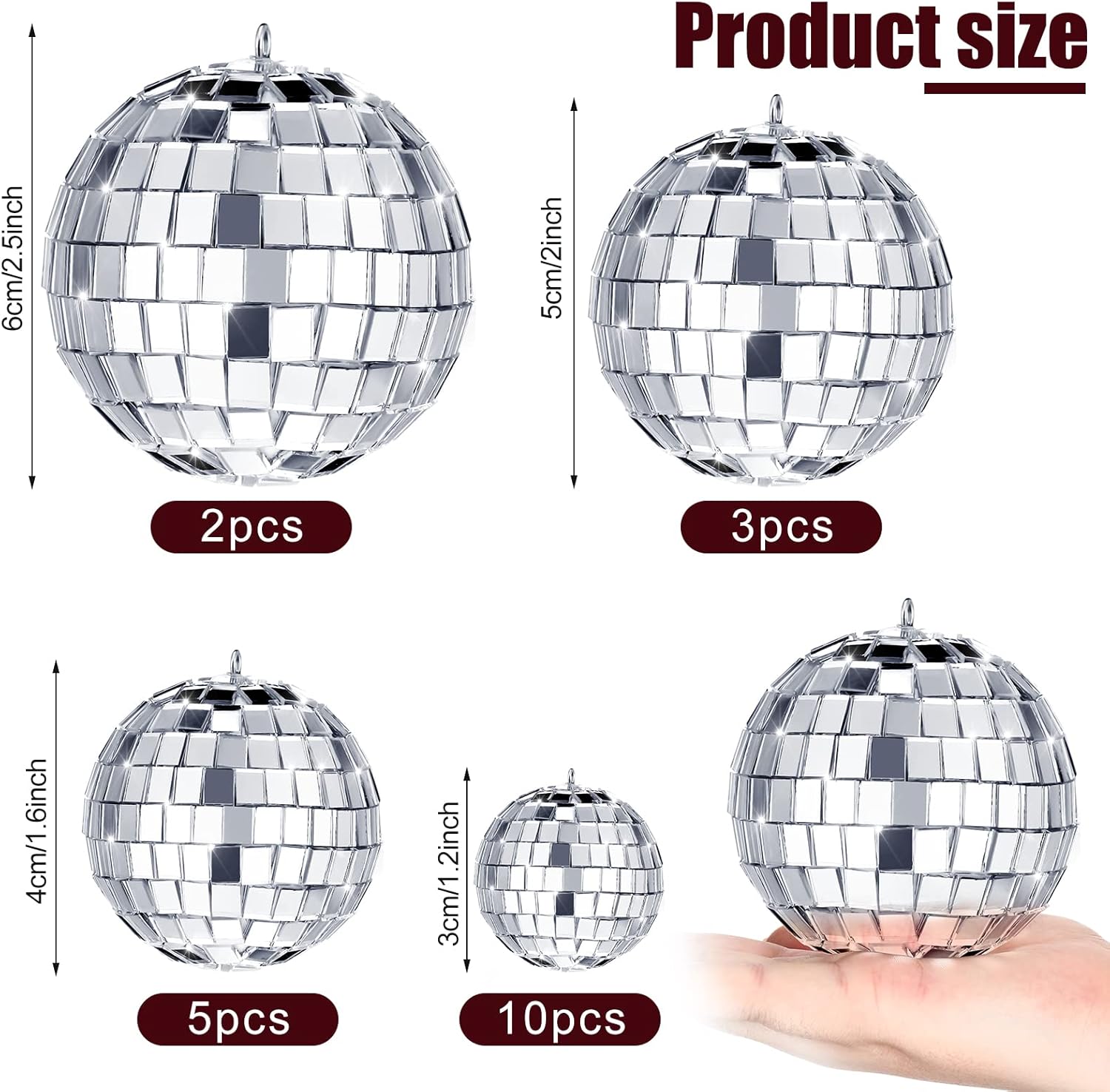
If you’ve ever bought a mirror ball — a sphere covered in small reflective tiles that fragments light in every direction — you probably thought “party decoration” and nothing else. That’s the obvious use. A mini disco ball, typically ranging from 4 inches up to about 20 inches in diameter, bounces sunlight or artificial light into dozens of tiny moving beams, which is why they look so good above a dance floor. But here’s what the product review sections quietly reveal: a surprising number of people buying these things have zero interest in dancing. They’re hanging them on porches to shoo flies, stringing them through vegetable gardens to confuse birds, and mounting them near chicken coops as pest deterrents. This guide takes that pattern seriously — because if you’re considering a mini disco ball for any non-party application, you deserve a straight answer on what works, what the real durability tradeoffs are, and how to actually hang the thing properly without improvising with a coat hanger.
The short version: the reflective-deterrent use case is real and science-adjacent, outdoor durability varies significantly by climate and product, and almost none of these balls ship with adequate hanging hardware. Let’s go through it properly.
| EDITOR'S PICKYoudepot Disco Ball 12-Inch – L… | Mid-tierAlytimes Mirror Disco Ball - 8-… | Budget pickMTLEE 20 Pcs Disco Balls Decora… | |
|---|---|---|---|
| Diameter | 12 in | 8 in | 1.2–2.4 in |
| Quantity | 1 | 1 | 20 |
| Material | — | — | Glass |
| Hanging rope | — | — | ✓ |
| Assorted sizes | ✗ | ✗ | ✓ |
| Price | $45.99 | $17.98 | $11.99 |
| See on Amazon → | See on Amazon → | See on Amazon → |
Do Disco Balls Actually Repel Flies, Birds, and Insects — and Why?
The honest answer is: probably yes, with caveats, and the mechanism is reasonably well understood.
Reflective surfaces disrupt the visual navigation that many flying insects and birds rely on. The University of Florida IFAS Extension’s research on reflective mulches and insect management in vegetable crops documents that highly reflective surfaces — think metalized film laid on the ground — significantly reduce aphid and whitefly populations by interfering with how those insects orient toward plants using polarized light cues. A spinning or lightly swaying mirror ball creates a similar effect in three dimensions: fragmented, constantly shifting light that makes a stable visual target difficult to locate.
The USDA Agricultural Research Service’s published work on reflective surfaces and aphid deterrence in field crops reinforces this, showing that even non-moving reflective surfaces reduce pest pressure. A slowly rotating disco ball that catches wind or a light breeze amplifies the disruption by making the reflected light unpredictable.
Birds are deterred by a slightly different mechanism: most species are startled or confused by flashing, unpredictable light, interpreting it as a potential threat or simply avoiding it as sensory overload. This is why reflective tape, old CDs strung on fishing line, and — yes — mini disco balls show up repeatedly in gardening forums as bird-deterrent tools.
Across aggregated reviews of several mirror ball SKUs, this pattern appears consistently. One buyer documented using twelve 12-inch balls at the entry points of a chicken enclosure specifically to keep flies at bay. Another reviewer purchased a 20-piece mini ball set and deployed them across a back porch, calling it “so worth the buy every year” — implying they replace or refresh the set seasonally. A third noted that mirror balls placed near raised garden beds kept birds from pecking at ripening produce.
What it won’t do: repel mosquitoes (which navigate primarily by CO₂ and heat, not light), deter determined mammalian pests, or work effectively in low-light or shaded conditions where there’s no sunlight to fragment.
By the numbers:
- Reflective surfaces reduce aphid pressure by 30–50% in published USDA field trials
- Most effective deterrent window: 8 a.m. to 4 p.m. when sunlight angle creates maximum reflection
- Effective radius per ball: roughly 6–10 feet for light disruption in direct sun
- Replacement cycle reported by outdoor users: 1–3 years depending on climate
Can You Use Mini Disco Balls Outdoors Permanently? The Real Durability Picture
This is where you need to be honest with yourself about your climate before buying.
Mini disco balls are constructed around a foam, polystyrene, or lightweight plastic core, with small mirrored tiles — called “mirror glass tiles” or “glass mosaic tiles” — adhered to the surface with epoxy or hot-melt adhesive. The tile adhesion is the single most vulnerable point for outdoor use.
Reviewers of the Flasoo 26-piece set noted they were “heavier than I thought in a good way” — a cue that the tiles have meaningful glass content rather than thin mylar, which is actually good news for longevity. Heavier tiles typically mean real glass rather than metalized plastic, and real glass holds up better to UV exposure over time. Mylar-faced tiles tend to delaminate and dull within a single outdoor season.
The durability question breaks down by climate zone:
Mild, dry climates (Southern California, Southwest): Owners consistently report multi-year outdoor performance with minimal tile loss. One reviewer using an 8-inch Alytimes ball on a California porch noted uncertainty about winter durability — which is a reasonable concern even in mild climates, since nighttime temperature swings can stress adhesive bonds. In practice, many California porch users report two to three seasons without significant tile loss if the ball is under an overhang and not in standing water.
Humid subtropical climates (Gulf Coast, Southeast US): This is the hardest environment for any adhesive-bonded product. High sustained humidity softens many hot-melt adhesives over time, and thermal expansion cycles accelerate tile separation. Users in these climates should expect one to two seasons of reliable service before tile loss becomes cosmetically significant. Budget accordingly — a $12–$20 ball replaced annually is still cheaper than commercial bird netting or a bug zapper.
Cold climates (Midwest, Northeast, Mountain West): Freeze-thaw cycling is the main threat. Water infiltrates micro-gaps in the adhesive, freezes, expands, and pops tiles. Owners in these climates who bring balls indoors for winter report substantially longer lifespans. Leaving them outside through a New England or Great Lakes winter is a one-season proposition for most budget-tier balls.
What actually holds up: Balls with epoxy adhesion (typically more expensive, often noted as “professional grade” in listings) outperform hot-melt-glued versions in all climates. If you’re buying for permanent outdoor installation, look for product descriptions that specifically mention UV-stable adhesive or epoxy bonding. This information isn’t always on the listing, so cross-referencing owner reviews mentioning tile loss — or the absence of complaints about it — is your best signal.
What Hanging Hardware Do You Actually Need?
Almost universally, mini disco balls ship with inadequate or no hanging hardware. This is not a flaw unique to budget products — even mid-tier balls from brands like Youdepot (whose 16-inch ball reviewers specifically flagged the lack of included hardware) treat the hanging mechanism as a buyer-solved problem.
Here’s what you actually need, depending on your installation:
For porch ceiling or pergola mounting: A simple screw-in eye hook (3/8-inch thread, rated for at least 5 lbs) is sufficient for balls up to 12 inches, which typically weigh under 1.5 lbs. For 16-inch and larger balls, step up to a 1/2-inch eye hook with a load rating of 10 lbs or more. Pair this with a swivel clip — sometimes called a snap swivel or barrel swivel, borrowed from fishing hardware — which allows the ball to rotate freely in wind without twisting and eventually breaking a fixed cord.
For outdoor garden or tree mounting: Weatherproof nylon cord (paracord works well) or stainless steel wire rated for outdoor use. Avoid standard jute twine or cotton rope — both degrade rapidly in UV and moisture. Monofilament fishing line is popular because it’s nearly invisible and UV-resistant, but it can be slippery with smooth-topped balls; a small cable clamp or stopper knot solves this.
For balcony railings or fence posts: S-hooks through eye bolts lag-screwed into a wood post, or zip-tied to a metal fence rail, give you adjustable-height positioning. If you’re stringing multiple balls in a line (common for garden bird deterrence), a single length of stainless wire with individual drop cords works cleanly and doesn’t require a separate anchor per ball.
Apartment Therapy’s guides on hanging objects without wall damage are worth consulting if you’re working with rented outdoor spaces — adhesive hook systems rated for outdoor use can support smaller balls (4–8 inch), though they’re not reliable for anything heavier in high-humidity environments.
One thing the reviews make clear: the loop or ring that comes pre-attached to the ball’s top is often the weakest point, not the hook or cord. On cheaper balls, this is a thin wire embedded in the foam core. Inspect it before hanging outdoors — if it looks like it could pull out under sustained wind load, reinforce it with a wrap of heavy-gauge wire or a cable tie cinched below the ball’s equator as a secondary support.
How Long Do Mirror Tiles Last Outdoors — and Will Humidity Pop Them Off?
The tile adhesion question is the most-asked and least-answered in the product listings, so let’s synthesize what’s actually known.
Humidity alone is rarely the acute cause of tile loss — it’s the combination of humidity and temperature swings. In a stable warm-humid environment (like a covered porch in Florida), tiles may stay put for a full season before edge tiles begin to separate. In an environment that swings from 90°F and 80% humidity in August to 35°F and dry in January, you can see tile loss begin within a few months.
The good news from reviewers of heavier, glass-tiled balls like the Flasoo set: real glass tiles with good epoxy bonding hold substantially better than the mylar-over-plastic tiles common in the cheapest sets. The weight observation from buyers isn’t just aesthetic — it correlates with durability.
If tiles do begin to separate, clear exterior-grade silicone adhesive (the kind used for glass and mirrors) is an effective field repair. It cures waterproof, stays flexible through temperature cycles, and doesn’t fog the mirror surface. Budget another $5–$8 for a small tube if you’re planning a permanent outdoor installation — call it maintenance cost rather than a product failure.
Frequently Asked Questions
Do disco balls actually repel flies and insects, and why? Yes, with meaningful effectiveness for flying insects that navigate by visual light cues — flies, gnats, aphids, whiteflies. The fragmented, moving reflected light disrupts their orientation. It’s less effective against mosquitoes and useless against ground-level pests.
Can mirror disco balls be used outdoors permanently? In mild, dry climates with overhead cover: yes, for two to three seasons. In humid subtropical or cold climates with freeze-thaw cycles: plan on seasonal removal or annual replacement for budget-tier balls. Epoxy-bonded glass-tile balls last longer than hot-melt-glued mylar balls in every climate.
What hanging hardware do I need that doesn’t come in the box? A screw-in eye hook rated for your ball’s weight, a swivel clip to allow free rotation, and UV-resistant cord or wire. For multi-ball garden installations, stainless wire strung between posts with individual drop cords is the cleanest solution.
How long do mini disco balls last outside in different climates? Mild/dry: 2–3+ seasons. Humid subtropical: 1–2 seasons. Cold with freeze-thaw: 1 season if left out, much longer if brought in for winter.
Will mirror tiles fall off with humidity or temperature changes? Eventually, yes — the question is how quickly. Epoxy-bonded glass tiles handle the combination of humidity and temperature swings better than hot-melt-glued mylar. Clear exterior silicone is an easy repair for any tiles that do separate.
The Decision Frame: Which Use Case Matches Which Ball
If you’re buying for insect deterrence on a covered porch: a mid-size ball in the 8–12 inch range gives you enough surface area to cast meaningful fragmented light across a 6–10 foot zone. Prioritize glass tiles over mylar — the Flasoo set’s “heavier than expected” quality signal is what you want here.
If you’re buying for garden bird deterrence across a larger area: a multi-piece set (16–20 smaller balls strung across rows) outperforms a single large ball. Coverage width matters more than individual ball size. Budget for replacement every one to two seasons in most climates.
If you’re in a cold climate and want multi-season outdoor use: buy a ball you’re willing to bring inside between October and April. The hardware investment in a good swivel hook makes seasonal removal a two-minute task rather than a project.
If you’re in Southern California or a similarly mild climate and want a semi-permanent porch fixture: the Alytimes 8-inch ball’s reported California porch performance suggests reasonable durability under an overhang — just inspect the pre-attached hanging loop before trusting it to a full season of wind load.
The insect-deterrent use case isn’t a quirk or a happy accident. It’s a real application with a real mechanism, documented by enough independent buyers across enough different products that it earns a place in any honest guide to what these things can do.