August 26, 2026 • Roxanne Flair • 11 min reading time • Prices verified June 4, 2026
Mini Disco Ball Kits with Motor and Light: What All-in-One Buyers Actually Get
Mini Disco Ball Kits with Motor and Light: What All-in-One Buyers Actually Get
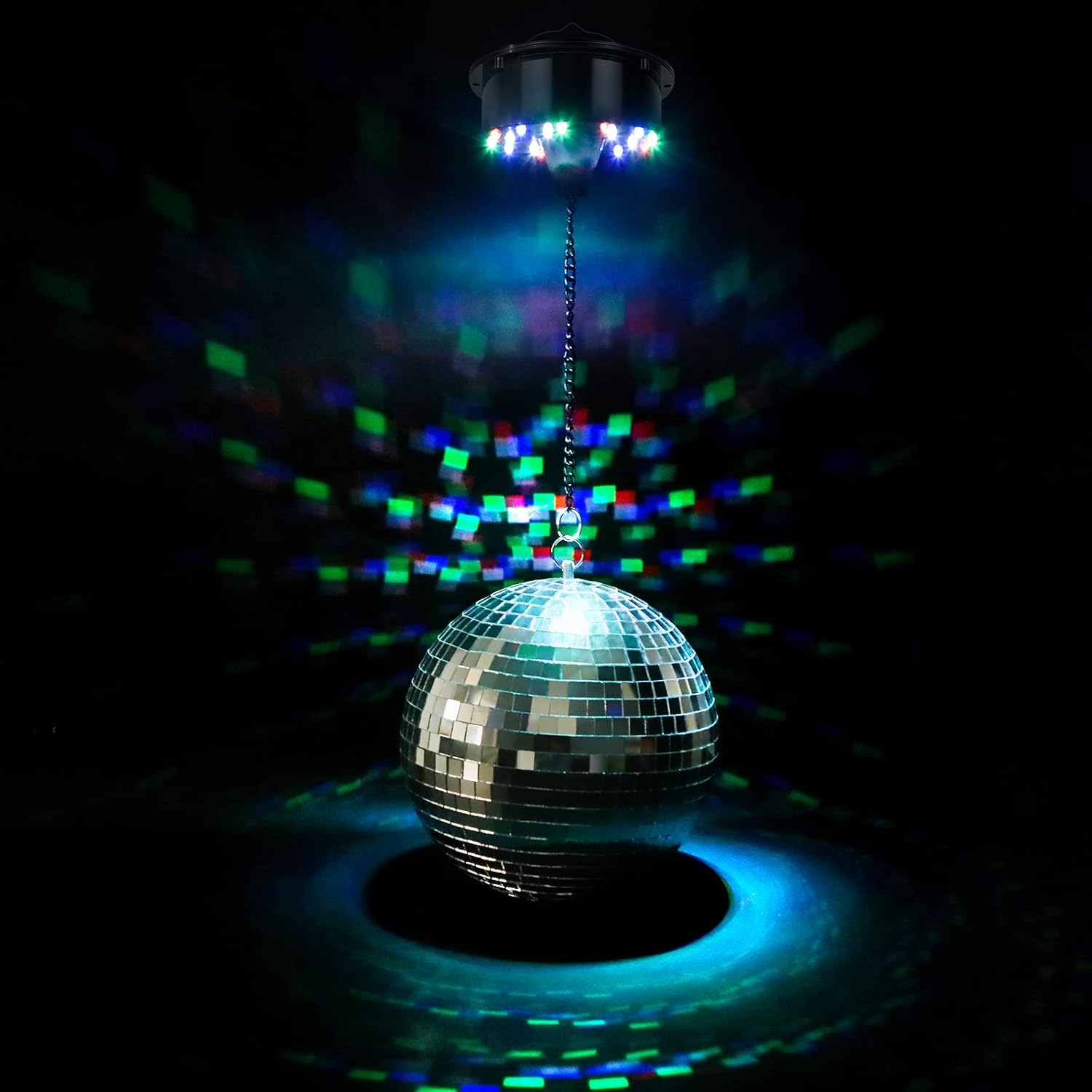
If you’ve never shopped for a mirror ball setup before, the concept is simple: a disco ball — a foam or glass sphere covered in tiny mirrored tiles — catches light and scatters it across walls and ceilings in spinning, drifting dots. The motor makes it spin. The light, usually a small colored LED, gives those dots their color. An all-in-one kit bundles all three: ball, motor, and light source, so you theoretically plug it in and the party starts. Theoretically. What actually arrives in the box, how fast it spins, whether the power cord works, and whether your kid’s bedroom will feel like a relaxing galaxy ceiling or a disorienting strobe situation — those are the real questions. This guide digs into the pattern across owner reviews for the most popular kits at this price point and gives you clear decision rules for each use case.
The Two Things That Separate a Good Kit from a Frustrating One
Before naming specific products, it helps to frame what owners consistently identify as the two make-or-break variables: spin rate (measured in RPM, or rotations per minute) and power delivery. Every complaint in the one- and two-star reviews traces back to one of these two things.
Spin rate matters more than most buyers expect. A ball spinning at 12–15 RPM in a small bedroom is genuinely nauseating — the reflections race around the walls fast enough to feel chaotic rather than ambient. A ball at 1–3 RPM in that same room produces the slow, dreamy drift you picture when you imagine a perfect retro dance floor. The difference between those two experiences is enormous, and most budget kits ship with fixed-speed motors that don’t tell you where they actually land. Apartment Therapy’s 2024 feature “How to Style a Disco Ball for Small Spaces” specifically calls out slow rotation — in the 1–3 RPM range — as the sweet spot for bedroom and living room installations, a conclusion that aligns closely with the pattern across owner reviews for every product covered here.
Power delivery is simpler: does the included cord work, or are you effectively battery-dependent the moment you open the box? For portable or outdoor setups, batteries are fine. For a bedroom installation or a recurring party use case, a non-functional cord is a genuine problem.
Keep both of those in mind as we go through the field.
Kit-by-Kit Breakdown: What Owners Actually Report
Meagoo All-in-One Kit — The Reliable Entry Point
The Meagoo kit is the one that consistently earns the “just works” label from buyers assembling a one-night setup with no patience for troubleshooting. Owners describe a genuine out-of-the-box experience: motor, ball, and LED hang from a single hook, everything connects, and the light show starts within minutes of opening the package.
The interesting wrinkle is the spin rate. The spec sheet lists 6 RPM, but a consistent thread across owner reviews puts the actual observed rate closer to 3 RPM. That gap sounds like a flaw, but the reception is instructive. One reviewer set it up for a trunk-or-treat Halloween event and found the slower actual rate “perfectly festive without being dizzying.” Another buyer, who wanted a more energetic bedroom vibe, found 3 RPM too subdued. Neither is wrong — they just had different use cases.
The practical takeaway: if you’re buying the Meagoo for a kids’ party, a casual living room setup, or a holiday event where you want ambiance rather than intensity, the real-world spin rate is probably an asset, not a defect. If you want visible, lively movement in a room larger than 12 feet across, you may find it underwhelming.
Slow
$9.49
In stock on Amazon
Check price on AmazonTRESSON Kit — Solid Hardware, Documented Power Cord Issue
The TRESSON kit draws consistent praise for build quality and light output, but it comes with a documented asterisk: multiple reviewers have received units where the included power cord simply does not function. Buyers in this situation effectively have a battery-only kit whether they planned for that or not.
The seller’s customer service response, based on the review pattern, has been active — at least one reviewer received a replacement cord and a partial refund after flagging the issue. But that’s a post-purchase friction loop that shouldn’t exist for a product in this category.
The decision frame here is straightforward: if you’re buying for a permanent or semi-permanent installation — a bar cart corner, a bedroom ceiling, a home studio — a cord that requires follow-up troubleshooting is a real cost in time and annoyance. If you’re buying for portable party use and batteries are acceptable anyway, the TRESSON’s core hardware earns good marks once it’s actually powered.
Disco
$24.99
In stock on Amazon
Check price on AmazonAdjustable-Speed Remote Motor (0–15 RPM) — The Upgrade for Anyone Who’s Been Burned Before
This is the product that shows up in reviews written by people who have already bought one or two other motors and found them too fast. These aren’t first-time buyers leaving first impressions — they’re practitioners who’ve run through the fixed-speed experience and arrived here with a specific problem to solve.
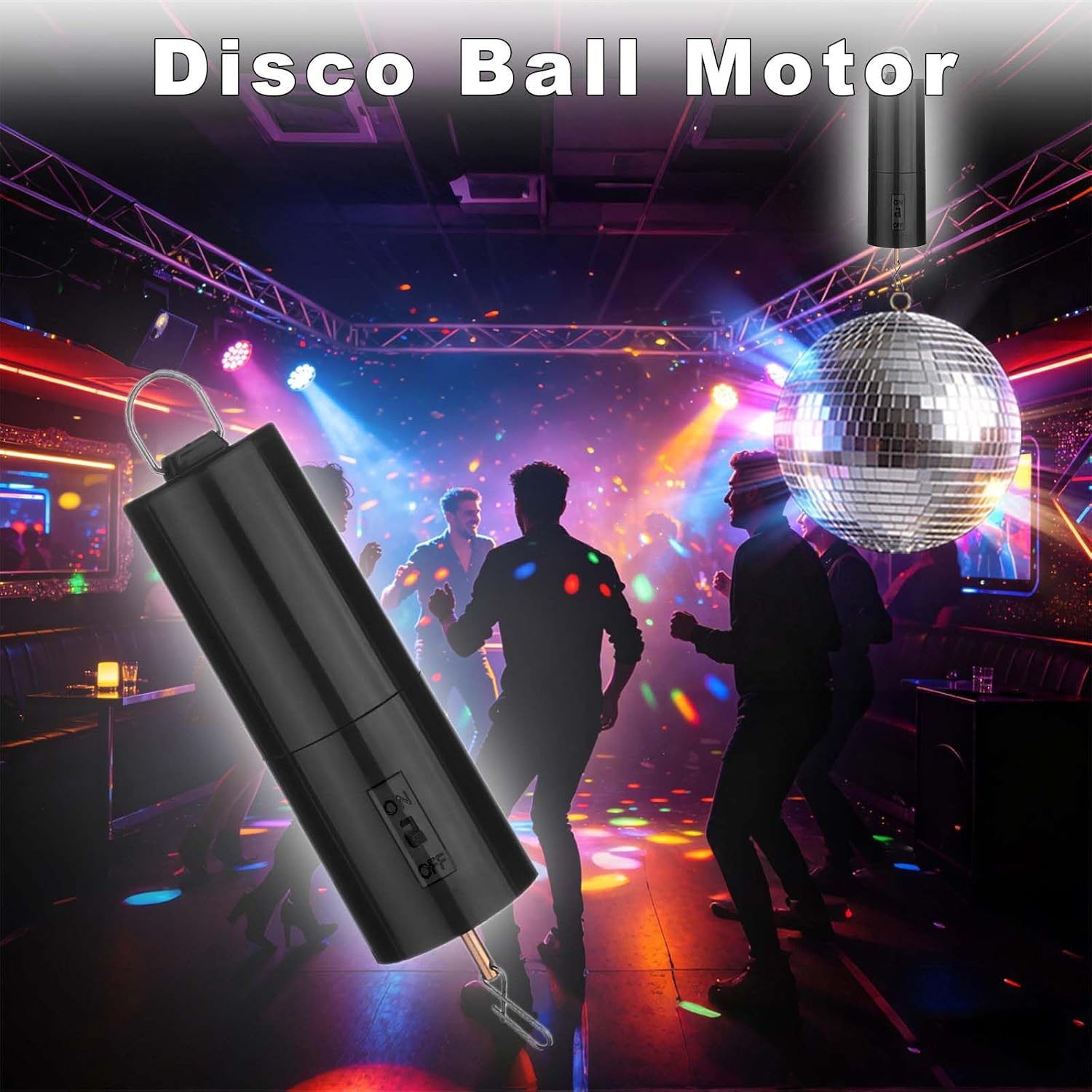
The 0–15 RPM remote-adjustable motor addresses the core frustration directly. Owners who’ve cycled through multiple fixed-speed motors describe the adjustability as immediately obvious in practice: you can dial the ball back to a 1–2 RPM drift for ambient room use or push it to 10+ RPM for an active party floor, and you can do that without touching the motor itself. One reviewer uses this setup in a golf simulator room, running it essentially nonstop, and reports zero mechanical issues after two months of continuous operation.
The tradeoff is that this motor is typically sold separately from a ball and light kit, meaning you’re assembling components rather than unboxing a single package. For a buyer who already owns a ball, or who wants to source a specific size, that’s a genuine advantage. For someone who wants a single order that covers everything, it’s an extra step.
Meagoo
$38.99
In stock on Amazon
Check price on Amazon1.5 RPM Corded Motor — Built for People Who Know Exactly What They Want
This motor has the clearest buyer profile of anything in this category. Reviewers explicitly describe buying it after being unable to find anything slower than 12–15 RPM in the battery motor market. One owner states it plainly: every battery-powered motor they could find topped out at 12 RPM minimum on the slow end, and they needed something dramatically slower for a low-key ambient installation.
At 1.5 RPM, this motor produces movement you’d describe as a slow float rather than a spin — individual reflected dots drift across the ceiling at a pace where you can almost track each one. Apartment Therapy’s coverage of disco ball styling for small spaces, cited above, emphasizes exactly this kind of slow, ambient movement as the sweet spot for bedroom and living room use, and owner reviews on this motor align with that conclusion precisely.
The corded design is a deliberate feature, not a limitation. Buyers choosing this motor are choosing reliable, continuous power over portability. It is not a good fit for outdoor use or anything mobile. It is a very good fit for a ball you’re hanging in a fixed spot and leaving there.
Disco
$24.99
In stock on Amazon
Check price on AmazonSlow-Spin Battery Motor — The Outdoor and Garden Option
The slow-spin battery motor occupies a niche that’s distinct from everything above: outdoor and garden use, where running a cord is impractical and where ambient movement in natural or string light is the goal rather than an active light show. Owners credit it specifically for garden spinner applications, where a gentle rotation in daylight or soft evening light produces a pleasant visual effect without requiring any power infrastructure.
Battery life at typical casual use rates — a few hours of evening use — is described as acceptable in reviews, though the specific duration varies by battery quality. For a weekend party patio setup, most owners report no issues. For an installation intended to run multiple consecutive days without attention, battery dependency becomes a management task.
Slow
$9.49
In stock on Amazon
Check price on AmazonComparison at a Glance
| Motor / Kit | Typical Real-World RPM | Power Source | Best Use Case |
|---|---|---|---|
| Meagoo all-in-one kit | ~3 RPM (spec: 6) | Corded | Casual party, kids’ events — Slow — $9.49 |
| TRESSON all-in-one kit | Varies (cord issues reported) | Corded / batteries | Portable, battery-acceptable use — Disco — $24.99 |
| Adjustable remote motor | 0–15 RPM (dial to taste) | Corded | Any room, serious repeat use — Meagoo — $38.99 |
| 1.5 RPM corded motor | 1.5 RPM fixed | Corded | Bedroom, ambient living room — Disco — $24.99 |
| Slow-spin battery motor | 1–3 RPM | Battery | Outdoor, garden, no-cord setups — Slow — $9.49 |
The Decision Frame: If X, Then Y
If you want one box that works tonight with zero assembly decisions: The Meagoo kit is the call. Expect the real spin rate to run around 3 RPM rather than the listed 6 — in most casual settings, that’s fine and may actually be an improvement.
If you’ve already tried a fixed-speed motor and found it too fast: Skip the kits entirely and go straight to the adjustable-speed remote motor. Reviewers with exactly your experience are the core audience for that product, and the two-month continuous-run report from the golf simulator owner is meaningful durability evidence.
If you need the slowest possible spin for ambient bedroom or living room use: The 1.5 RPM corded motor is purpose-built for this. It exists specifically because buyers couldn’t find anything slow enough in the standard battery motor market.
If you’re setting up outdoors or somewhere without a convenient outlet: The slow-spin battery motor is the logical choice. Budget for rechargeable batteries if you’re running it regularly.
If you’re considering the TRESSON kit: Buy it if the hardware quality and light output reviews appeal to you, but go in knowing that power cord troubleshooting is a realistic first-week experience. The seller has demonstrated willingness to resolve it, but you may need to engage customer service.
Frequently Asked Questions
Does the included power cord actually work, or do these kits require batteries? It depends on the kit. The Meagoo’s cord is consistently reported as functional. The TRESSON has a documented pattern of non-functional cords on some units — the seller has issued replacements, but it’s a real risk. The 1.5 RPM corded motor works reliably per owner reports. If cord reliability is essential, the Meagoo or the standalone corded motors are safer bets.
What RPM is actually comfortable in a small bedroom or living room? Based on the consistent theme across owner reviews and Apartment Therapy’s 2024 guidance on small-space disco ball styling, 1–3 RPM is the sweet spot for ambient use in rooms under roughly 15 feet. Anything above 6 RPM in a small enclosed space reads as fast and potentially disorienting rather than relaxing. The adjustable remote motor’s popularity with experienced buyers is largely explained by this: they’ve learned through experience that slower is almost always better indoors.
Can these motors hold a heavier 10-inch or 12-inch ball safely? Most motors in this price range are rated for balls up to 8 inches. Published specs for the motors covered here generally max out at 6–8 inch ball compatibility. A 10- or 12-inch ball — which can weigh 1–2 pounds — typically requires a motor explicitly rated for that load. Check the manufacturer’s stated weight capacity before hanging anything larger than 8 inches on a kit motor.
How long do the batteries last at typical party use? Owner reviews on battery-powered motors describe 4–8 hours on a fresh set of AA batteries at moderate speed, depending on motor draw and battery quality. For a single-evening party, a fresh set is generally sufficient. For multi-day or outdoor use, rechargeable AAs are a worthwhile investment.
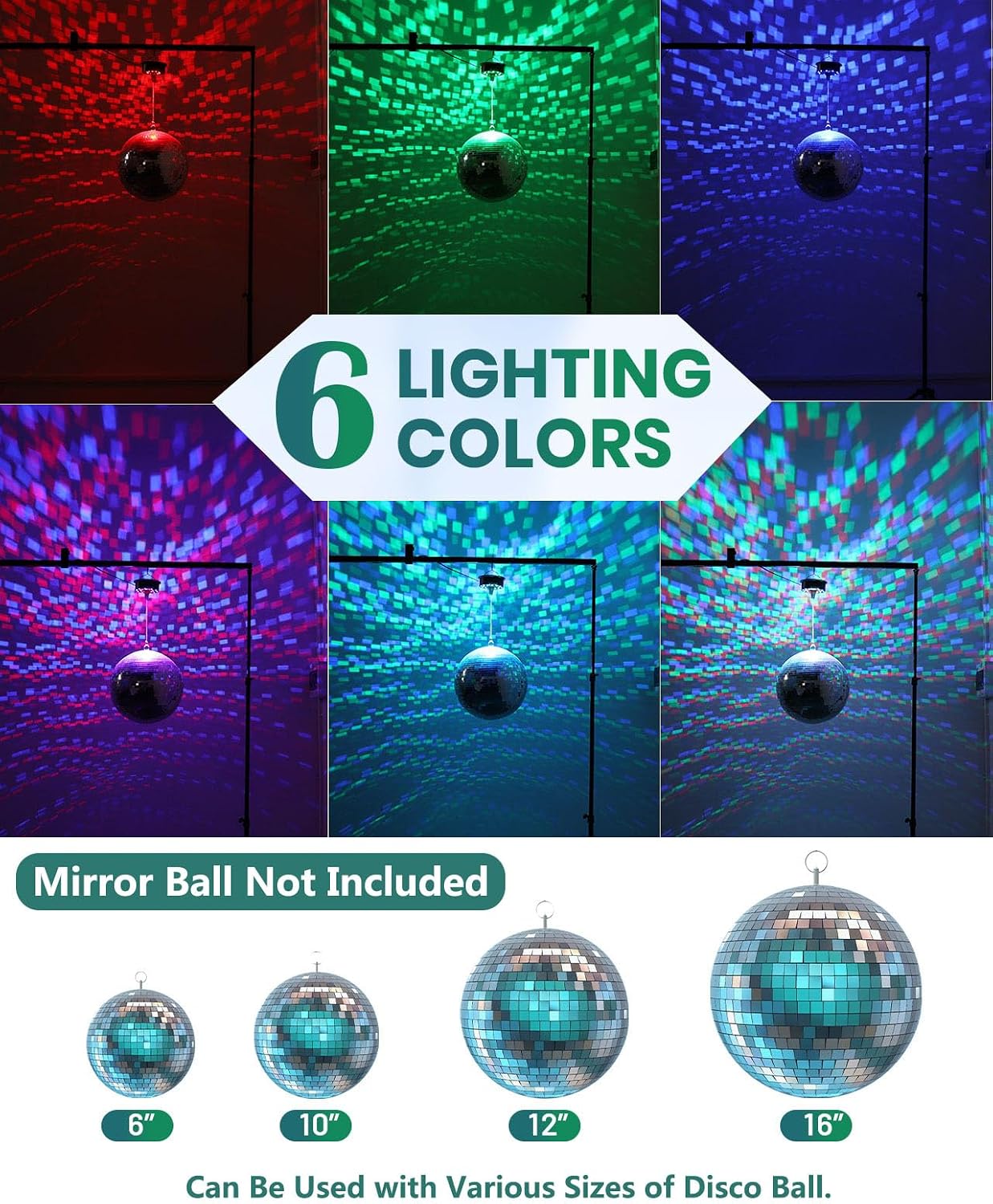
Is the LED light bright enough to see reflections in a partially lit room? In a fully dark room, the LED light sources in all-in-one kits produce visible reflections. In a partially lit room — lamps on, some ambient light — the effect is noticeably weaker. Owners consistently note that the smaller LEDs included in budget kits work best when the room is dimmed. If you need a visible effect with room lights partially on, a separate, brighter LED pin spot sold as a mirror ball accessory produces dramatically better results than the kit light.
What’s the difference between fixed-speed and adjustable-speed motors for a first-time buyer? A fixed-speed motor spins at one rate — whatever the manufacturer set, usually somewhere between 3 and 15 RPM. You get what you get. An adjustable-speed motor lets you dial the rotation up or down, usually via a knob or remote. For a first-time buyer doing a one-night party, fixed-speed is simpler and cheaper. For anyone who plans to use the setup repeatedly in different contexts — or who’s already found a fixed-speed motor too fast — adjustable is worth the step up in price.