October 3, 2026 • Roxanne Flair • 10 min reading time • Prices verified June 4, 2026
Hercules Inpulse 500 vs. DDJ-FLX4 vs. Mixtrack Platinum FX: The $200–$300 Controller Decision
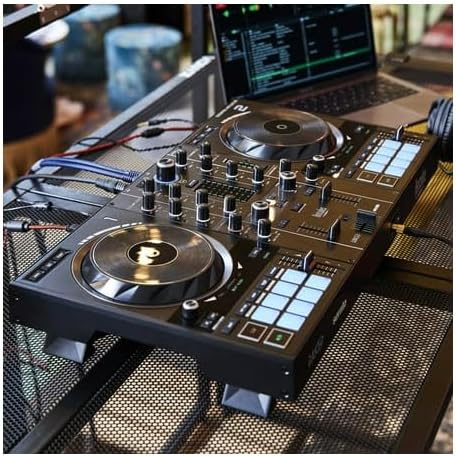
If you’ve ever stood in front of a DJ setup at a party — two turntable-shaped decks, a mixer in the middle, headphones draped around someone’s neck — you already have a picture of what a DJ controller does. A controller is a single piece of hardware that puts all of that in one compact unit, connected to your laptop, so you can mix music without a separate mixer and a pair of actual turntables. In the $200–$300 price window, three names come up constantly: the Pioneer DJ DDJ-FLX4, the Numark Mixtrack Platinum FX, and the Hercules Inpulse 500. All three will get you mixing. All three include software. But they are not the same tool, and choosing the wrong one for where you’re headed will cost you — either in frustration now or in a premature upgrade later. This guide lays out the real tradeoffs so you can make the call with your eyes open.
| EDITOR'S PICKPioneer DJ DDJ-FLX4 2-deck reko… | Mid-tierHercules DJControl Inpulse 500:… | Budget pickAlphaTheta DDJ-FLX2 Compact 2-C… | |
|---|---|---|---|
| Channels | — | — | 2 |
| Included software | rekordbox, Serato | Serato, DJUCED | rekordbox, djay, Serato Lite |
| Streaming-ready | — | — | ✓ |
| Smart Fader / CFX | — | — | ✓ |
| Phone/tablet support | — | — | ✓ |
| Price | $339.00 | $299.99 | $188.95 |
| See on Amazon → | See on Amazon → | See on Amazon → |
What You’re Actually Deciding Between
Before the spec comparison, here’s the honest frame: this isn’t a “which is best” question. It’s a “which is best for your path” question. These three controllers have meaningfully different philosophies, and the sections below each end with a plain statement of who that controller is actually for.
The Pioneer DJ DDJ-FLX4
The DDJ-FLX4 (typically street-priced around $249–$279 as of mid-2026) is built around Pioneer’s club-standard layout — the same spatial logic used on CDJ-3000 media players found in professional club booths worldwide. DJ Mag’s “Best DJ Controllers 2025: The Ultimate Guide” highlights that Pioneer’s layout decisions function as deliberate teaching tools: if you learn on a DDJ-FLX4, the button placement, cue behavior, and loop controls map directly to what you’ll encounter at a real venue. Sound On Sound’s published review of the DDJ-FLX4 confirms the club-layout inheritance as a genuine feature, not marketing language, noting the controller’s fidelity to professional Pioneer workflow as a primary selling point.
Aggregated verified owner feedback reinforces this. Multiple buyers explicitly describe the FLX4 as “the only one in this range I’d recommend to someone who wants to eventually play actual gigs,” and several caution against stepping down to the DDJ-FLX2 as a cost-saving move, calling the FLX4 the correct entry point into Pioneer’s ecosystem. One reviewer who had previously owned cheaper Numark controllers before switching to Pioneer hardware describes the experience as a “reliability step change.” The DDJ-FLX4 is also the controller most frequently referenced in Resident Advisor’s gear coverage when writers discuss accessible entry points to professional club infrastructure.
Hercules
$299.99
In stock on Amazon
Check price on AmazonThe Numark Mixtrack Platinum FX
The Mixtrack Platinum FX (street price typically around $249) earns attention for one specific feature almost nobody else offers at this price: jog wheel displays — small screens embedded in the spinning platters that show track position, BPM (beats per minute), and elapsed time. That’s genuinely useful visual feedback while you’re learning to beatmatch, which means aligning the beats of two tracks so they play in sync. MixMag’s coverage of entry and intermediate DJ controllers has treated this display feature as a meaningful differentiator for learners, not a gimmick.
However, aggregated owner reviews tell a more complicated story. Carefully documented long-form owner feedback flags sticky faders and platters straight out of the box, and describes the crossfader — the horizontal slider that blends between two tracks — as feeling “noticeably cheaper than everything around it.” This isn’t a universal complaint, but it appears consistently enough across the review record to flag as a real quality-control risk rather than isolated bad luck.
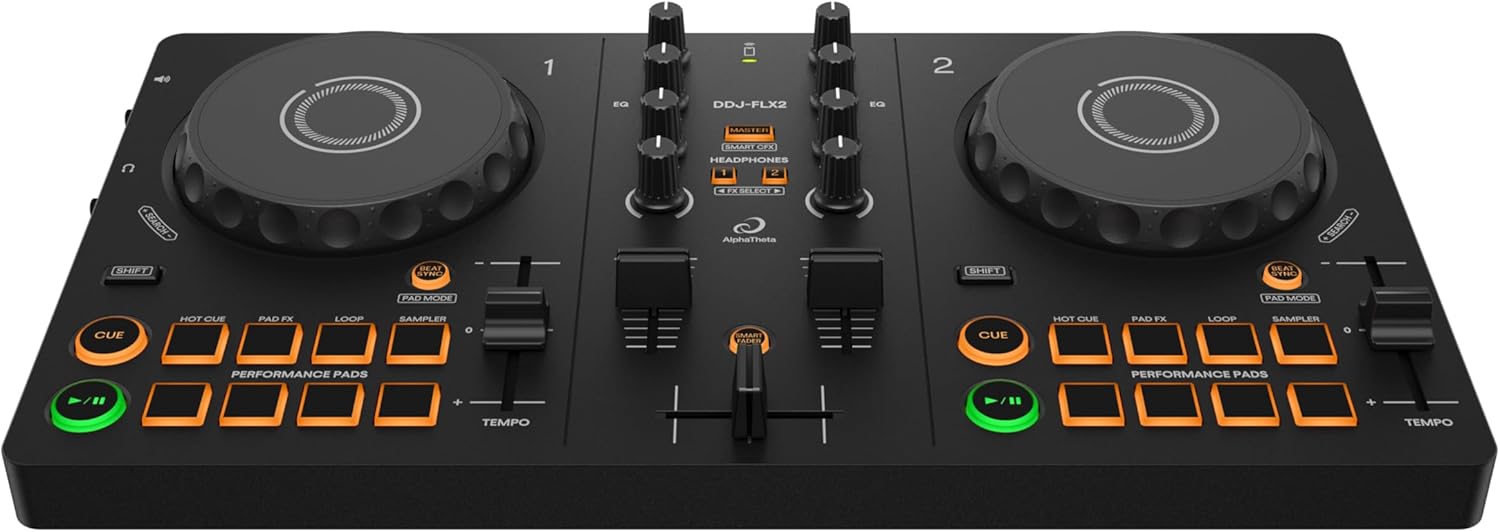
AlphaTheta
$188.95
In stock on Amazon
Check price on AmazonThe Hercules Inpulse 500
The Inpulse 500 (street price around $199–$229) is the budget floor of the three, and its positioning reflects that. Hercules markets it with their proprietary DJUCED software and an AI beatmatch-assist feature aimed at beginners. MixMag’s entry-level controller coverage has consistently treated Hercules as a credible brand rather than a throwaway — the build quality at this price point is genuine. It is the only controller in this group with a verified active gigging owner in the user review record, though that owner specifically notes jogwheel speed as a limitation in a live context.
The Inpulse 500’s strongest case is as a first-year learning tool with a lower financial commitment. Its weakest point — addressed in detail in the software section below — is that its included platform, DJUCED, has narrow industry adoption and does not offer a clear upgrade path to professional software ecosystems.
AlphaTheta
$188.95
In stock on Amazon
Check price on AmazonThe Numbers That Actually Matter
| Feature | DDJ-FLX4 | Mixtrack Platinum FX | Inpulse 500 |
|---|---|---|---|
| Street price (mid-2026) | ~$249–$279 | ~$249 | ~$199–$229 |
| Jog wheel size | 5.6 in. (manufacturer spec) | 5 in. | 5 in. |
| Jog wheel displays | No | Yes | No |
| Included software | rekordbox (DJ) | Serato DJ Lite | DJUCED |
| Serato DJ Pro upgrade path | Yes (paid) | Yes (paid) | No native path |
| Club-layout transferability | High (CDJ-standard) | Medium | Low |
| Primary audience | Aspiring gigging DJs | Home learners, visual learners | Budget-first beginners |
AlphaTheta
$188.95
In stock on Amazon
Check price on AmazonThe jog wheel diameter gap — 0.6 inches between the FLX4 and the other two — matters less than it sounds across a five-inch platter. What matters more is torque feel and platter response. DDJ-FLX4 owners consistently describe the platter feel as the closest to “real” in this price range. Mixtrack Platinum FX owners who flagged sticky platters describe a break-in period for faders, but the crossfader feel appears to be a design-level characteristic rather than something that improves over time.
Hercules
$299.99
In stock on Amazon
Check price on AmazonSound On Sound’s DDJ-FLX4 review specifically addresses build materials and component choices, and its conclusions align with the owner consensus: the FLX4’s physical controls are more consistent with what you’d find one tier up in price. DJ Mag’s controller guide reinforces this positioning, describing Pioneer’s entry-level lineup as unusually transferable to professional contexts compared to competing brands at equivalent prices.
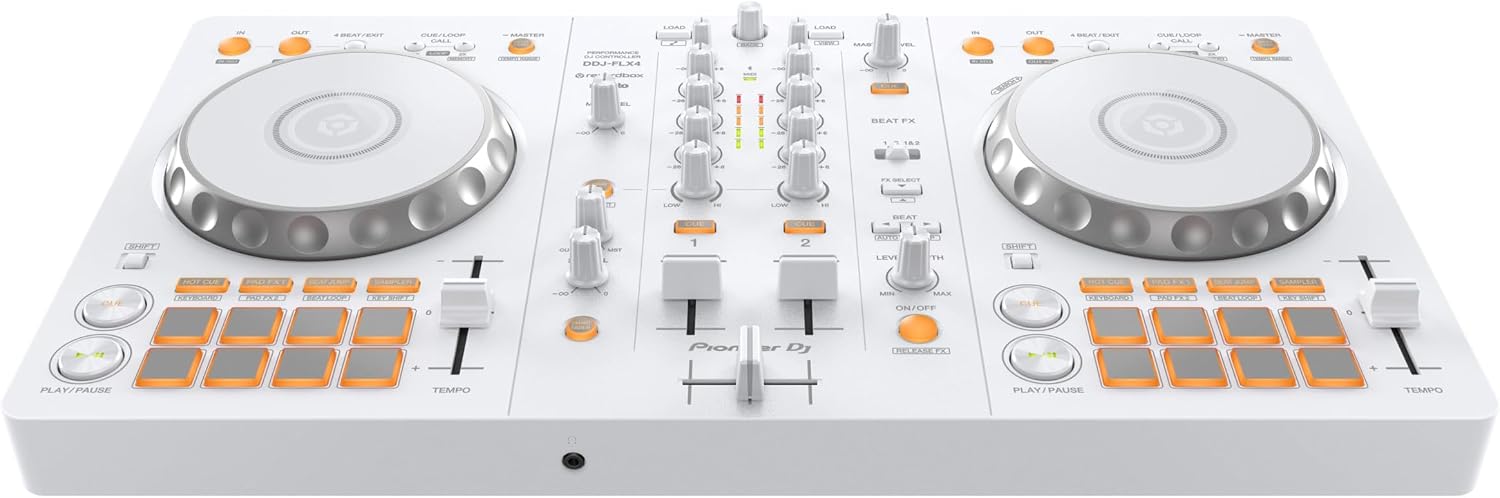
Pioneer
$339.00
In stock on Amazon
Check price on AmazonThe Software Question Is Bigger Than It Looks
The software bundled with each controller determines your ceiling — and this is where the decision gets underrated.
The DDJ-FLX4 includes rekordbox, Pioneer’s own DJ software. Rekordbox is the same platform used to prepare music for CDJ-3000 setups in professional club environments. You analyze your tracks, set cue points, and organize playlists in rekordbox on your laptop, then export to a USB drive that a club’s CDJ can read directly. Learning rekordbox now creates zero friction when you eventually play a venue. It also unlocks a legitimate upgrade path: rekordbox’s paid Performance Plan adds advanced features without switching platforms or relearning a new interface.
The Mixtrack Platinum FX bundles Serato DJ Lite, a stripped-down version of Serato DJ Pro — the industry’s other dominant professional platform. Lite is genuinely usable for learning, but it caps you: no more than two active tracks, limited effects, and no streaming service integration beyond what Lite supports. Upgrading to Serato DJ Pro — required to unlock TIDAL and more advanced features — runs approximately $9.99 per month or around $99 as a one-time purchase as of 2026. The controller is hardware-compatible with Pro, so the upgrade path is real and well-documented. MixMag has covered this Lite-to-Pro upgrade pathway as a common trajectory for Numark users who outgrow the bundled software.
The Inpulse 500’s DJUCED is a Hercules-proprietary platform with narrower industry adoption. It works for home practice, and the AI beatmatch-assist feature is a genuine aid for absolute beginners. But DJUCED skills don’t transfer. If you eventually sit behind a Pioneer setup at a venue or switch to Serato, you are relearning software from scratch. This is not a dealbreaker for a dedicated home practice setup, but it is a real cost to account for when evaluating the Inpulse 500 as a long-term platform versus a 12-month stepping stone.
The Honest Verdict: If X, Then Y
If your actual goal is playing real gigs within the next 12–18 months, the DDJ-FLX4 is the clearest choice in this range. The club-layout transferability to CDJ-3000 setups is documented by both Sound On Sound and DJ Mag as deliberate and functional, the rekordbox integration solves your professional workflow from day one, and owner consensus on build quality is the strongest of the three. Several buyers who explicitly compared it to the DDJ-FLX2 recommend spending the extra $40–$60 to land on the FLX4 rather than upgrading again in six months.
If you’re primarily a home learner who mixes for fun and wants the best visual feedback while figuring out beatmatching, the Mixtrack Platinum FX’s jog wheel displays are a genuine differentiator at this price. No other controller in this range provides real-time track position feedback embedded in the platter. Go in aware of the build quality concerns: some units ship with sticky faders, and the crossfader feel appears to be a design-level choice rather than a break-in issue. If your style depends heavily on precise crossfader work — scratch techniques, hard cuts — that warrants serious weight.
If you’re on a firm budget and want a capable practice tool with lower buy-in, the Inpulse 500 is honest value. One verified gigging owner exists in the review record, so it’s not strictly a practice toy. But the jogwheel speed limitation noted by that owner, combined with DJUCED’s narrow career runway, means the Inpulse 500 is best framed as a learning tool before a planned upgrade — not a long-term platform investment.
Frequently Asked Questions
Is the DDJ-FLX4 genuinely better than the DDJ-FLX2 or just more expensive? Based on manufacturer specs and the coverage in DJ Mag’s “Best DJ Controllers 2025: The Ultimate Guide,” the FLX4 is meaningfully better: larger jog wheels, more performance pads, and a layout closer to professional CDJ standards. Multiple reviewers specifically call out the FLX2 as an inferior starting point and recommend the FLX4 as the correct entry-level Pioneer controller if playing out is your goal.
Do the jog wheel displays on the Mixtrack Platinum FX matter for learning? They’re a legitimate teaching aid, not just a gimmick. Real-time BPM and track position feedback embedded in the platter helps beginners understand what’s happening during a mix. Whether they’re worth the build-quality risk relative to the DDJ-FLX4 depends on your learning style and how central the crossfader is to the techniques you’re developing.
Can the Hercules Inpulse 500 handle real paid gigs or is it strictly a practice tool? There’s at least one verified owner using it for actual gigs in the review record — so it’s not categorically incapable. But that same owner flags jogwheel speed as a live performance issue. For low-stakes paid work such as private parties or small events, it can function. For anything requiring consistent professional reliability, the DDJ-FLX4 is the safer tool.
Which controller in this range works best with streaming services like TIDAL? The DDJ-FLX4 with rekordbox, or the Mixtrack Platinum FX paired with an upgraded Serato DJ Pro license, both support TIDAL integration. Spotify integration remains restricted across most DJ software platforms due to licensing constraints — this is a platform-level limitation, not a controller hardware issue. As of mid-2026, TIDAL remains the most functional streaming option in professional DJ software ecosystems.
Do sticky faders on the Platinum FX resolve with use or stay a problem? Owner reports are mixed. Sticky faders appear to loosen with regular use in most accounts. The crossfader feel — described as cheap by careful reviewers — appears to be a design characteristic rather than a break-in problem. If crossfader precision is central to your style, this is worth weighing seriously before purchase.
Is the white DDJ-FLX4 colorway the same hardware as the standard graphite version? Based on Pioneer DJ’s published product specifications, the white colorway is a cosmetic variant with identical internal hardware, software compatibility, and feature set. It commands a slight premium in some markets due to lower production volume but represents no functional difference.
Research for this article draws on DJ Mag’s “Best DJ Controllers 2025: The Ultimate Guide,” MixMag’s entry and intermediate controller coverage, Sound On Sound’s published DDJ-FLX4 review, Resident Advisor’s gear review archive, and aggregated verified owner feedback across major retail platforms.