September 21, 2026 • Roxanne Flair • 11 min reading time • Prices verified June 4, 2026
The Yamaha MG10XU vs. FIFINE vs. Boytone: Which Mixer Actually Fits Your Home Setup
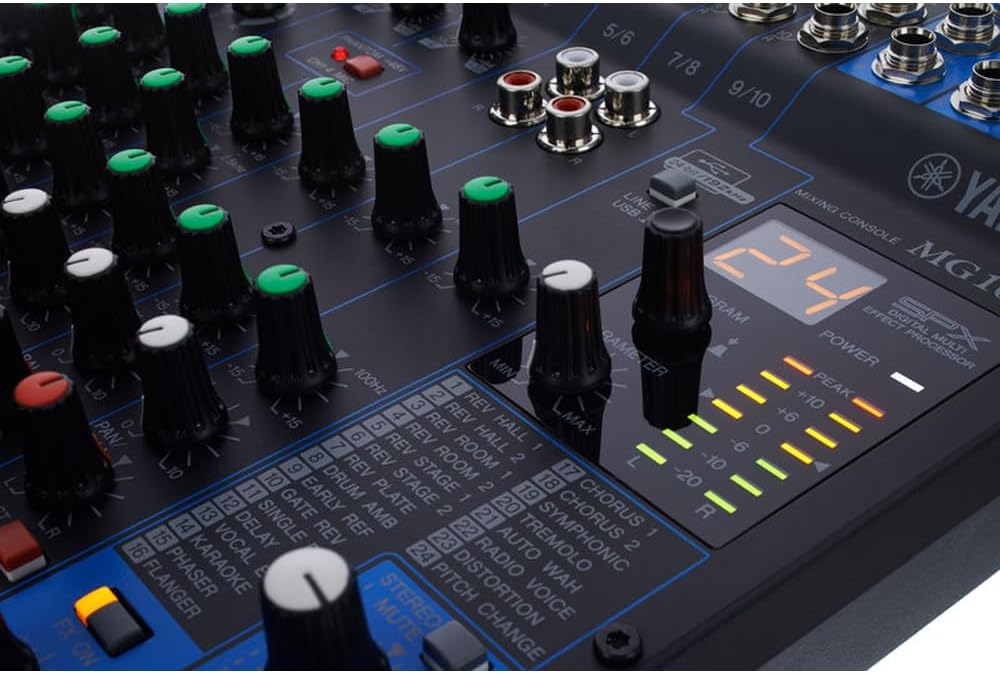
A home mixer is exactly what it sounds like: a small box that lets you plug in microphones, instruments, or music playback sources and blend them together into one clean output — whether that’s going to a speaker, a recording app, or a livestream. If you’ve been juggling volume levels in your laptop’s software, using your phone’s headphone jack as a mic input, or wondering why your recorded vocals always sound thin and echoey, a mixer is the hardware fix that eliminates those workarounds. This guide covers four options that get compared constantly in home-studio and podcasting forums in 2026: the Yamaha MG10XU, the FIFINE AmpliGame SC3, the Boytone BT-930DJ, and the Pyle PMXU43BT rechargeable mini mixer. They span roughly $50 to $210, and the differences between them are meaningful enough to matter — but only if you know which differences to care about for your specific setup.
If you already know what noise floor (the level of background hiss a mixer adds to your signal) and phantom power (the 48-volt charge that condenser microphones need to operate) mean, you’re ready to dive into the comparisons below. If those terms are new, the FAQ at the end defines each one in plain language before answering questions tied to them.
| EDITOR'S PICKYAMAHA MG10XU 10-Input Stereo M… | Mid-tierBoytone Dj Mixers 8 Channel Aud… | Budget pickPyle 5-Channel Rechargeable Min… | |
|---|---|---|---|
| Input channels | 10 | 8 | 5 |
| Bluetooth | — | ✓ | — |
| 48V phantom power | — | ✓ | — |
| Built-in effects | ✓ | ✓ | — |
| Rechargeable battery | — | — | ✓ |
| Price | $294.99 | $179.00 | $46.75 |
| See on Amazon → | See on Amazon → | See on Amazon → |
The Core Tradeoff: Noise Floor vs. Budget
Every mixer in this comparison adds some amount of background noise to your audio. That noise floor — measured in decibels of equivalent input noise (EIN) — is the single biggest quality differentiator between a $50 mixer and a $200 one. You can’t fix a high noise floor in post-production; you can only mask it with loud enough source audio, which isn’t always possible when you’re recording in a quiet room at normal speaking volume.
The Yamaha MG10XU’s specification sheet, published by Yamaha Pro Audio in the MG10XU Owner’s Manual and Specification Sheet, lists an EIN of -128 dBu. That is genuinely quiet. Sound On Sound’s “Budget USB Mixers Compared” (2024) identifies the MG series as the threshold below which noise becomes audible in home recording without significant acoustic treatment. Budget mixers in the $50–$80 range typically measure around -110 to -118 dBu — a gap that owners consistently describe as a faint but persistent hiss when monitoring through headphones or when waveforms are zoomed in during editing.
That gap is the whole “buy once, cry once” argument you’ll see repeated whenever these mixers come up for comparison. Buyers who started with a sub-$60 mixer and upgraded to the MG10XU overwhelmingly report that the noise floor was the specific driver of the upgrade — not missing features, not broken hardware, but a hiss they couldn’t unhear once they’d noticed it.
By the numbers:
| Mixer | Approx. Street Price (2026) | EIN (published spec) | Phantom Power | USB Audio |
|---|---|---|---|---|
| Yamaha MG10XU | ~$190–$210 | -128 dBu | Yes (48V) | Yes (2-in/2-out) |
| FIFINE AmpliGame SC3 | ~$55–$70 | Not published | Yes (48V) | Yes |
| Boytone BT-930DJ | ~$50–$65 | Not published | No | Yes |
| Pyle PMXU43BT | ~$60–$80 | Not published | No | Yes |
The Four Mixers, Head to Head
Yamaha MG10XU: The Case for Spending More Upfront
The MG10XU is a 10-channel analog mixer with a built-in USB audio interface (the “U” in MG10XU) and onboard SPX digital effects (the “X”). The SPX effects unit adds reverb and chorus processing that Yamaha carries across its professional live-sound gear. Wirecutter’s “The Best Audio Interfaces and Mixers for Podcasters” (2025) highlights the MG series for exactly this reason — the reverb sounds natural rather than heavily processed, which matters when you’re using effects to add presence to a vocal rather than to create an obvious effect.
The 48V phantom power means it works with condenser microphones, which are the standard choice for podcasting and vocal recording because they capture more detail and presence than the dynamic mics typically bundled with budget kits.
The honest caveat: the MG10XU is not the most intuitive mixer for a first-time buyer. The channel strip layout — gain, EQ bands, aux sends, fader — assumes you’ve either read a mixing primer or are willing to experiment. Per Yamaha’s own MG10XU Owner’s Manual and Specification Sheet, the high-pass filter (a switch that cuts low-frequency rumble below 80Hz from mic channels) requires manual engagement per channel, which trips up new users who wonder why their recordings sound boomy. Reading the manual before the first session saves thirty minutes of confusion.
For the home podcaster, solo musician recording demos, or anyone running a regular livestream with more than one audio source, the MG10XU is the one to reach for first. The noise floor alone justifies the price premium over entry-level options when clean, quiet audio is the benchmark.
YAMAHA
$294.99
In stock on Amazon
Check price on AmazonFIFINE AmpliGame SC3: Honest Value, One Catch
The FIFINE SC3 is a four-channel USB mixer aimed squarely at streamers and YouTube creators. It includes per-channel mute buttons, a headphone monitoring output, and RGB lighting — which reviewers consistently describe as functional but limited to a handful of color modes rather than full-spectrum customization. For under $70, those are genuinely useful features for someone assembling a streaming station on a tight budget.
The 48V phantom power support is real and functional. FIFINE Technology’s AmpliGame SC3 Product Page and FAQ (2025) confirms the phantom power implementation, and verified-purchase reviewers confirm it works as labeled with standard condenser microphones.
The one consistent gap in aggregated buyer feedback: the SC3 does not ship with an XLR cable. An XLR cable is the standard, balanced connector used between a microphone and a mixer input — without one, the mixer is literally unusable with a condenser mic out of the box. This catches buyers off guard regularly enough that it appears in the top critical reviews across multiple retail platforms as of early 2026. Budget an extra $8–$15 for a quality XLR cable alongside the SC3 and factor that into your price comparison with the Yamaha.
The noise floor is not published in FIFINE’s spec documentation. Owners describe it as acceptable for voice recording in a treated room but perceptibly noisier than the Yamaha when used in an untreated home space or when recording at lower gain levels. Sound On Sound’s “Budget USB Mixers Compared” (2024) frames this tier of mixer as workable for casual podcasting and streaming but notes that the noise gap becomes apparent in quiet, untreated rooms — which describes most home setups. If you’re recording podcasts for casual distribution, the SC3 is good enough. If silence in the background matters to your workflow or your audience, the noise floor is a difference you’ll eventually notice.
Boytone
$179.00
In stock on Amazon
Check price on AmazonBoytone BT-930DJ: Understand What You’re Actually Getting
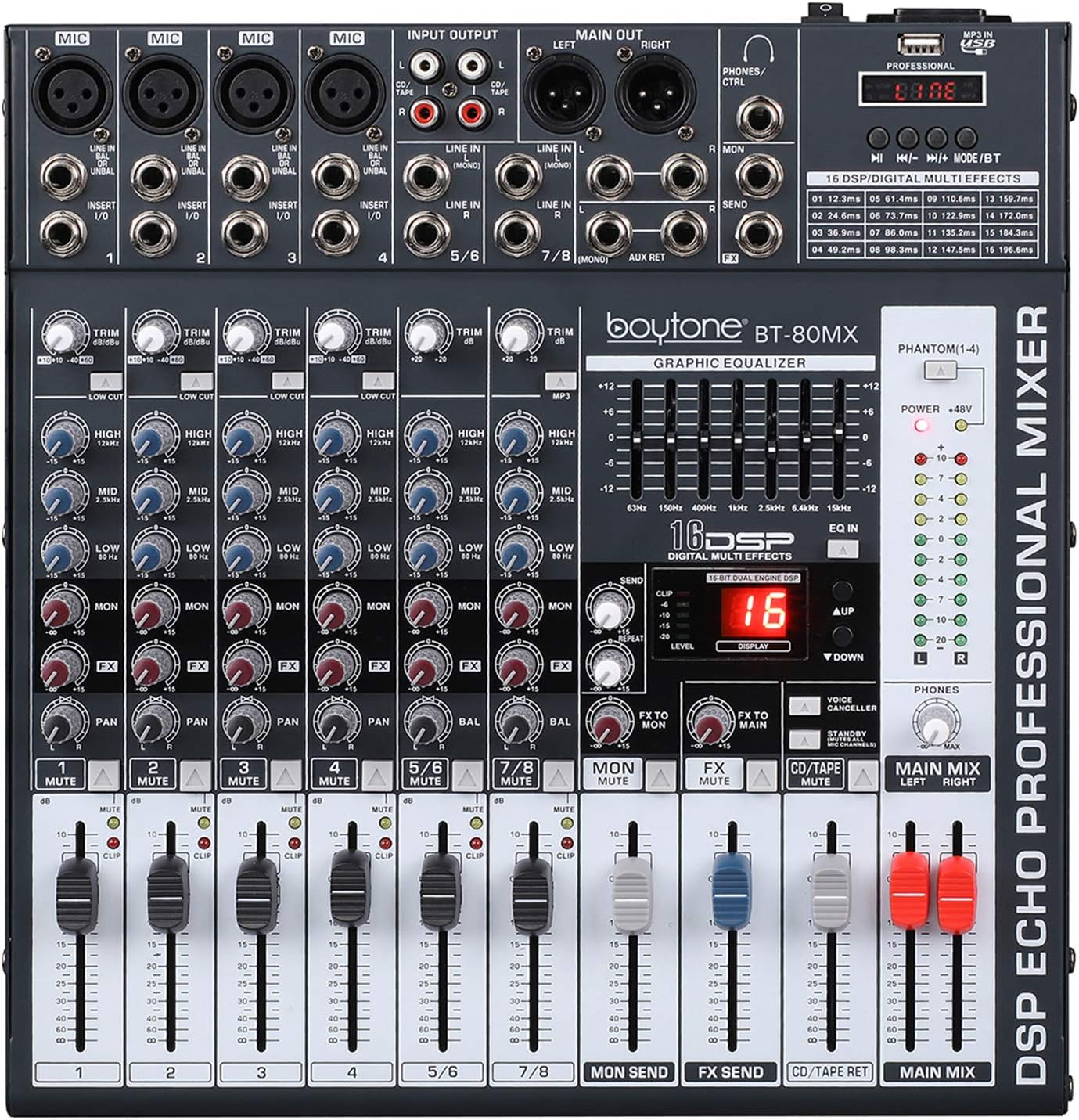
The Boytone is frequently purchased by buyers who see “16 DSP effects” on the listing and assume they’re getting a versatile multi-effects processor. Verified-purchase analysis is consistent on this point: the 16 “effects” are a single echo function with 16 different delay time values. There is no reverb. There is no chorus, flanger, or modulation of any kind. The 16 settings vary the length of the echo tail and nothing more.
The included documentation, per multiple reviewers, does not clearly explain this distinction — buyers spend time trying to activate effect types that simply do not exist in the hardware. Going in with that expectation managed will prevent the most common source of frustration with this unit.
The Boytone also does not include 48V phantom power, which rules it out for condenser microphones entirely. If your microphone is a dynamic mic — a Shure SM58 or SM7B type, which generates its own signal without external power — the Boytone will work fine for routing audio to a speaker or recording at a basic level. But if you’re using a condenser, you’ll need either a different mixer or a separate inline phantom power adapter, which partially defeats the purpose of a budget purchase.
Where the Boytone legitimately earns consideration: it’s a physically larger unit with more input options than the FIFINE at a similar price point. For someone running a small party or informal event with multiple music sources and no need for studio-quality recording, it covers the basics. Go in with clear eyes about the echo situation and it won’t disappoint. Go in expecting a versatile effects processor and you’ll be frustrated within the first session.
Pyle
$46.75
In stock on Amazon
Check price on AmazonPyle PMXU43BT: The Battery-Powered Niche That Nothing Else Fills
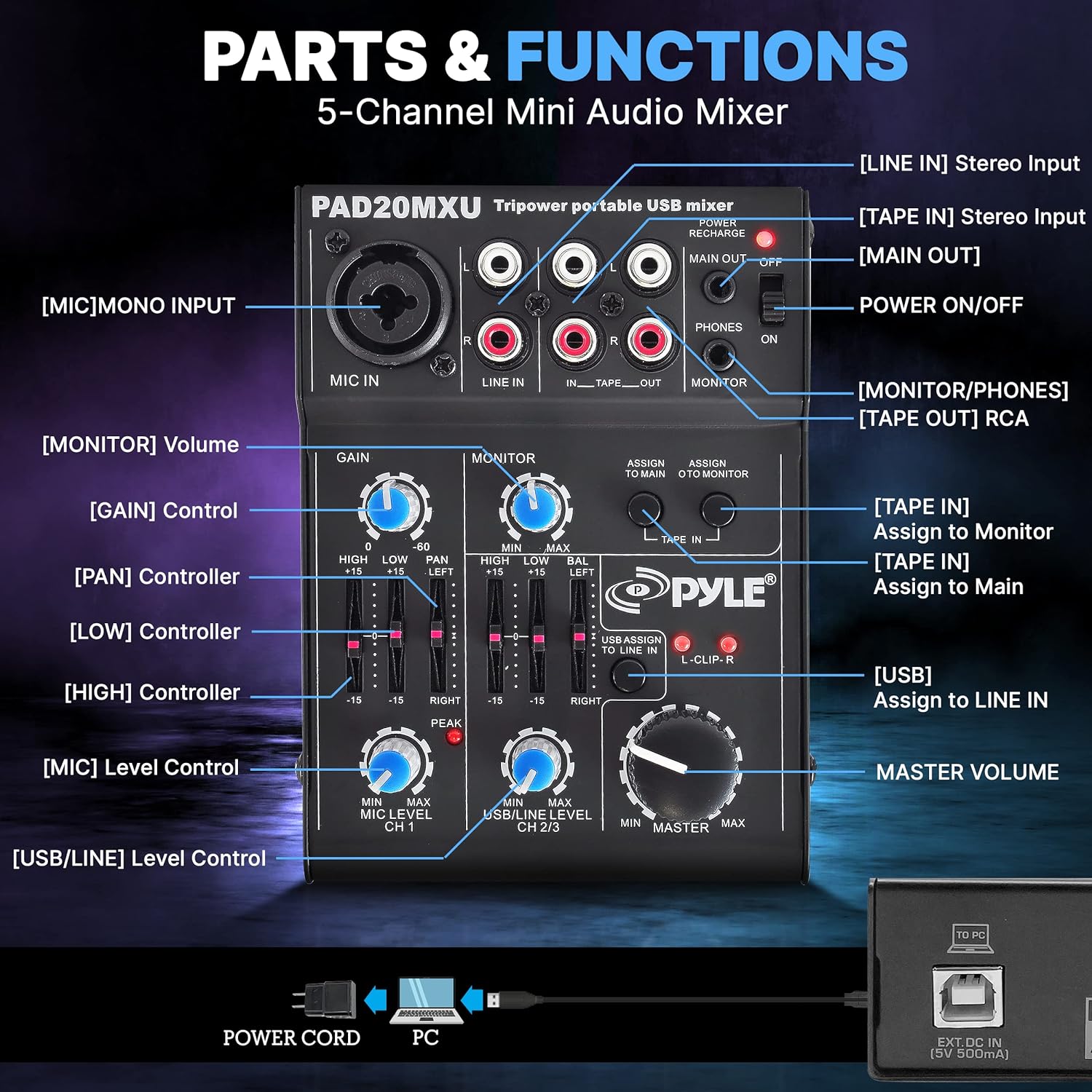
The Pyle PMXU43BT occupies a completely different lane from the other three mixers in this comparison. The differentiation that owners consistently call out — and that explains why it keeps surfacing in specific search results rather than general mixer roundups — is that it is battery-powered and includes USB audio in/out in a sub-$80 package.
That combination is rare enough that it has developed a distinct owner demographic: fitness instructors running virtual classes who need to mix music playback with a microphone input without being tethered to a wall outlet. Reviewers from this use case specifically describe searching for a battery-powered USB mixer and finding the Pyle as essentially the only sub-$100 option that met both criteria simultaneously.
The tradeoffs are straightforward. No phantom power means no condenser microphones. The preamp quality and form factor reflect the price tier, and the Pyle is not a mixer you’d choose for audio you’re publishing or selling. For a fitness instructor teaching from a living room or gym floor on a laptop, those tradeoffs are entirely acceptable. For anyone whose primary goal is clean audio recording, they are not. The Pyle PMXU43BT is a right-tool-for-specific-job recommendation — but within that specific job, nothing else in this price range competes.
Pyle
$46.75
In stock on Amazon
Check price on AmazonFrequently Asked Questions
Is the Yamaha MG10XU worth the price premium over a $50–$70 mixer for home podcasting? If you’re publishing regularly and care about audio quality, yes. The -128 dBu EIN published in Yamaha’s MG10XU Owner’s Manual and Specification Sheet represents a meaningful real-world difference that owners consistently describe as the reason they upgraded from budget mixers. Sound On Sound’s “Budget USB Mixers Compared” (2024) identifies this spec range as the threshold at which noise becomes inaudible in typical home recording conditions. If you’re recording casually or experimenting, the FIFINE is a reasonable starting point — but plan for the upgrade if your standards rise.
Does the FIFINE SC3 come with everything you need out of the box? No. The SC3 does not include an XLR cable, which you need to connect a standard microphone. This is the most frequently cited surprise in buyer reviews and is confirmed absent in FIFINE Technology’s AmpliGame SC3 Product Page and FAQ. Add an XLR cable to your order — budget $8–$15 for a quality cable.
Are the Boytone’s 16 DSP effects actually useful or primarily a marketing claim? Partially a marketing claim. Per consistent verified-purchase analysis, the 16 effects are a single echo function with 16 different delay time settings — not 16 distinct effect types. There is no reverb, chorus, or modulation. Useful if you specifically want echo with adjustable tail length; misleading if you expected a multi-effects processor.
Can the Pyle mini mixer handle a condenser microphone? No. The Pyle PMXU43BT does not supply 48V phantom power, so it will not run condenser microphones. It works with dynamic microphones, which generate their own signal without external power. If your microphone requires phantom power — check its specification sheet — the Pyle is not compatible.
Which of these mixers works without a laptop for party or event hosting? The Boytone and the Pyle both function as standalone mixers for routing audio to speakers without a connected computer. The Yamaha MG10XU and FIFINE SC3 can also operate in analog-pass-through mode, but their USB features only activate with a computer connected. For a party with multiple music sources going to a PA speaker, any of the four will route audio; the Boytone’s larger input count makes it the most practical choice for multi-source informal event use.
How noticeable is the noise floor difference in a typical home recording setup? Audibly noticeable in quiet rooms at normal recording levels. Sound On Sound’s “Budget USB Mixers Compared” (2024) frames the audibility threshold around the -128 dBu range that the Yamaha achieves. Mixers operating around -110 to -118 dBu produce a hiss that’s subtle in loud environments but becomes apparent when listening back through headphones or editing quiet passages. In an acoustically treated room with a loud source, the gap narrows. In a typical untreated home room recording voice at conversational levels, it’s the difference between clean audio and audio that benefits from noise reduction in post.
The decision frame — if X, then Y:
- Recording podcasts or vocals you’re publishing → Yamaha MG10XU. The noise floor is the purchase.
- Streaming or making YouTube content on a budget, own an XLR cable → FIFINE AmpliGame SC3.
- Running a party, don’t need recording quality, using dynamic mics only → Boytone BT-930DJ, but go in knowing the effects situation.
- Teaching fitness classes virtually, need battery power and USB audio → Pyle PMXU43BT, and nothing else in this tier comes close.