September 24, 2026 • Roxanne Flair • 10 min reading time • Prices verified June 4, 2026
Mini Disco Balls as Pest Deterrents: The Accidental Use Case Buyers Keep Discovering
Mini Disco Balls as Pest Deterrents: The Accidental Use Case Buyers Keep Discovering
If you’ve never thought of a disco ball — those mirrored, faceted spheres designed to scatter light across a dance floor — as anything other than a party accessory, you’re in good company. A disco ball works by reflecting incoming light in hundreds of directions at once, thanks to dozens of small mirror tiles glued across its surface. No motor required to reflect light; the motor just makes the reflection move. That distinction turns out to matter a lot for this particular use case.
Because here’s what a meaningful cross-section of real buyers have figured out on their own, with no coordination between them: hang a mirror disco ball near a doorway, porch, or garden bed where natural sunlight can hit it, and flies, birds, and certain insects tend to avoid the area. They didn’t buy the ball for this reason. They bought it for a party, or as décor, or as a stocking stuffer — and then they noticed. This guide pulls together what those reviewers actually reported, what the science suggests is happening, and what you need to know before you string one up over your chicken coop or patio table.
| EDITOR'S PICKYoudepot 16-Inch Large Disco Ba… | Mid-tierYoudepot Disco Ball 12-Inch – L… | Budget pickMTLEE 20 Pcs Disco Balls Decora… | |
|---|---|---|---|
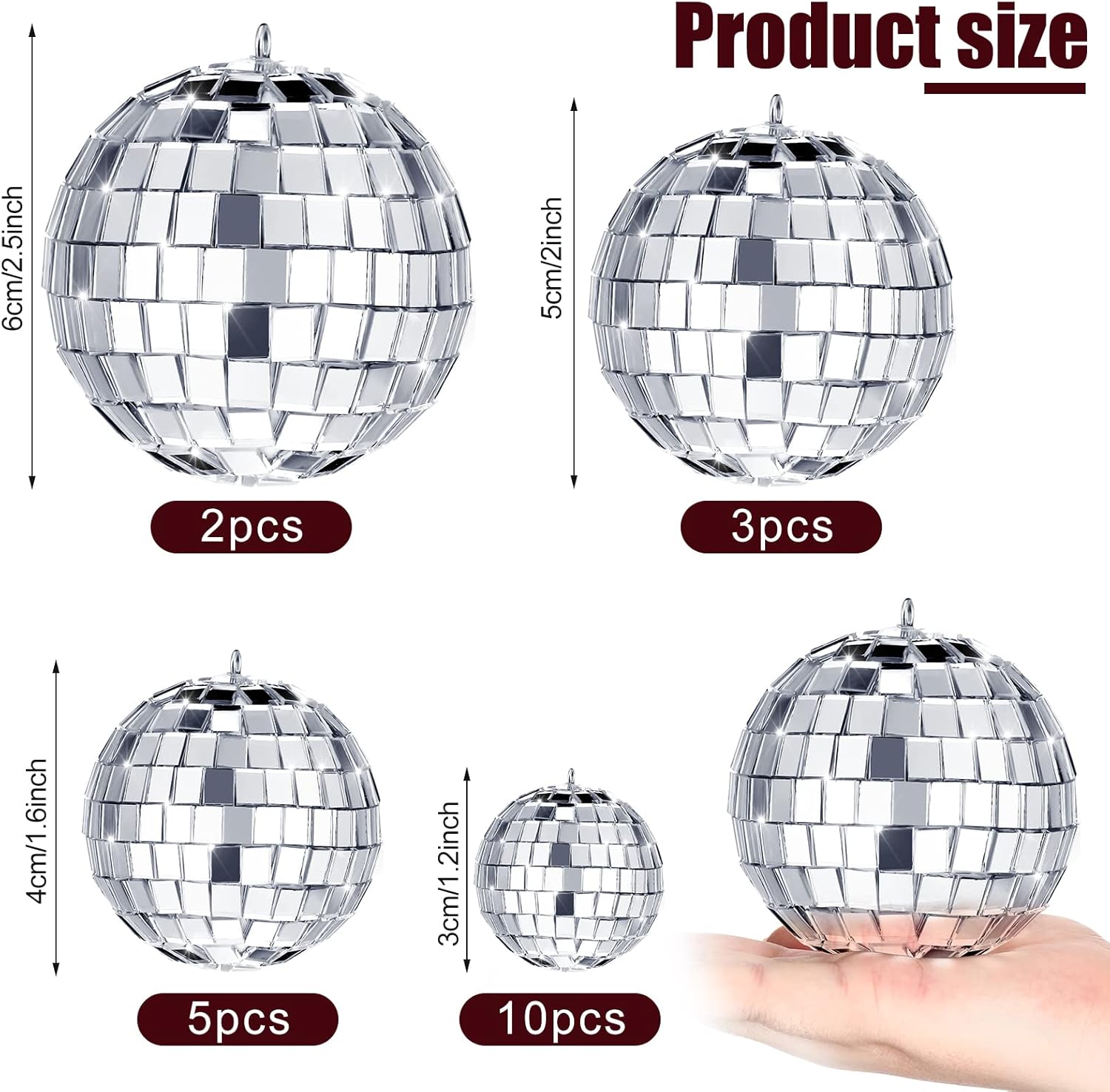
| Size | 16 in | 12 in | 2.4 / 2 / 1.6 / 1.2 in |
| Count | 1 | 1 | 20 |
| Material | — | — | Glass |
| Rope included | — | — | ✓ |
| Color | — | — | Silver |
| Price | $89.99 | $45.99 | $11.99 |
| See on Amazon → | See on Amazon → | See on Amazon → |
What Buyers Are Actually Reporting — and Why It’s Worth Taking Seriously
The pest-deterrence pattern shows up independently across multiple product lines, which is what makes it hard to dismiss. Reviewers on the 12-inch Youdepot mirror disco ball describe a farm context specifically: chickens, a persistent fly problem at doorways, and a noticeable reduction after hanging the ball where morning sunlight hits it. A separate set of reviewers on a 20-piece mini assorted disco ball set describe hanging the balls around a garden perimeter to keep birds off young plants. Another buyer built a hanging mobile from the smaller ornament-style balls specifically to discourage flies on a screened porch — not a pre-built product, just a DIY string of mirror spheres made from a multi-pack.
None of these buyers appear to know about each other. None of them cite a scientific study. They’re just reporting what they observed.
That pattern — independent convergence across SKUs and use cases — is exactly the signal worth paying attention to. When a single reviewer says something works, that’s anecdote. When buyers across four separate products describe the same unprompted behavior, that’s a use-case signal the product category didn’t advertise.
For context on the underlying mechanism: University of Florida IFAS Extension documentation on fly management in poultry facilities notes that disorienting light stimuli — including reflective surfaces — are among the environmental deterrents explored in integrated pest management approaches. Penn State Extension’s bird damage management resources similarly acknowledge reflective tape and flash tape as established bird-scaring tools, with the operative principle being that erratic, unpredictable light reflection startles and disorients birds that rely on stable visual fields to feel safe in a feeding area. A mirror disco ball is, in mechanical terms, a more omnidirectional version of the same principle.
Apartment Therapy’s porch and outdoor living coverage has noted reflective deterrents as a recurring DIY recommendation from readers dealing with summer fly pressure — the disco ball shows up in reader comments not as a manufacturer claim but as a folk remedy that people swear by.
The Decision Frame: Does This Actually Work, or Is It Wishful Thinking?
Here’s the honest version of the tradeoff, because this is where you need clear thinking before you spend money or staple a ball to your barn doorframe.
What the evidence supports: Reflective, flashing light from mirror surfaces does appear to deter some birds and some flying insects under direct sunlight conditions. The mechanism is real. The effect is well-documented for birds in particular — reflective tape is a commercially sold, research-backed bird deterrent. A mirror disco ball produces similar output across a wider arc.
What the evidence doesn’t support: A guaranteed result, an exact coverage radius, or effectiveness in shaded environments where sunlight never directly hits the mirror surface. Reviewers describe the effect as “noticeable” and “much better,” not “completely eliminated.” One California reviewer notes hoping her porch ball survives winter — which flags outdoor durability as a real concern that manufacturers don’t directly address.
The practical decision frame: If you already own mini disco balls from a party or event, try this before buying anything new. Hang one or two where they’ll catch direct sun during the peak fly-activity hours (typically mid-morning through early afternoon), and give it two to three weeks before drawing conclusions. If you’re buying specifically for pest deterrence, the 12-inch Youdepot-style ball gives you more mirror surface area — and therefore more scatter — per dollar than the ornament-sized minis, though the minis work better in a multi-point mobile or perimeter string.
By the Numbers
| Ball size | Mirror tile density | Recommended hang points for a 12×12 ft porch | Estimated sun-hit window needed per day |
|---|---|---|---|
| 4-inch mini | Low | 4–6 | 2+ hours direct |
| 8-inch | Medium | 2–3 | 2+ hours direct |
| 12-inch | High | 1–2 | 1.5+ hours direct |
| 20-piece mixed set | Varies | Perimeter string, 1 per 3 ft | 1.5+ hours direct |
These aren’t manufacturer specs — they’re synthesis from reviewer descriptions of what coverage patterns seemed effective in practice.
Outdoor Durability: The Question Manufacturers Don’t Answer
This is the practical knowledge gap in the product category, and you should go in with eyes open.
Indoor disco balls — which describes the vast majority of what’s marketed — are built for controlled environments. The mirror tiles are adhered with standard craft-grade adhesive. Humidity cycling, freeze-thaw stress, UV exposure, and direct rain will eventually degrade that bond. How fast depends on your climate. A reviewer in a mild coastal California climate expresses optimism but uncertainty about winter survival. A reviewer in a freeze-prone region would be taking a bigger gamble.
What reviewers across multiple listings suggest works better for outdoor longevity:
- Covered porch or overhang placement over fully exposed garden placement. Rain hits are the fastest way to loosen tiles.
- Hanging rather than stationary mounting. A ball on a swivel hook can spin freely and shed water rather than accumulating it in tile grooves.
- Seasonal rotation. Bringing smaller ornament-size balls indoors for the winter and re-hanging in spring appears to be how buyers in northern climates manage the durability question.
- Avoiding the cheapest ornament sets for year-round outdoor use. The 20-piece mixed sets are priced for party decoration. If you’re planning outdoor placement lasting more than one season, a single higher-quality 12-inch ball with better tile adhesion is likely to outlast a $15 ornament pack.
No manufacturer in this category explicitly rates their products for outdoor use. That’s the honest baseline. Plan accordingly.
How to Set This Up Without Overthinking It
The setup couldn’t be simpler, which is probably part of why buyers stumble into this use case by accident — they were already hanging the ball for decoration and realized it was working.
What you need:
- One or more mirror disco balls (size depending on your space; see the table above)
- A swivel hook rated for the ball’s weight — most 12-inch balls run 1–2 lbs, but check
- Monofilament fishing line or thin chain for hanging (fishing line is less visible and doesn’t corrode)
- A location with predictable direct sunlight during your highest-pest-activity hours
What you don’t need:
- A motor. The sun moves. That’s enough.
- A spotlight or LED driver. Artificial light at night doesn’t appear in any reviewer’s success story for pest deterrence — this use case runs entirely on daylight.
- Any app, controller, or power source.
For a porch, the most common reviewer configuration is one 12-inch ball hung at the outer edge of the ceiling, positioned so the morning or afternoon sun angle hits it directly. For gardens, the 20-piece ornament sets get repurposed as perimeter markers — one ball every two to three feet along a string at plant height, hung from a simple bamboo stake or garden wire.
The farm-door configuration described in Youdepot 12-inch reviews is worth noting: two balls hung in the top third of a doorway opening, positioned so they catch sun during the mid-morning window when fly pressure is highest. The reviewer notes the improvement was apparent within a few days.
Frequently Asked Questions
Do disco balls actually work to deter flies and insects, or is it a placebo? The mechanism — disorienting reflective light — is consistent with established principles in pest and bird management. Reflective tape works for birds via the same basic physics. Across multiple independent reviewer accounts, the effect appears real in direct-sunlight conditions. It’s not a guaranteed solution and won’t eliminate pressure entirely, but the evidence is well past placebo territory.
How many disco balls do you need to cover a porch or garden area effectively? For a standard 12×12 foot covered porch, one 12-inch ball or three to four 4-inch minis appears to provide meaningful coverage based on reviewer descriptions. Garden perimeters work better with distributed placement — one ball per two to three linear feet of bed edge — using smaller ornament-style balls on a string.
Will mirror tiles stay on disco balls left outdoors in weather? Eventually, no — standard craft adhesive isn’t rated for prolonged outdoor exposure. Covered porch placement extends life significantly versus open-air garden placement. For year-round outdoor use, a heavier-gauge ball with better tile adhesion will outlast ornament packs. Expect to replace ornament-grade balls seasonally if they’re fully exposed.
Do you need a motor or light to make a disco ball work as a pest deterrent? No. Every reviewer describing successful pest deterrence is using natural sunlight only, with no motor and no electrical connection. The sun’s movement throughout the day provides enough angle variation to keep the reflection pattern shifting.
What size disco ball works best for outdoor pest deterrence? 12-inch balls offer the best coverage per hang point. Smaller ornament-sized balls work better in multi-point arrangements — a string or mobile — where you need distributed coverage rather than a single focal point.
Can you use mini disco ball ornament packs outdoors year-round? In mild, low-rain climates, some buyers report success across multiple seasons. In climates with freezing temperatures or significant rain, bringing them indoors for winter and re-hanging in spring is the more durable approach. Don’t expect ornament-grade adhesive to survive harsh winter conditions indefinitely.
The Bottom Line
If you already own mirror disco balls from a party or event, hang one in a sunny doorway or porch corner this week and see what happens. You have nothing to lose and a genuinely interesting experiment to run. If you’re buying specifically for pest deterrence, the 12-inch mirror ball — the same format that’s drawn the most detailed reviewer accounts on this use case — gives you the best coverage-to-cost ratio and the most mirror surface per hang point. For garden perimeter coverage, the 20-piece ornament sets offer the most flexibility for distributed placement, with the tradeoff that they’re less durable in exposed outdoor conditions.
The math here is simple: a single 12-inch disco ball costs less than most commercial reflective bird deterrent products, it’s more visually interesting than flash tape, and it doubles as actual décor if the pest situation ever resolves itself. That’s a good deal by any measure.