August 5, 2026 • Roxanne Flair • 10 min reading time • Prices verified June 4, 2026
Disco Ball Decoration Sets for Photography: Senior Portraits, Bachelorettes, and DIY Shoots
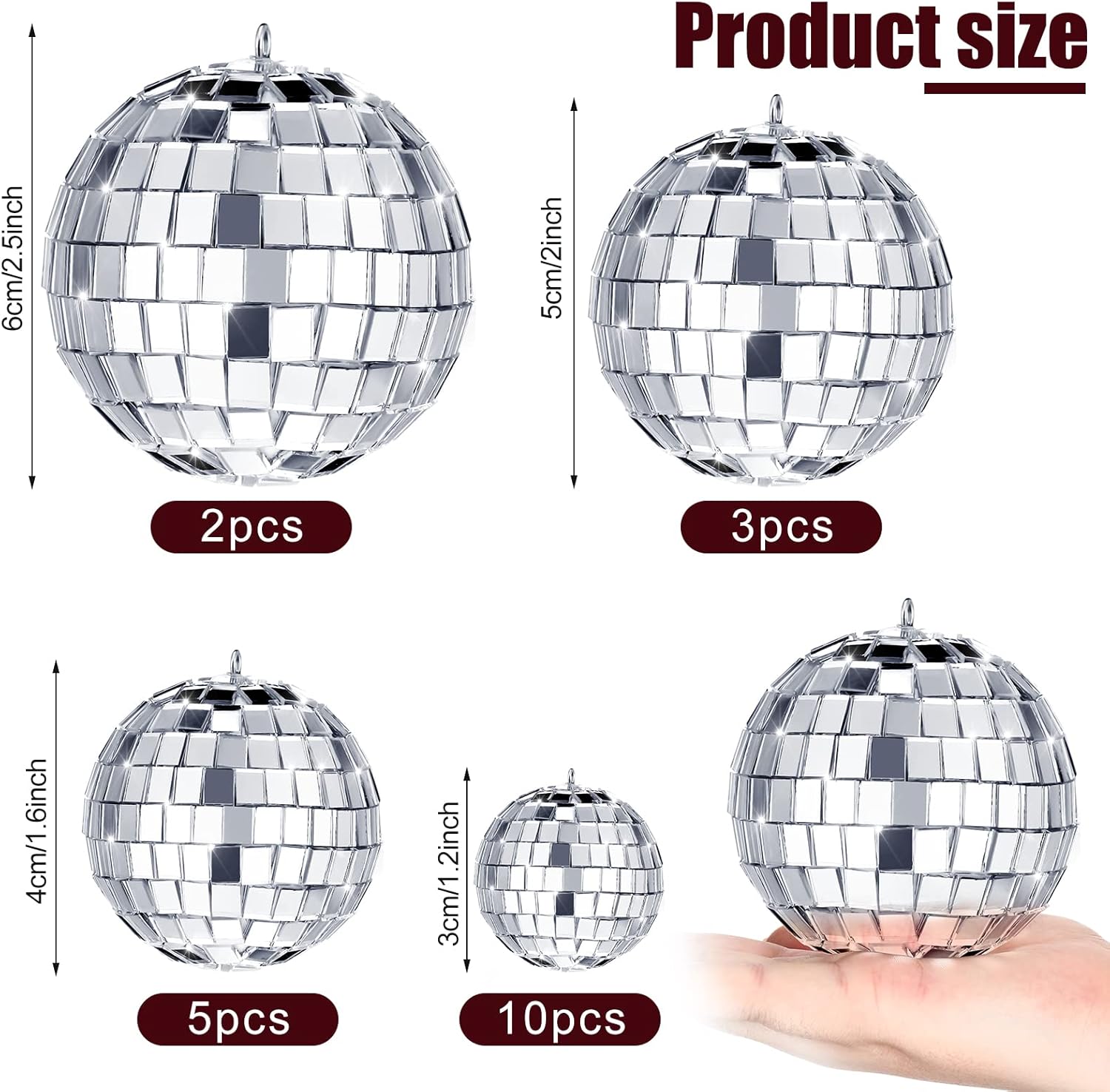
If you’ve ever scrolled past a photo that stopped you cold — a teenager laughing in front of a wall of silver shimmer, or a bachelorette group shot where the light seems to be doing something magical — there’s a good chance a disco ball (a mirrored sphere covered in small reflective tiles that scatter light in every direction) was somewhere in the frame. Disco balls aren’t just dance-floor nostalgia anymore. They’ve become a legitimate photography prop, showing up in senior portraits, engagement shoots, birthday flat-lays, and DIY home studio setups precisely because they add visual texture and catch light in a way no paper backdrop can. This guide is for the person who already knows they want that look and needs to figure out which set to actually buy — including the honest tradeoffs between balloon-style props, multi-piece assorted sets, and single statement balls.
What “Disco Ball Decoration Set” Actually Means (and Why It Matters for Photos)
Walk into a party supply search and you’ll find at least four distinct product categories all using the phrase “disco ball set.” Knowing the difference before you order saves you from a box of flat foil balloons when you wanted a genuine mirrored sphere.
Mirrored ball sets use real or plastic mirror tiles — small squares of reflective film or glass-like acrylic — bonded to a foam or styrofoam core. These are the ones that scatter visible light reflections across walls and ceilings. 4D disco balloons are mylar (metallic foil) balloons pre-shaped into a sphere rather than a flat circle; they read as disco balls in photos because of their faceted silver surface, but they don’t create the same light scatter. Assorted multi-piece sets bundle several sizes of mirrored balls together — sometimes 17 to 32+ pieces spanning 1-inch to 6-inch diameters — and are designed primarily as tablescapes or garland elements rather than hero props. Large single balls in the 8-inch, 12-inch, or 32-inch range are the statement pieces most photographers have in mind when they picture a senior portrait backdrop.
For photography specifically, the distinction between these categories determines three things: how convincing the prop looks on camera, whether it creates live light scatter in-frame, and how forgiving it is when handled repeatedly across a shoot session.
The Four Prop Tiers: Which Format Fits Your Shoot
Tier 1 — Assorted Multi-Piece Sets (17–26+ Pieces)
Reviewers of 17-piece assorted sets consistently describe them as exceeding expectations on build quality for the price point, and at least one buyer used hers specifically for at-home senior portraits with no professional studio — describing the results as exactly matching her daughter’s vision. That’s meaningful real-world validation. The multi-size variety (typically ranging from roughly 1.5 inches to 4–6 inches) gives you flexibility for both foreground detail work and background texture.
The 26-piece assorted sets earn consistent praise for sparkle and variety across tablescapes and garland arrangements — which is also the most practical use case for DIY photography, where you want to build a surface or backdrop rather than hang a single ball. Reviewers specifically note the multi-size range works well for flat-lay compositions where you’re controlling depth and layering elements.
Tradeoff to name explicitly: assorted sets are optimized for decor layering, not for a single focal-point hero shot. If your senior portrait concept calls for the subject to hold or stand beside a single significant ball, a 4-inch piece from a 17-piece set won’t carry the frame. Use the assorted set as the supporting environment, then pair with a larger single ball for the anchor.
Tier 2 — 4D Disco Balloons (KatchOn 32-Inch and Similar)
The KatchOn 32-inch balloon set has accumulated specific, useful buyer intelligence: owners report it holds inflation without helium for a full week, and — critically for photography — the ball-shaped (not flat) silhouette reads convincingly as a three-dimensional disco ball on camera. That distinction matters more than it might seem. Flat mylar balloons photograph as obviously two-dimensional; the 4D sphere shape preserves the illusion even at close focal lengths.
The math on helium vs. air inflation: For a one-day shoot, air inflation is the obvious call. Reviewers confirm the shape holds without helium, which also means you’re not racing against a deflation clock mid-session. For multi-day event photography (a three-day bachelorette weekend, for instance), the reported one-week hold time provides real scheduling margin.
Tradeoff: Mylar balloon surfaces don’t create actual light scatter the way mirrored tiles do. In bright sunlight or under a direct flash, the faceted surface reads as sparkly and dimensional on camera, but you won’t get the moving reflection patterns on surrounding walls. If that kinetic light effect is part of your creative brief, a mirrored ball is the correct tool.
Tier 3 — Single Mirrored Balls (8-inch and 12-inch)
These are the workhorses of the photography prop world for portrait-specific setups — large enough to anchor a composition, small enough to hold or position easily. The honest caveat flagged repeatedly by buyers of both the 8-inch and 12-inch single balls: they typically do not include hanging hardware. No hook, no swivel motor mount, no ceiling attachment. If your concept requires the ball to hang freely (the classic spinning overhead shot), you’re sourcing the rigging separately, which adds friction to a quick setup.
For poses where the subject holds the ball or it rests on a surface, the missing hardware is a non-issue. For suspended shots, budget the extra step.
Tier 4 — Disco Cloud Shapes and Specialty Props
The disco cloud prop earns a specific differentiator that’s easy to overlook: it ships with replacement mirror squares. One reviewer noted this wasn’t something they’d have thought to expect, and it turned out to matter — mirror tiles shed from any handled prop over time, and having replacements extends the usable life of a prop that gets picked up and repositioned dozens of times across a shoot. For commercial photographers or anyone who rents props to clients, that’s not a minor feature.
By the Numbers
| Format | Typical Size Range | Light Scatter | Helium-Free Option | Includes Hardware |
|---|---|---|---|---|
| Assorted mirrored set (17–26 pc) | 1.5 in – 6 in | Yes | N/A | Rarely |
| 4D disco balloon (KatchOn 32 in) | 32 in diameter | No | Yes (air-stable ~1 week) | No |
| Single mirrored ball (8–12 in) | 8 in or 12 in | Yes | N/A | Typically no |
| Disco cloud shape | Varies | Yes | N/A | Varies; some include replacement tiles |
Setup Strategy: Light, Hang, and Location
Apartment Therapy’s styling coverage notes consistently that the quality of a disco ball’s visual effect is almost entirely dependent on the light source — not the ball itself. This is practical guidance for photography setups: a disco ball in a dim room with no direct light source creates minimal visible scatter. A disco ball hit by a narrow, direct beam — even a single LED par can, a clip-on spotlight, or direct sunlight through a window — creates the cascading reflection effect most people associate with the prop.
Buyers in outdoor shoot contexts organically describe sunlight as their primary “spotlight,” which is accurate and free. For indoor setups without a dedicated lighting rig, position the ball near a south-facing window during midday hours and let natural light do the work. Rolling Stone’s coverage of the disco revival trend notes that part of what makes the aesthetic so resonant in photography is its responsiveness to light quality — the prop rewards good light exponentially.
The New York Times Wirecutter’s party and event decor coverage recommends treating any large hanging prop as a structural question first: what’s the ceiling made of, what’s the load, and what’s the reversible attachment method. For photography setups in rental venues or apartments, adhesive ceiling hooks rated for the specific ball weight (typically 2–6 lbs for a 12-inch mirrored ball) are the standard practical answer, with a secondary assist from a boom arm or C-stand for setups that can’t touch the ceiling at all.
Decision Frame: If X, Then Y
This is the actual decision logic based on aggregated buyer reports and the use cases described above:
-
If you’re shooting senior portraits at home with a limited budget and want a complete environment: The 17-piece assorted set is your foundation. Add a single 8-inch or 12-inch mirrored ball as the focal prop. Source a clip-on spotlight or position near a window.
-
If you’re shooting a bachelorette event across multiple days and need props that survive handling: The KatchOn 4D balloon set for large-scale visual impact (air-inflate it; it holds) plus a disco cloud prop with replacement tiles for detail shots and flat-lays.
-
If you need a genuine swinging, light-scattering ball for video or portrait work: A single 12-inch mirrored ball is correct, but budget the rigging separately — the ball almost certainly ships without a hook.
-
If you’re building a recurring photography prop kit that you’ll use across multiple clients or shoots: Prioritize props with replacement hardware (the disco cloud shape with included spare tiles) and air-stable balloons over single-use decorations.
Frequently Asked Questions
Do any of these sets include a hook or ceiling mounting hardware? Based on aggregated buyer reports across the 8-inch and 12-inch single ball categories, most ship without any hanging hardware. The disco cloud shape varies by listing — check the product description specifically for “hook included” language. Assorted multi-piece sets occasionally include thin monofilament for small ornament-style balls, but nothing rated for ceiling mounting of larger pieces.
How many mirror tiles typically fall off during normal party or photo-shoot use? Tile shedding is reported across nearly all mirrored ball categories, with the frequency correlating to handling intensity. Reviewers of actively handled props — passed between subjects, repositioned frequently — note anywhere from a few tiles to a visible patch over a full-day shoot. The disco cloud shape’s inclusion of replacement tiles directly addresses this; for other props, keep clear nail adhesive on hand.
Can the 4D disco balloons be inflated without helium and still look good in photos? Yes, consistently confirmed by KatchOn 32-inch buyers. The ball-shaped silhouette holds its three-dimensional form with air, and reviewers specifically report it photographs convincingly as a full sphere rather than reading as flat. Inflation duration without helium is reported at approximately one week under normal indoor conditions.
Are the mini balls in assorted sets made of real glass or plastic? The mirror tiles on most consumer-grade assorted sets are plastic or metallic film over a foam core — not glass. The reflective quality is sufficient for photography, but they won’t produce the same depth of sparkle as true glass-mirrored balls used in professional dance-floor fixtures. For photographic purposes at normal shooting distances, reviewers consistently describe the visual result as strong.
How do I hang a large disco ball without damaging my ceiling? Removable adhesive ceiling hooks (rated for the specific ball weight, typically listed on the packaging) are the lowest-damage option for drywall ceilings. For heavier balls or swivel motor setups, a freestanding C-stand or light boom positioned behind the frame keeps everything off the ceiling entirely — and gives you repositioning flexibility mid-shoot.
Will a disco ball create visible light reflections indoors without a dedicated spotlight? In a normally lit room with ambient overhead lighting, the reflections are minimal to invisible. A narrow, direct light source — even a basic clip-on LED spotlight aimed at the ball — produces the recognizable scatter pattern. Sunlight through a window at a direct angle works equally well and is the most commonly described “free” solution in buyer reviews.