September 24, 2026 • Roxanne Flair • 11 min reading time • Prices verified June 4, 2026
Disco Ball Sets for Senior Photos, Bachelorettes, and DIY Shoots: What Buyers Actually Used
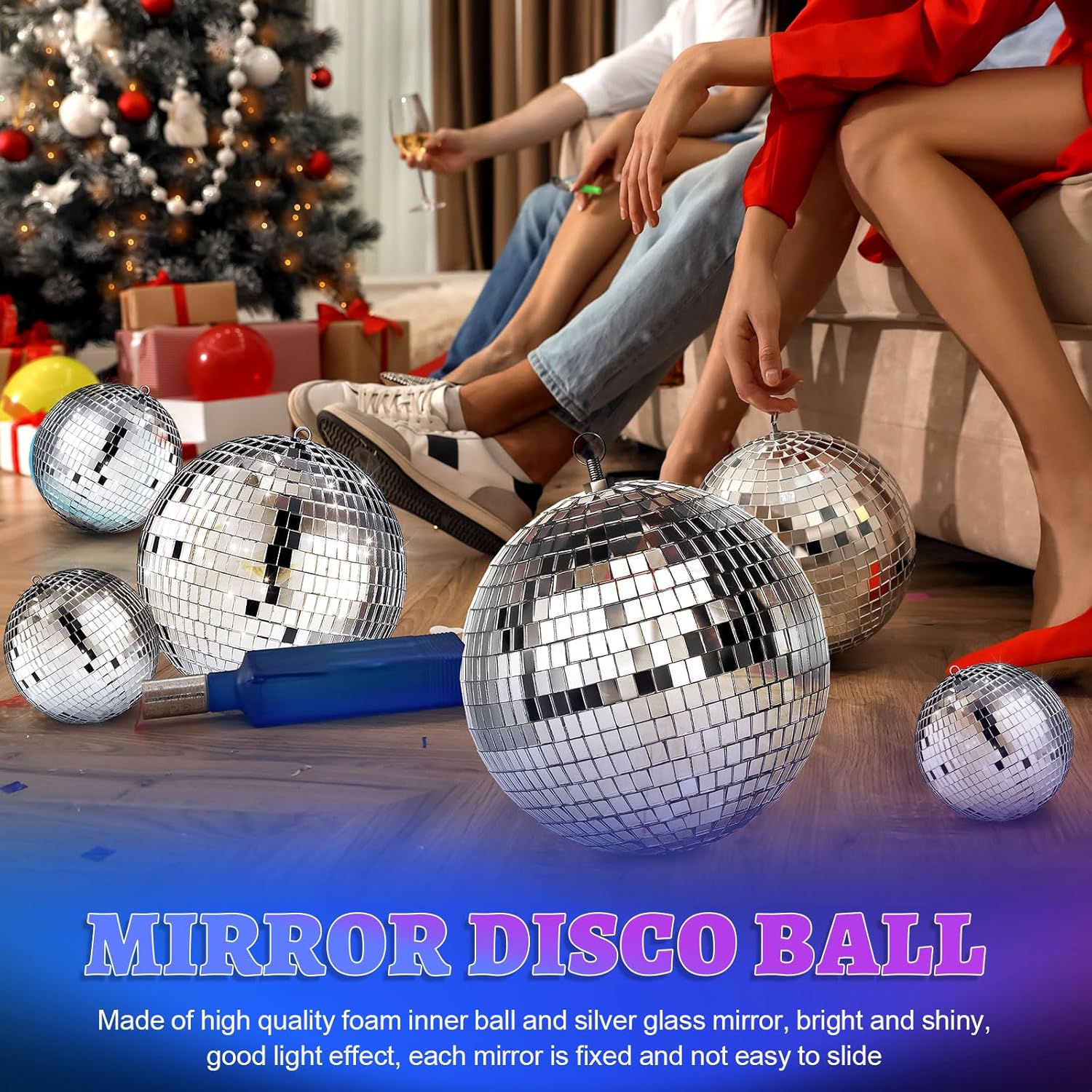
If you’ve ever scrolled through senior portrait galleries or bachelorette party inspiration boards, you’ve probably noticed that disco balls have quietly become one of the most requested props in DIY photography. A disco ball — at its most basic, a sphere covered in small mirrored tiles that scatter light into dozens of tiny reflected spots across a room — creates an atmosphere that’s hard to replicate with any other prop. You don’t need a dance floor or a DJ to use one. You need a ball, some decent light, and a little bit of setup knowledge. That’s what this guide is about: cutting through the “will this look cheap on camera?” anxiety that shows up in review after review, and giving you the specific tradeoffs — size, set composition, lighting, durability — that determine whether your shoot goes flat or fantastic.
What follows is built from aggregated buyer reviews across several of the most-purchased disco ball sets on the market right now, cross-referenced with sourcing context from two named editorial sources: Apartment Therapy’s party décor coverage and Wirecutter’s party lighting guidance. We haven’t touched these products ourselves — what we have done is read a lot of people who have, and pulled out the patterns that matter.
| EDITOR'S PICKSHEHDS LED Stage Par Lights LED… | Mid-tierAlytimes Mirror Disco Ball - 8-… | Budget pickMTLEE 20 Pcs Disco Balls Decora… | |
|---|---|---|---|
| Type | LED par lights | Mirror disco ball | Mini disco balls |
| Size | — | 8 in | 2.4–1.2 in |
| Quantity | — | 1 | 20 pcs |
| Light source | 18x18W RGBWA+UV | — | — |
| Control | DMX512 | — | — |
| Hanging rope | — | — | ✓ |
| Price | $128.88 | $17.98 | $11.99 |
| See on Amazon → | See on Amazon → | See on Amazon → |
What Buyers Were Actually Doing With These Sets
The use cases in the review pool aren’t what the packaging suggests. Yes, people buy disco ball sets for parties. But a clearly documented pattern across verified purchaser reviews for the 17-piece disco ball set — a multi-size assortment that typically includes balls ranging from about 2 inches up to 8 inches — is senior portrait photography at home. One reviewer describes setting up the full 17-piece assortment as a backdrop for her daughter’s senior photos and reporting results she described as better than expected given the price point. That framing — “I expected cheap, I got usable” — appears repeatedly and is worth taking seriously as a signal.
Bachelorette party buyers for the same product describe a related fear: that the balls would look obviously plastic or flimsy in photos posted to social media. The consistent feedback is that this fear did not materialize at the final image level, even if the physical objects feel lightweight in hand. The distinction between “looks cheap in person” and “photographs well under controlled light” is a real one, and it’s the core tension every DIY photographer navigates with budget props.
The balloon-format disco balls — oversized foil balloons printed or covered to mimic a mirror-ball aesthetic, sold in sizes up to 32 inches — serve a different function. Buyers predominantly use these as statement centerpieces or hanging backdrop elements rather than handheld or tabletop props. The surprise finding in aggregated reviews for the 32-inch balloon disco ball format is helium longevity: multiple buyers report the balloons holding shape for a full week without additional inflation. For a multi-day bachelorette trip or a shoot-to-party pipeline where you set up decor once and use it across both contexts, that’s a meaningful practical advantage.
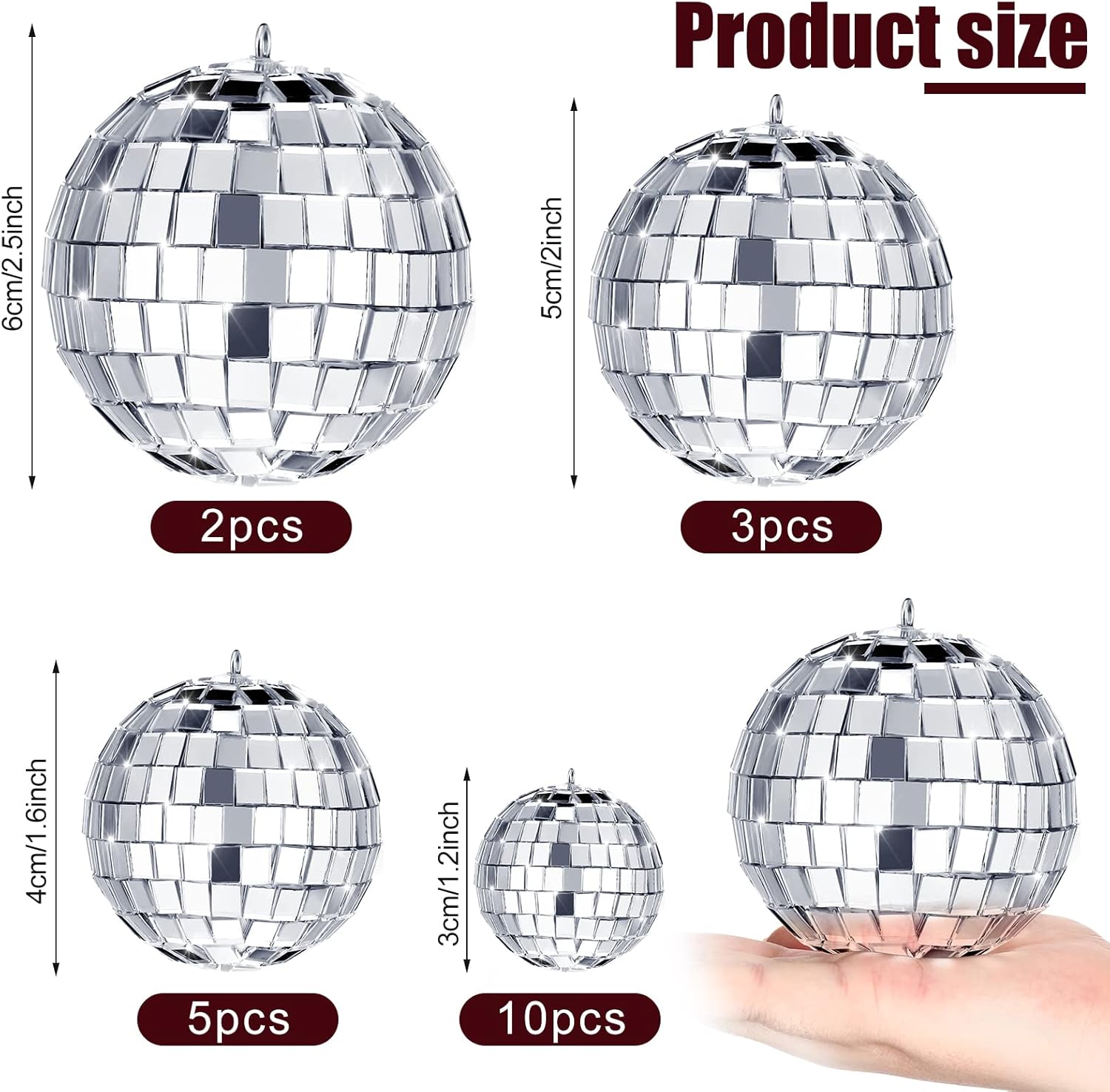
The mini-ball sets — typically 12 to 20 small mirror balls ranging from 1 to 3 inches — show up consistently in reviews tagged to art projects and tablescapes rather than overhead installations. Apartment Therapy, in their 2024 article “How to Style a Party Table with Reflective Decor,” notes that small mirror objects work best in clusters at table level, where light sources are close and the scatter pattern reads clearly in photos. Reviewers across multiple mini-ball sets confirm this pattern: the smaller balls function as texture and surface interest, not as primary light-scattering elements.
MTLEE
$11.99
In stock on Amazon
Check price on AmazonThe Spotlight Gap Nobody Warns You About
Here’s the thing that keeps showing up in one-star and three-star reviews across almost every set in this category: none of these multi-piece disco ball sets include a spotlight. This sounds obvious once you know it, but a surprising number of buyers don’t realize it until they’ve unboxed everything.
A disco ball without a dedicated light source pointed at it produces very little of the “mirror ball effect” — the scattered moving dots of light that make the prop visually dynamic on camera. Without a focused beam, you get reflections only from ambient room light, which typically reads as a general shimmer rather than distinct, photogenic light scatter. Multiple reviewers across sets mention discovering this after purchase, with some improvising using phone flashlights (which works at close range for still photography) and others investing in a separate light source.
By the numbers — what focused light actually changes:
| Light source | Scatter visibility on camera | Useful working distance |
|---|---|---|
| Ambient room light only | Low — general shimmer | Any distance, weak effect |
| Phone flashlight (held close) | Moderate — works for macro/portrait | Under 3 feet |
| Dedicated PAR light or pinspot | High — distinct dot scatter | 5–20+ feet |
| SHEHDS 18x18W PAR lights | High — color-programmable | Stage/event scale |
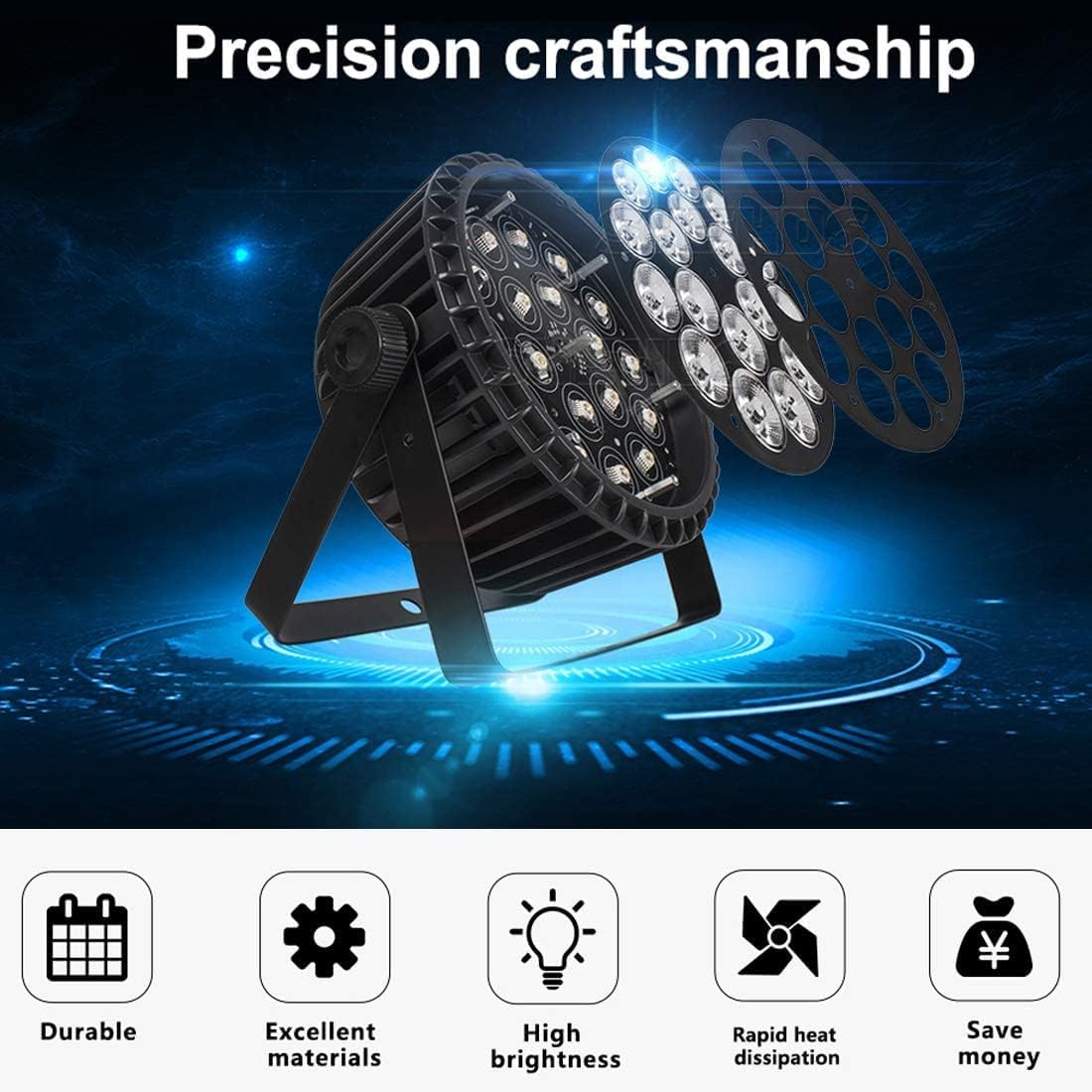
The SHEHDS 18x18W PAR lights appear in this category’s review ecosystem because buyers who were already sourcing lighting for mobile performance contexts — a technical director’s review specifically mentions using them in a live performance setup — discovered the same lights work exceptionally well for prop-driven photography. PAR lights (short for parabolic aluminized reflector, meaning a light with a focused beam rather than a flood) are the standard tool professionals use to activate mirror balls. For a DIY shoot, you don’t need that level of investment, but you do need something focused.
Wirecutter, in their 2025 “Party Lighting Buyer’s Guide,” recommends that buyers pairing mirror-ball props with photography consider a basic pinspot — a single, narrow-beam light — as the minimum viable light source before assuming the prop is underperforming.
Alytimes
$17.98
In stock on Amazon
Check price on AmazonSize Tradeoffs: What’s Actually Useful in a Multi-Pack
This is the decision frame that separates a useful purchase from a frustrating one. Multi-piece sets include a range of sizes specifically to cover different use cases, but buyers consistently report that the distribution of “useful” sizes skews smaller than expected.
For overhead installation (the classic hanging mirror ball): You need at least a 6-inch ball to generate visible scatter at any distance beyond arm’s reach. The 8-inch ball in a 17-piece set is doing most of the atmospheric work in overhead applications. Reviewers who hang the 4-inch and smaller balls find the scatter pattern too subtle to read on camera from more than a few feet.
For tabletop and foreground props in portraits: The 3- to 4-inch range is the sweet spot. These are large enough to be identifiable as disco balls in a photo, small enough to hold naturally or place in a hand without overwhelming the frame. Reviewers using balls as senior portrait props specifically name the mid-size range as the most-used pieces.
For texture and filler: The 1- to 2-inch mini balls in multi-packs function as surface decoration — scattered on a table, floated in a bowl, piled in a dish. They don’t scatter light meaningfully, but they add visual cohesion to a styled set. Their photographic value is texture, not effect.
For balloon formats: The 32-inch option is a statement piece that photographs well as a backdrop element. The inflation caveat is real and consistent across reviews — these cannot be inflated by mouth, and buyers who didn’t have a pump on hand report frustration. If you’re ordering these, confirm you have an electric balloon pump before the shoot day.
MTLEE
$11.99
In stock on Amazon
Check price on AmazonDurability: Will the Tiles Stay On?
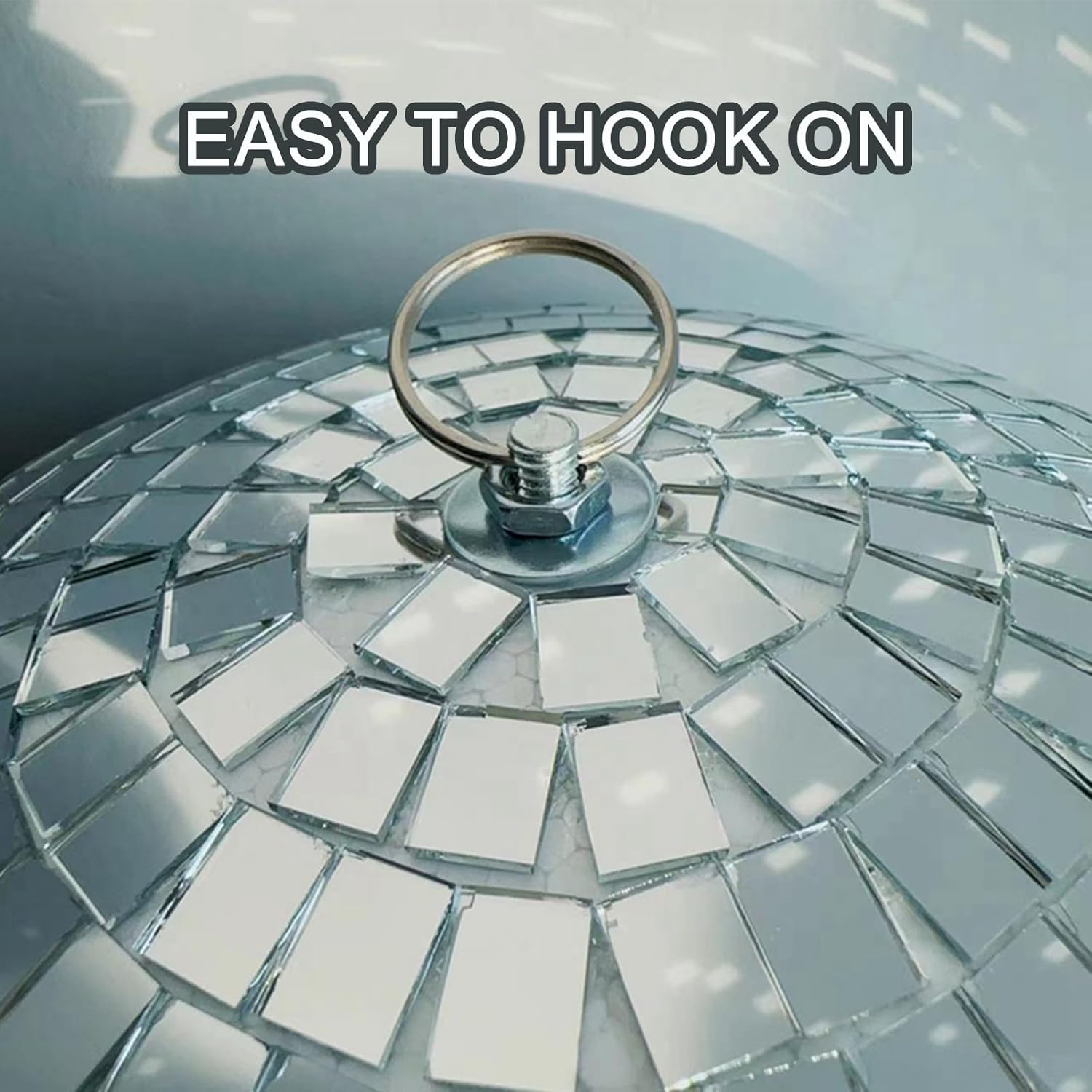
Mirror ball tiles — the small square mirrored pieces glued to the surface of a disco ball — are the recurring anxiety point in durability reviews. The question every buyer asks before purchasing for a photography context: will these shed tiles during handling, and will the ball look degraded after storage and reuse?
The pattern across verified reviews is mixed in a useful way. Budget sets in the $15–$40 range show tile loss primarily under two conditions: aggressive physical contact (dropping, squeezing) and heat exposure (left in a hot car or direct sun). Reviewers who handle these balls carefully for photography — setting them on surfaces, placing them in hands, moving them from location to location without impact — generally report no significant tile loss across a single shoot day or even a two- to three-day event.
Reviewers who used sets for bachelorette weekends involving repeated packing, transport, and setup report more tile loss, concentrated on the balls that received the most handling. The practical implication: if you’re buying for a single senior portrait shoot or one-night event, tile durability is unlikely to be a meaningful issue. If you’re building a prop kit you intend to reuse across multiple paid shoots, budget-tier mirror balls are a consumable, not a durable asset. The math changes at that point, and investing in heavier-construction balls with properly set tiles — or accepting a replacement cost per shoot — is the more honest framing.
SHEHDS
$128.88
In stock on Amazon
Check price on AmazonFrequently Asked Questions
Do disco ball sets look good on camera or only in person? Based on aggregated buyer reviews, most sets photograph better than they appear in hand. The mirrored surface reads differently at camera distance than it does under close inspection, and the imperfections that feel obvious while holding the ball typically don’t read in a finished photo. Multiple buyers describe being surprised by this gap.
Can I get good reflections without a dedicated disco ball spotlight? You can get a reflection effect without a purpose-built spotlight, but the results are significantly weaker. A phone flashlight at close range works for portrait-distance shots. Ambient room light alone produces a general shimmer rather than distinct scattered dots. A basic pinspot or PAR light produces the full effect. Wirecutter’s 2025 “Party Lighting Buyer’s Guide” specifically identifies the pinspot as the minimum viable tool for activating a mirror ball prop in photography contexts.
How long do foil disco ball balloons last without helium top-off? Reviewers for the 32-inch balloon disco ball format consistently report a full week of held inflation when properly sealed. Some report longer. Longevity drops with temperature changes and physical contact. For a multi-day event or shoot-to-party pipeline, one inflation is typically sufficient.
Which sizes in a multi-pack are actually useful for photography vs. too small to matter? The 6- to 8-inch range does the atmospheric work in overhead setups. The 3- to 4-inch range is the most versatile for prop use in portraits. Balls under 2 inches function as surface texture and filler — photogenic in clusters, not as standalone props. Apartment Therapy’s 2024 “How to Style a Party Table with Reflective Decor” corroborates this, noting that small reflective objects read best when grouped at close range to a light source rather than deployed individually.
Will the mirror tiles stay on through repeated handling and storage? Under careful handling in controlled photography contexts, yes — reviewers report minimal tile loss across single-event use. Under repeated transport and physical contact across multiple events, tile loss increases noticeably, concentrated on the most-handled pieces. Plan for budget-tier balls as consumables if you’re building a reusable prop kit.
What kind of lighting setup works best to make disco ball props sparkle in photos? A single focused light source — a pinspot, a basic PAR light, or even a strong narrow-beam flashlight — pointed directly at the ball produces the clearest scatter pattern. Position the light so the reflection dots fall on the subject or backdrop rather than directly into the camera lens. Color-programmable PAR lights such as the SHEHDS 18x18W units expand creative options significantly for buyers already investing in a lighting setup, but a single white beam is all you need to activate the effect.
The Decision Frame
If you’re buying for a one-time senior portrait or bachelorette shoot and you have access to even a basic focused light source, a 17-piece multi-size set gives you enough variety to style multiple setups and the mid-size range will carry the shoot. Don’t expect the small balls to do atmospheric work — use them as surface texture and let the 6- to 8-inch pieces do the overhead heavy lifting.
If you want a statement backdrop element that photographs large and holds up over a multi-day event, the 32-inch foil balloon format is the cleaner choice — but confirm you have a pump before shoot day.
If you’re building a reusable prop kit for paid shoots, treat budget mirror balls as consumables with a per-event cost built in, not as durable assets. The tile integrity math doesn’t support long-term heavy use at the $15–$40 tier, and that’s an honest tradeoff worth naming before you commit.