September 22, 2026 • Roxanne Flair • 10 min reading time • Prices verified June 4, 2026
Rechargeable Par Lights Under $50 per Unit: The Battery Math Real Event DJs Run
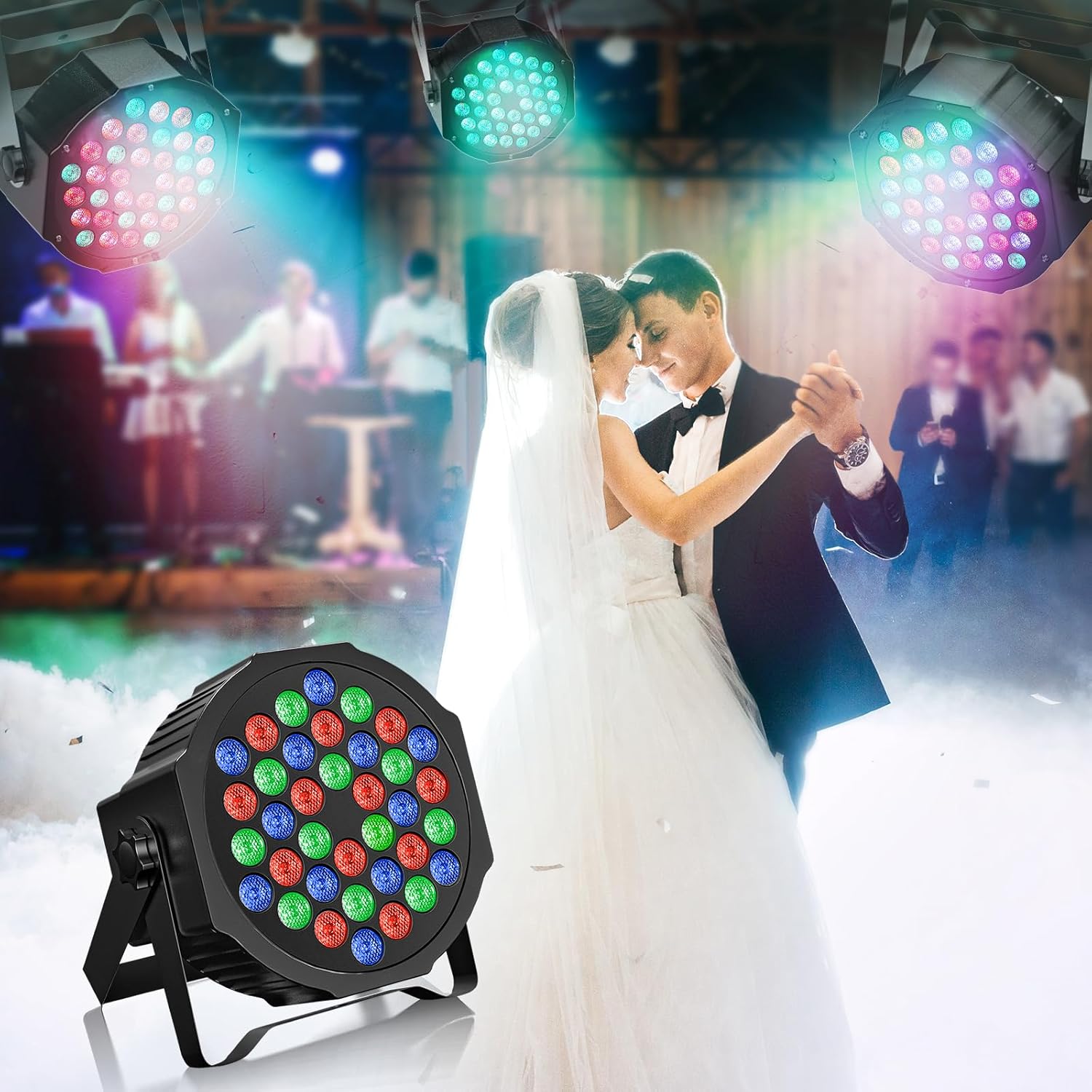
Rechargeable Par Lights Under $50 per Unit: The Battery Math Real Event DJs Run
If you’ve never shopped for event lighting before, here’s the quick picture: a par light (short for parabolic aluminized reflector — industry shorthand for a compact, flat-faced LED fixture) is the workhorse of mobile DJ and event lighting. You place them on the floor around a room’s perimeter, point them at walls, and they transform a beige hotel ballroom or a basement birthday party into something that actually looks like a venue. The rechargeable version runs on a built-in battery instead of a power cord, which means you’re not hunting for outlets or running extension cables across a dance floor. That’s the appeal. The question this guide answers is whether the sub-$50-per-unit options you’ll find in multi-packs actually hold up through a real four- or five-hour gig — and what the math looks like when you’re making a purchasing decision rather than an impulse buy.
If you’ve been doing mobile events for a year or two, you already know the outlet-scarcity problem. This guide is for you: runtime numbers pulled from long-run owner reviews, the reliability pattern in budget multi-packs, a clear decision frame for when battery pars make economic sense, and honest answers to the questions that keep showing up in DJ forums.
| EDITOR'S PICKRechargeable Par Can Lights U`K… | Mid-tierBattery Powered Uplights Rechar… | Budget pickBattery Powered Stage Par Light… | |
|---|---|---|---|
| Wattage | 36W | 6x18W | 36W |
| Pack size | 4 pack | 1 pc | 2 pack |
| Battery capacity | — | 9600 mAh | — |
| Runtime | — | — | 6–15 hrs |
| Control options | — | APP/Remote/DMX512 | Remote/DMX |
| LED count | 36 | 6 | — |
| Price | $199.99 | $159.99 | $108.88 |
| See on Amazon → | See on Amazon → | See on Amazon → |
Why Venue Outlet Scarcity — Not Convenience — Is the Real Driver
Let’s be direct about something the marketing copy glosses over. The pitch for rechargeable par lights often leads with “wireless freedom” and “clean setup.” That’s real, but according to aggregated feedback from a wedding DJ with 12 years of uplight experience reviewing the U’King rechargeable par series, the actual reason working DJs reach for battery units is simpler and less glamorous: venues don’t have enough outlets in the right places.
That’s not a new problem. Ballrooms, event halls, and restaurants were not designed with mobile DJ rigs in mind. The outlets that exist are often on the wrong walls, behind furniture, or already claimed by catering equipment. Running a standard corded uplight to a room corner 40 feet from the nearest circuit means visible cable runs, trip hazards, and potential liability. Battery pars eliminate that entirely.
DJ Mag’s guidance on mobile DJ budget gear consistently frames uplight purchases as a function of venue type. For DJs who primarily work hotel ballrooms, country clubs, and restaurant event spaces — venues with unpredictable outlet placement — battery pars justify their price premium over corded alternatives. For DJs who primarily work outdoor tented events (where a generator is already running) or venues where they have advance floor plan access and pre-agreed power drops, corded pars at $15–$25 per unit may remain more economical.
The decision frame, then, starts here: if outlet scarcity costs you setup time or introduces trip-hazard risk at more than half your gigs, battery pars are a legitimate professional investment at the sub-$50 tier — not a luxury.
What the Runtime Numbers Actually Look Like
This is where honest sourcing matters, because manufacturer runtime specs and real-world event conditions are two different things.
By the numbers — owner-reported runtime across three reviewed models:
| Model | Manufacturer Claim | Owner-Reported (Full Brightness) | Owner-Reported (50% Brightness) |
|---|---|---|---|
| U’King RGBWA Rechargeable Par | 6–8 hrs | 4–5 hrs | 7–8 hrs |
| HOLDLAMP Rechargeable Par | 8+ hrs | 8+ hrs (hotel gig confirmed) | Not widely reported |
| 6x18W RGBWA+UV Par | 6 hrs | ~4 hrs | Not needed — owners cap at 50% |
The HOLDLAMP series stands out in aggregated reviews for delivering on its runtime claims most consistently. One owner reporting from an actual hotel performance confirmed 8-plus hours of continuous use — notably, that’s the only model in this tier where long-run reviewers consistently match the spec-sheet number. That’s meaningful if your events regularly run five to six hours with no teardown window.
The 6x18W RGBWA+UV units tell a different story. Multiple owners describe them as genuinely bright — bright enough that one DJ owner reports re-programming their timecode controller to cap output at 50% for small basement events. That’s actually a useful data point: at full brightness, these units draw more power, which compresses runtime. At 50% cap, you’re getting more hours and, according to owner feedback aggregated across reviews, still delivering visually effective uplighting for standard event spaces. The practical upshot is that “6-hour runtime” at 50% brightness may be the more honest operating spec.
For a standard five-hour wedding reception with a 30-minute pre-event setup and a 30-minute teardown, the math looks like this:
- HOLDLAMP at full brightness: Comfortable margin (8 hrs reported vs. ~6 hrs needed)
- U’King at full brightness: Tight but workable for most receptions; charge between ceremony and reception if possible
- 6x18W RGBWA+UV at full brightness: Risk of runtime shortfall; cap at 50% and the margin returns
Multi-Pack Reliability: The One-or-Two-Unit Drain Problem
If you’ve been reading reviews in this category for any length of time, you’ve seen this pattern: someone buys a six-pack, and by the third or fourth event, one or two units are draining noticeably faster than the rest. This is not a single-brand issue. It appears across the U’King, HOLDLAMP, and 6x18W RGBWA+UV lines in aggregated owner feedback, and it’s worth naming directly before you build a 12-unit rig around any of these.
The good news, and it’s genuinely consistent across reviews, is that manufacturer replacement response in this category is reported as responsive. Owners filing warranty or direct-message claims through the platform consistently describe receiving replacement units rather than refund disputes. That matters for a working DJ because it shifts the risk calculus: the question isn’t “will some units underperform?” — some will — it’s “how quickly can I get a replacement before my next event?”
The practical approach that experienced reviewers recommend: buy in sets of eight when you need six. The two-unit buffer covers the one or two that will eventually show faster drain, and you’re never going into an event short. At sub-$50 per unit, the overage cost on a six-fixture rig is $100 or less — cheaper than the last-minute scramble.
Sound-Activated Mode, Remote Range, and DMX Compatibility: The Real Talk
Sound-activated mode gets mixed reviews across all three models. The honest summary, pulled from owner observations: it works, but it requires a specific sustained volume level to trigger reliably, and one owner describes it as functioning “just so-so” — meaning the sync can feel laggy or inconsistent at moderate volume levels. For DJ-driven events at normal dance-floor volume, it’s serviceable. For background music events or dinner-hour lighting where the music is quieter, sound-activation is not reliable enough to depend on. Use static color or a slow auto-cycle program for those segments instead.
Remote control range in owner-reported use at hotel ballrooms and event spaces typically falls in the 30-to-50-foot reliable range for the IR (infrared) remotes included with most units in this tier. RF (radio frequency) remotes, where included, extend that to 100 feet or more. Check the spec sheet for your specific unit — IR is line-of-sight and will fail if there’s a crowd between you and the fixture. For a DJ booth positioned at the far end of a long reception hall, this is a real operational constraint.
DMX while remote: This is a common buyer question and the answer for most units in this tier is no — not simultaneously. DMX mode and wireless remote mode are typically mutually exclusive control states. You select one or the other per event. If you’re building a rig you intend to run under DMX control from your lighting console, the remote is a backup tool for setup, not a co-running option.
Brightness Reality Check: Event-Grade or Party-Grade?
The 6x18W RGBWA+UV units, based on owner consensus, are unambiguously event-grade in larger spaces. “Very bright” appears repeatedly in long-run owner reviews, and the fact that working DJs are actively capping output to 50% for smaller venues tells you these are not novelty-level fixtures. For standard reception halls, hotel ballrooms, and mid-size event spaces, this output level is appropriate.
Smaller RGBWA units at four or six LEDs per head are better characterized as party-grade to small-event-grade — solid for home parties, small bars, and intimate venues, but they’ll look thin washing a 5,000-square-foot ballroom. The honest guidance from aggregated reviews: if your primary venue type is 200+ guests in a full ballroom, step up to the 18W-per-head units even within the sub-$50 tier.
Frequently Asked Questions
How long do rechargeable par lights actually last at full brightness during a real event? Based on aggregated owner reviews, expect 4–5 hours at full brightness for most units in this tier, with the HOLDLAMP series being the consistent outlier at 8-plus hours confirmed in real hotel use. Plan your charge timing accordingly — a full charge before each event is not optional, it’s protocol.
Do battery-powered uplights get replaced by the manufacturer if some units drain faster than others? Yes, consistently. Across the U’King, HOLDLAMP, and 6x18W RGBWA+UV lines, reviewers report responsive manufacturer replacement when one or two units in a pack underperform. Buy a buffer set (two extra units beyond what you need for a gig) to stay covered while replacements are in transit.
What is the effective remote control range for wireless battery par lights at a typical venue? IR remotes (the most common type in this tier) reliably cover 30–50 feet in clear line-of-sight. RF remotes extend to 100 feet or more. In a crowded venue, IR range degrades — position yourself with a clear sightline to at least one fixture, or use DMX control instead.
Can you run rechargeable par lights via DMX while also using the remote? For most units in this tier, no. DMX mode and remote mode are separate operating states. Select your control method before the event and stick with it. Remote is useful for quick color changes during setup; DMX is the right choice for programmed show control.
Are mini rechargeable par lights bright enough for a real event or just home parties? It depends on the fixture. Four- or six-LED-per-head units are home-party to small-event grade. The 18W-per-head RGBWA+UV units are working-event grade, bright enough that multiple owners cap them at 50% for smaller spaces. Match the fixture wattage to your venue scale.
What happens when a rechargeable par light fails mid-event — is there a manual override or backup mode? Most units in this tier include a button-operated mode cycle on the fixture itself, separate from the remote. If the remote fails or a unit drops DMX signal, you can walk to the fixture and cycle it to a static color manually. That’s your mid-event backup — know where the mode button is before load-in, not when a unit goes dark at 9 PM.
The Decision Frame
If you’re sitting on a current buying decision, here’s the clean if-then:
- If outlet scarcity affects more than half your venues → battery pars at this tier are a justified line item, not a luxury spend. HOLDLAMP for runtime confidence; 6x18W RGBWA+UV if brightness in larger spaces is a priority.
- If you primarily work outdoor tent events with generator power → corded pars save money; re-evaluate battery units when your venue mix shifts.
- If you’re building a six-fixture rig → buy eight. The two-unit reliability buffer is cheaper than the alternative.
- If your events regularly run past five hours → HOLDLAMP’s owner-confirmed 8-hour runtime makes it the lowest-risk option in this tier. Cap the 18W units at 50% brightness if that’s your platform; you’ll get the hours you need.
The sub-$50-per-unit tier is real professional gear if you buy it with clear eyes about runtime, operate it within its actual range, and build the buffer stock that working event work demands.