September 20, 2026 • Roxanne Flair • 11 min reading time • Prices verified June 4, 2026
Budget Par Lights Face-Off: Corded RGB Uplights Ranked by Working DJs and Event Hosts
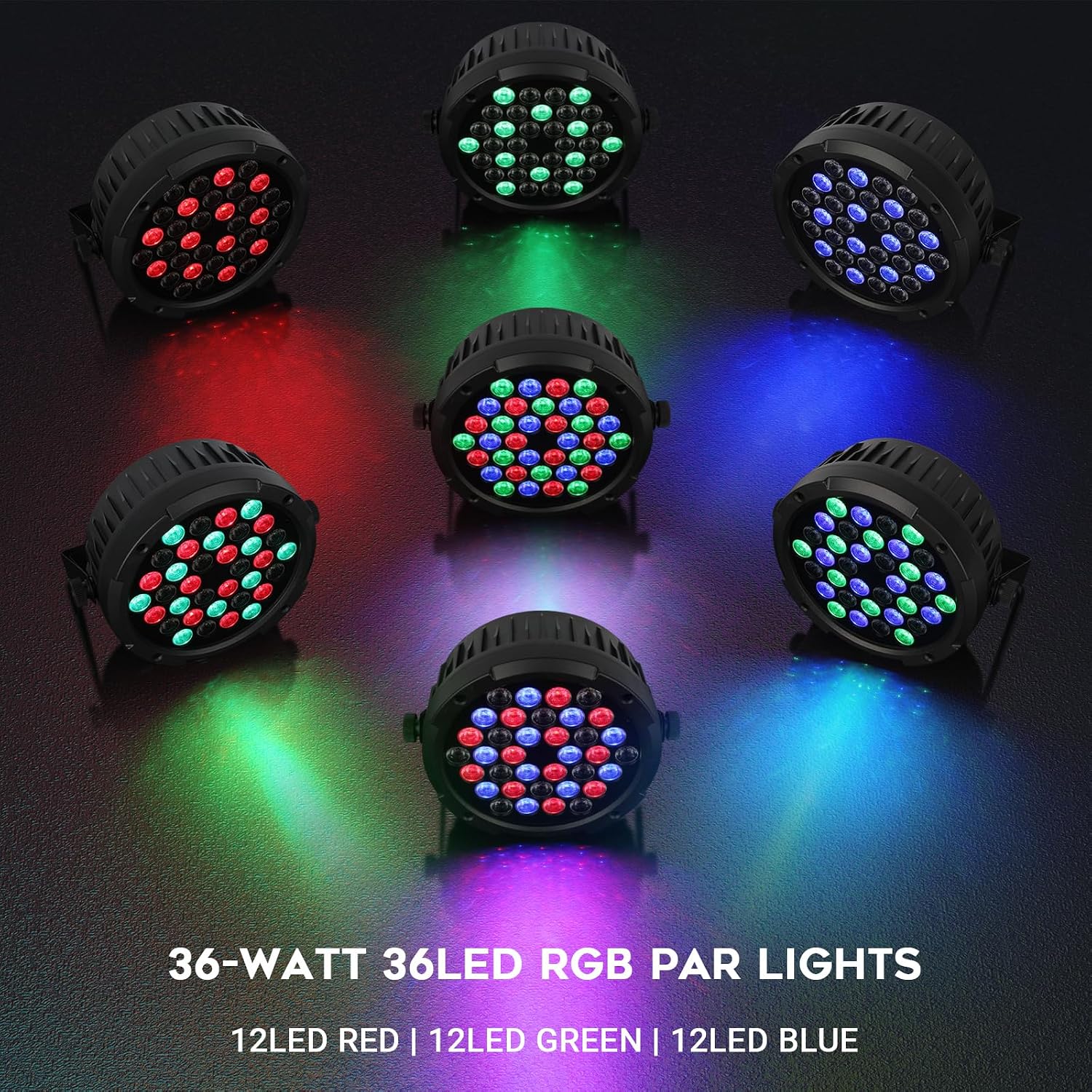
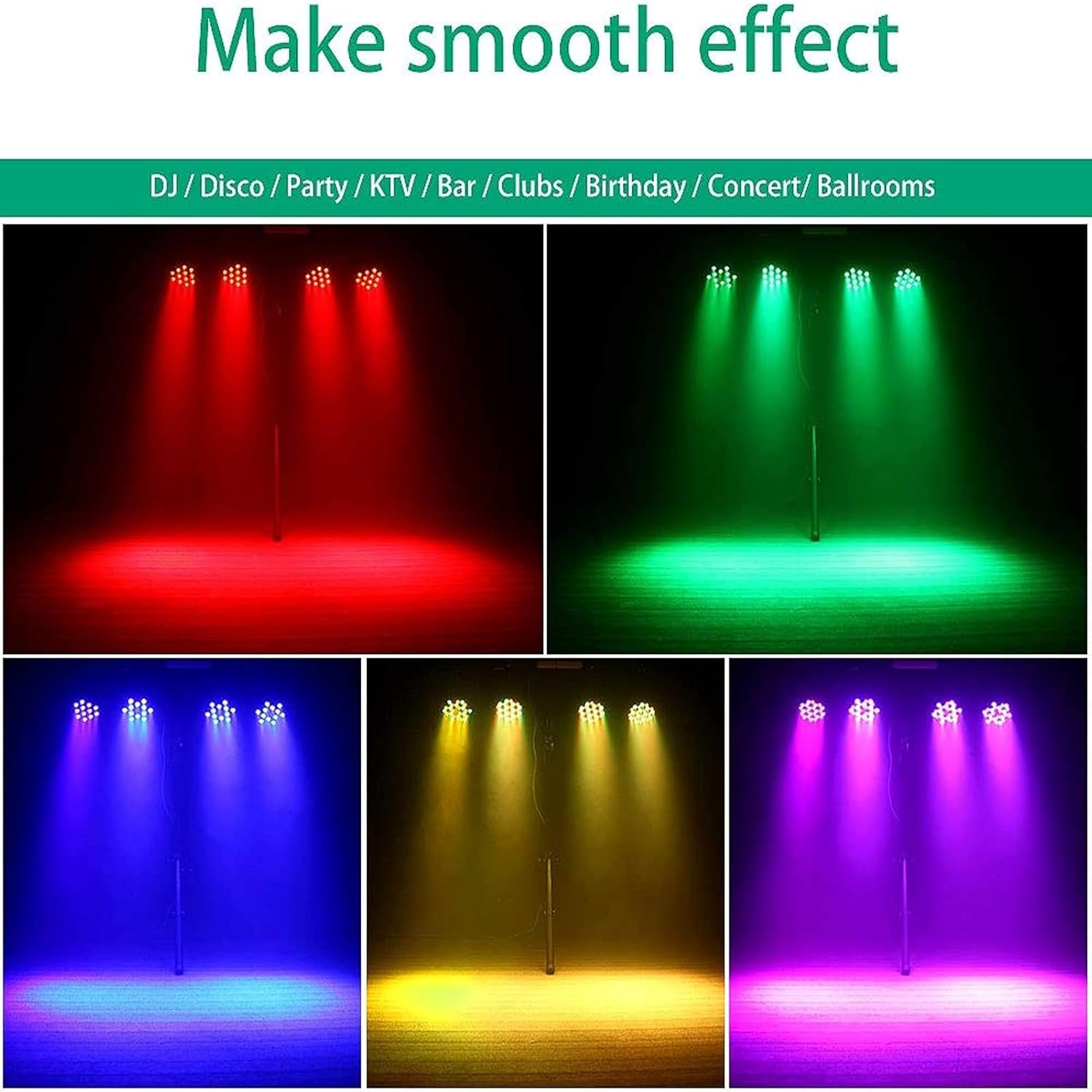
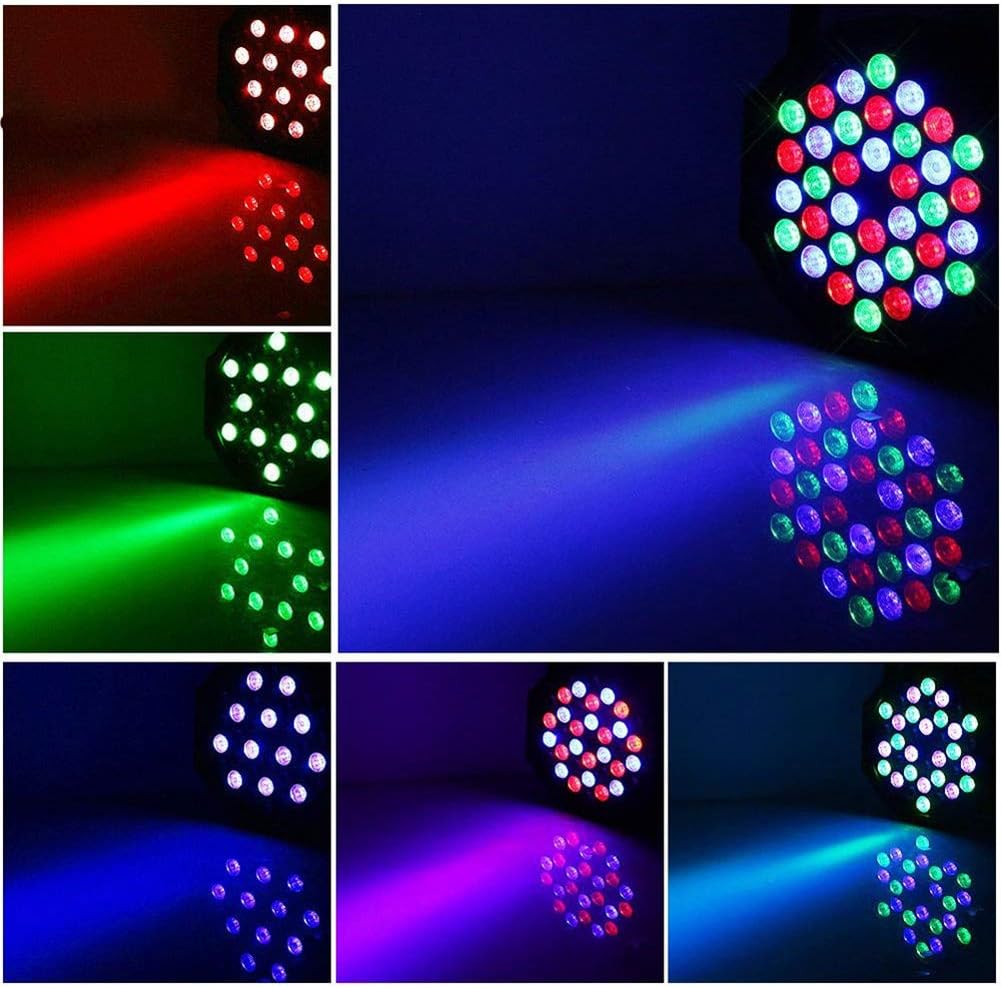
If you’ve ever walked into a venue and seen those cans of colored light washing up a wall or painting a dance floor — those are par lights (short for parabolic aluminized reflector lights, though everyone just calls them pars). They’re the workhorses of event lighting: affordable, stackable, and flexible enough to work as uplights framing a DJ booth, wash lights bathing a photo backdrop, or atmosphere fixtures along a stage. RGB par lights add a color-mixing engine to that basic concept — red, green, and blue LEDs that blend together to produce virtually any color you want. The corded versions we’re looking at here plug into a standard wall outlet and, depending on how deep you want to go, can be controlled by sound activation, a simple color-preset mode, or a DMX lighting console (a piece of gear that sends digital commands to each fixture with precision). If you’re building out your first rig or upgrading from plug-and-play wireless pucks, this guide is where the real decision-making starts.
What follows is synthesized from hundreds of owner reviews across the Amazon Verified Purchase review corpus for each unit, aggregated May 2026, alongside manufacturer specification sheets. The goal is a clear tier-by-tier verdict so you can stop second-guessing and start lighting your next gig.
| EDITOR'S PICKU`King LED Par Lights DJ Stage… | Mid-tierSHEHDS LED Stage Par Lights LED… | Budget pickU`King LED Par Lights DJ Stage… | |
|---|---|---|---|
| LEDs | 36 LED | 18x18W | 36 LED |
| Color Mixing | RGB | RGBWA+UV | RGB |
| Control | Remote | DMX512 | — |
| Pack Size | 8 | — | 2 |
| Price | $159.99 | $128.88 | $39.99 |
| See on Amazon → | See on Amazon → | See on Amazon → |
The Contenders, Ranked by Use Case
Before we get into the numbers, a framing note: at this price tier, “which is best” is the wrong question. The right question is which fixture matches your control setup, your wattage needs, and your tolerance for technical quirks. These are the four units that dominate the conversation in aggregated owner reviews as of mid-2026.
OPPSK 36W RGB Par — The Entry Gateway
The OPPSK 36W is a 36-watt fixture with twelve 3-watt LEDs arranged in red, green, blue, and a fourth color cluster — usually white or UV, depending on the variant. It runs in sound-activated mode, static color preset mode, or DMX. Price-per-unit puts it firmly in the impulse-buy tier, and for many buyers that’s exactly how it starts.
The recurring theme across the Amazon Verified Purchase review corpus for this unit (OPPSK 36W RGB Par Light, aggregated May 2026) is genuine surprise at how much light it throws relative to its cost. Multiple reviewers — including working mobile DJs — draw favorable comparisons to fixtures from ADJ and Chauvet DJ at prices two to three times higher. That’s a meaningful data point, though it comes with important asterisks.
A technically specific entry in the review corpus flags a real optical limitation: because the red, green, and blue LEDs are physically separated rather than blended at the emitter level, the fixture produces color separation in shadows — what photographers call color fringing. When you’re washing a flat surface like a wall or scrim, you’ll see distinct R, G, and B shadows trailing the main color wash. On a dance floor with moving bodies, it’s nearly invisible. On a stationary backdrop where guests are taking photos, it reads as an artifact. Know your use case before you buy six of these.
DMX users should also be aware that the OPPSK 36W uses a different channel map than the OPPSK 90W. Mixed rigs are possible but require manual channel reassignment — a frustrating surprise for anyone who expects brand consistency.
U`King
$39.99
In stock on Amazon
Check price on AmazonOPPSK 90W RGB Par — The Step-Up Power Play
The 90W version addresses the output ceiling of its smaller sibling. Nine 10-watt COB (chip-on-board) LEDs — a design where multiple LED chips are mounted on a single substrate, improving color blending — replace the individual 3-watt emitters, and the result is a noticeably more homogeneous color wash with less of the shadow-fringing problem.
Here’s where practitioners need to pay attention: the DMX channel layout on the 90W does not match the 36W despite sharing a brand. Reviewers in the Amazon Verified Purchase review corpus for the OPPSK 90W RGB Par Light (aggregated May 2026) report this repeatedly. If you’re running a mixed rig of OPPSK 36W and 90W units on the same DMX chain and you expect them to respond to the same channel assignments, you will spend a frustrating hour troubleshooting a problem that the manufacturer’s manual does not adequately flag. The fix is workable — you assign each unit type its own starting address — but it adds complexity to what should be a simple setup.
For output, the 90W’s reviewer base skews toward buyers doing larger rooms: hotel ballrooms, wedding receptions, church stages. The consensus is that it earns its higher price point for those applications. For a mobile DJ assembling a six-to-eight fixture uplight rig, this is the unit that does the heavy lifting.
SHEHDS
$128.88
In stock on Amazon
Check price on AmazonSHEHDS 18×18W RGBWA — The One That Surprised a Tech Director
The SHEHDS 18×18W earns the most detailed single review in the Amazon Verified Purchase review corpus for this unit (SHEHDS 18x18W RGBWA Par Light, aggregated May 2026). The reviewer identifies as a theatre technical director — a buyer who understands DMX infrastructure, has worked with commercial-grade fixtures, and knows what good dimming looks like.
Their specific praise is for the unit’s low-end dimming performance. Most budget LED pars suffer from a “staircase” effect at low dimmer levels — instead of a smooth fade, the light steps down in visible increments and often cuts to black well before the fader hits zero. The SHEHDS 18×18W, per this reviewer’s detailed account, tracks smoothly at the low end in a way that is unusual for its price range. For theatre and live event applications where you want slow, organic fades, that is a genuine differentiator.
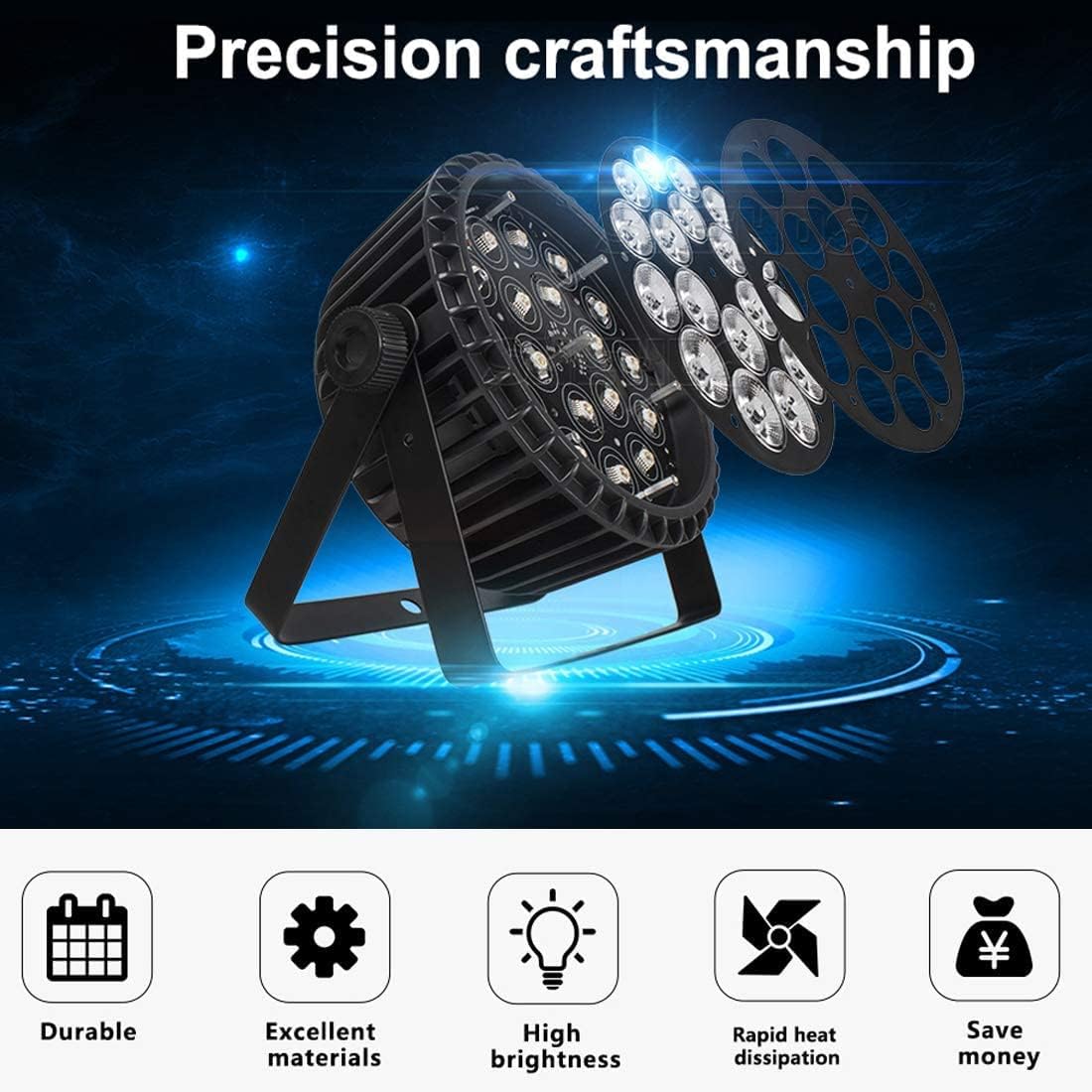
The RGBWA designation — red, green, blue, white, amber — expands the color palette meaningfully. Amber is particularly relevant for disco and retro-dance applications. Pure RGB mixes tend to produce a clinical orange that does not replicate the warm amber wash of vintage incandescent pars. Adding a dedicated amber channel gets you much closer to that 1970s ballroom feel. UV (ultraviolet), present on some variants, adds fluorescent reactive effects for white fabrics and neon-colored décor.
This unit runs more DMX channels in full mode and is aimed at buyers already comfortable with DMX addressing. The learning curve is real but manageable for anyone who has run a show before.
U`King
$159.99
In stock on Amazon
Check price on AmazonU`King RGB Par Can — The Crossover Fixture
The UKing units occupy an interesting position. Their review base in the Amazon Verified Purchase review corpus for the UKing RGB Par Can (aggregated May 2026) is notably mixed compared to the OPPSK and SHEHDS entries — and the mix itself is telling. A significant portion of U`King reviewers are not event DJs. Podcasters using them as background set lighting, home theater owners creating ambient wash effects, and content creators adding color to video backdrops show up consistently. That is not a knock on the fixture; it tells you that this unit performs well in low-demand, low-duty-cycle applications.
For working DJs running six-hour receptions, the picture is more qualified. Reviewers note adequate brightness for small-to-medium rooms — up to roughly 200 square feet of dance floor — but fewer long-run operational reviews compared to the OPPSK units. If your use case is episodic — podcast recording, occasional house parties, short-term rental property setup — U`King delivers strong value. If you’re gigging weekly, the OPPSK 90W or SHEHDS earn the conversation instead.
U`King
$39.99
In stock on Amazon
Check price on AmazonBy the Numbers
| Unit | Wattage | LED Config | DMX Channels | RGBWA? | Tier |
|---|---|---|---|---|---|
| OPPSK 36W | 36W | 12 × 3W discrete | 4-ch or 7-ch | No | U`King — $39.99 |
| U`King RGB Par Can | 36W | 12 × 3W discrete | 4-ch or 7-ch | No | U`King — $39.99 |
| OPPSK 90W | 90W | 9 × 10W COB | 4-ch or 7-ch | No | SHEHDS — $128.88 |
| SHEHDS 18×18W | 324W total | 18 × 18W multi-chip | Up to 10-ch | Yes (RGBWA) | U`King — $159.99 |
Wattage and channel counts per manufacturer specification sheets. SHEHDS total draw varies by variant.
DMX Deep Dive: The Channel Questions That Keep Coming Up
4-channel vs. 7-channel DMX mode is the most common technical question in this category, and the answer is straightforward once you see it framed clearly.
In 4-channel mode, your DMX controller addresses: Ch1 = Red, Ch2 = Green, Ch3 = Blue, Ch4 = Master Dimmer. Simple, direct, and compatible with the most basic lighting controllers. The tradeoff is that you cannot control strobe speed or program automated color macros from the console — the fixture handles those internally via the mode button on the unit itself.
In 7-channel mode, you get: Ch1 = Master Dimmer, Ch2 = Red, Ch3 = Green, Ch4 = Blue, Ch5 = Strobe, Ch6 = Automated Programs, Ch7 = Program Speed. This is the mode you want if you’re running a proper DMX board and want full console control over effects. Most intermediate-level controllers — including units in the Chauvet DJ Obey series and the ADJ DMX Operator series, per their respective published user manuals — handle 7-channel fixtures without issue.
The OPPSK 36W versus 90W channel-map incompatibility means the two units do not share the same Ch1–Ch7 assignments even in matching modes. This is confirmed across multiple independent reviews in the aggregated owner corpus for both units. Plan for it before your first show with a mixed rig.
Frequently Asked Questions
Can I mix OPPSK 36W and 90W units in the same DMX chain? Yes, but not seamlessly. Because OPPSK uses different channel layouts on the two units, you’ll need to assign them separate starting addresses and create separate fixture profiles or channel groups in your controller. It is manageable, but plan for the extra programming time before your first gig with a mixed rig.
What does sound-activated mode actually respond to — music volume, bass, or beat? Based on manufacturer documentation across OPPSK and U`King product lines, sound-activated mode responds primarily to overall sound pressure level — effectively volume — with some sensitivity bias toward low-frequency transients such as bass hits. It is not beat-detection in the technical sense; the fixture does not analyze a waveform. In practice, this means it chases volume peaks reasonably well in a loud room but can behave erratically in quieter environments or when music dynamics are subtle.
Do these lights get hot enough to be a fire hazard at events? LED pars in this wattage range run substantially cooler than equivalent halogen or incandescent par cans. Owners in the aggregated review corpus report that the OPPSK 36W and U`King units are warm to the touch after extended operation but not hot. The OPPSK 90W and SHEHDS 18×18W generate more heat given their higher wattage, and owners note that the built-in fans on both units are audible in quiet settings. Standard event safety practice — keeping fixtures away from flammable drapes or fabric, ensuring ventilation clearance — applies regardless of fixture type.
Is RGB sufficient for a disco or retro dance party, or do I need RGBWA? For a budget build or a single-night 70s theme event, RGB covers most of the palette — you can produce the warm pinks, purples, and blues associated with disco-era lighting. The honest limitation is amber and warm white: RGB mixes produce a slightly clinical orange that does not fully replicate the warm amber wash of vintage incandescent uplights. If period-accurate warm amber tones matter — and for a serious disco or soul night, they should — the SHEHDS 18×18W’s amber channel is worth the premium.
How do I set multiple par lights to the same color without DMX? Most units in this category include a static color preset mode accessible via buttons on the fixture itself. You scroll through preset colors, land on the one you want, and the unit holds it. To match multiple units, you set each one to the same preset number manually. It takes a few minutes per fixture but requires zero additional gear. For sets of six or more units, a simple DMX controller makes this process dramatically faster and gives you real-time control during the event — but for small installs, the manual method works fine.
The Verdict: If X, Then Y
Here’s the decision frame, stated plainly:
-
If you’re hosting a one-night event, need six or fewer fixtures, and have no DMX infrastructure: The OPPSK 36W is your answer. Understand the shadow-fringing limitation and avoid aiming them at photo backdrops.
-
If you’re running a mobile DJ rig and want units you can grow into full DMX control: The OPPSK 90W is the step-up that makes sense. Budget for the learning curve on its channel map if you already own 36W units.
-
If you’re doing theatre, corporate events, or any application where smooth dimming and warm amber are non-negotiable: The SHEHDS 18×18W is the only unit in this comparison a theatre technical director praised by name in detailed owner accounts, and that endorsement is the most credible signal in the aggregated review data.
-
If your use case is ambient background lighting — podcast sets, content creation, home setups, or occasional parties: U`King delivers excellent value in that context. There is no need to overbuy the SHEHDS for a use case that doesn’t demand it.
For most working mobile DJs assembling a versatile eight-fixture uplight rig in 2026, the OPPSK 90W handles the heavy lifting, and the SHEHDS earns one or two anchor positions at focal points where color quality and dimming performance will actually be noticed. That combination covers the range without overcommitting budget to a category where the floor quality has genuinely risen over the past few years.