September 17, 2026 • Roxanne Flair • 11 min reading time • Prices verified June 4, 2026
Belt-Drive vs Direct-Drive Turntables: What Vinyl Beginners Actually Need to Know
If you’ve decided to start buying vinyl records — those large, grooved black discs that have made a remarkable comeback over the last decade — the first real decision you’ll face is which turntable to buy. A turntable is simply the device that spins a record and reads it with a needle (called a stylus) so you can hear the music. But not all turntables spin their platters the same way, and that mechanical difference turns out to matter quite a bit depending on how you plan to use yours. Two designs dominate the market: belt-drive, where a small rubber band connects the motor to the spinning platter, and direct-drive, where the motor sits directly beneath the platter and spins it without an intermediary. This guide will walk you through what that difference actually means in practice — for sound, for durability, for DJing, and for your wallet — so you can make a confident decision instead of a hopeful one.
The Core Mechanical Difference (And Why It Changes Everything)
Picture a belt-drive turntable like an old ceiling fan with a rubber pulley: the motor sits off to the side, and a thin elastic loop transfers rotation to the platter. The rubber belt acts as a physical buffer, absorbing vibrations from the motor before they can travel into the platter and, from there, into your stylus and your music. That isolation is the primary acoustic argument for belt-drive. Because the motor never directly touches what’s spinning your record, motor noise — a faint rumble that sits below the music — stays lower.
Direct-drive removes the belt entirely. The motor is the platter hub. Spin-up is faster (the platter reaches its target speed in under a second, versus a few seconds for most belt-drives), torque is higher, and there are no rubber belts to age, stretch, or eventually snap. The tradeoff is that vibration isolation depends entirely on how well the manufacturer engineered the motor itself — which is why cheap direct-drive tables earned a bad reputation in the 1980s, and why premium direct-drive tables like the Technics SL-1200 series remain the industry professional standard decades later.
The Vinyl Factory’s editorial piece “Belt Drive vs Direct Drive: What’s the Difference?” frames it cleanly: belt-drive wins on noise floor and is traditionally preferred for pure listening, while direct-drive wins on torque, durability, and the ability to handle the physical demands of DJing. Both claims hold, with the caveat that price tier matters enormously. A $150 direct-drive table from an unknown brand will not sound like a Technics. A $100 belt-drive table will not sound like a $900 Rega.
By the Numbers
| Feature | Belt-Drive | Direct-Drive |
|---|---|---|
| Motor-to-platter contact | Indirect (rubber belt) | Direct (motor = hub) |
| Typical start-up time to speed | 2–5 seconds | Under 1 second |
| Belt replacement needed? | Yes, every 3–7 years | No |
| DJ scratching / backspinning | Not recommended | Yes, designed for it |
| Entry-level sweet spot | ~$100–$300 | ~$130–$350 |
Comparing Your Options by Budget Tier
The belt-vs-direct-drive question maps almost directly onto three shopping tiers. Here’s how the decision plays out at each price level, with specific models that represent each tier well.
Budget Pick: The Fully Automatic Entry Point
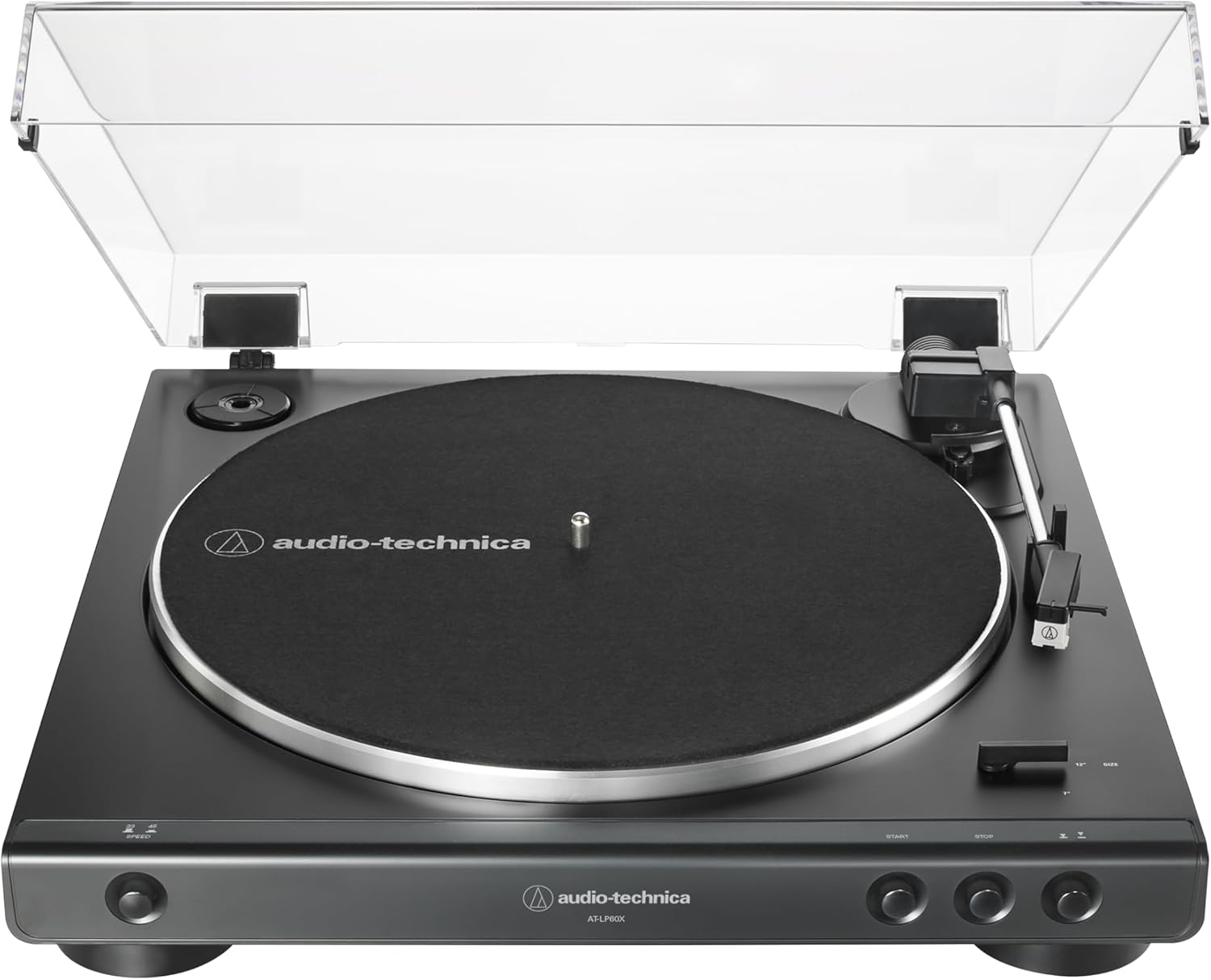
For the listener who wants to start a vinyl collection with zero setup anxiety, fully automatic belt-drive tables dominate this tier for good reason. The Audio-Technica AT-LP60X is the most-recommended introductory belt-drive table in circulation right now, and it earns that recommendation for specific, practical reasons rather than vague brand prestige.
Wirecutter’s “The Best Turntables” guide consistently returns to belt-drive options when evaluating entry-level tables for home listening, noting that the design’s inherent motor isolation gives manufacturers more acoustic headroom to work with at modest price points. The AT-LP60X demonstrates this: owners consistently praise its fully automatic operation, where you press a button and the tonearm moves itself to the record, drops, and lifts again at the end without you touching anything. For someone just getting started, that automation removes a major anxiety point — first-time vinyl owners often worry about damaging their records by handling the tonearm awkwardly. Setup time runs about 20 minutes by most owner accounts, which is genuinely fast for a category where some tables arrive requiring cartridge alignment, anti-skate calibration, and counterweight balancing.
One practical limitation worth knowing before you buy: the AT-LP60X’s automatic mechanism is calibrated for standard 7-inch and 12-inch records. Owners who’ve tried playing mini vinyl records — novelty 3-inch or 5-inch records that some specialty labels release — report that the automatic stopper prevents playback from completing. If mini records are part of your collection plans, this is a real constraint.

Meagoo
$38.99
In stock on Amazon
Check price on AmazonMid-Tier Pick: The Step-Up for Growing Listeners
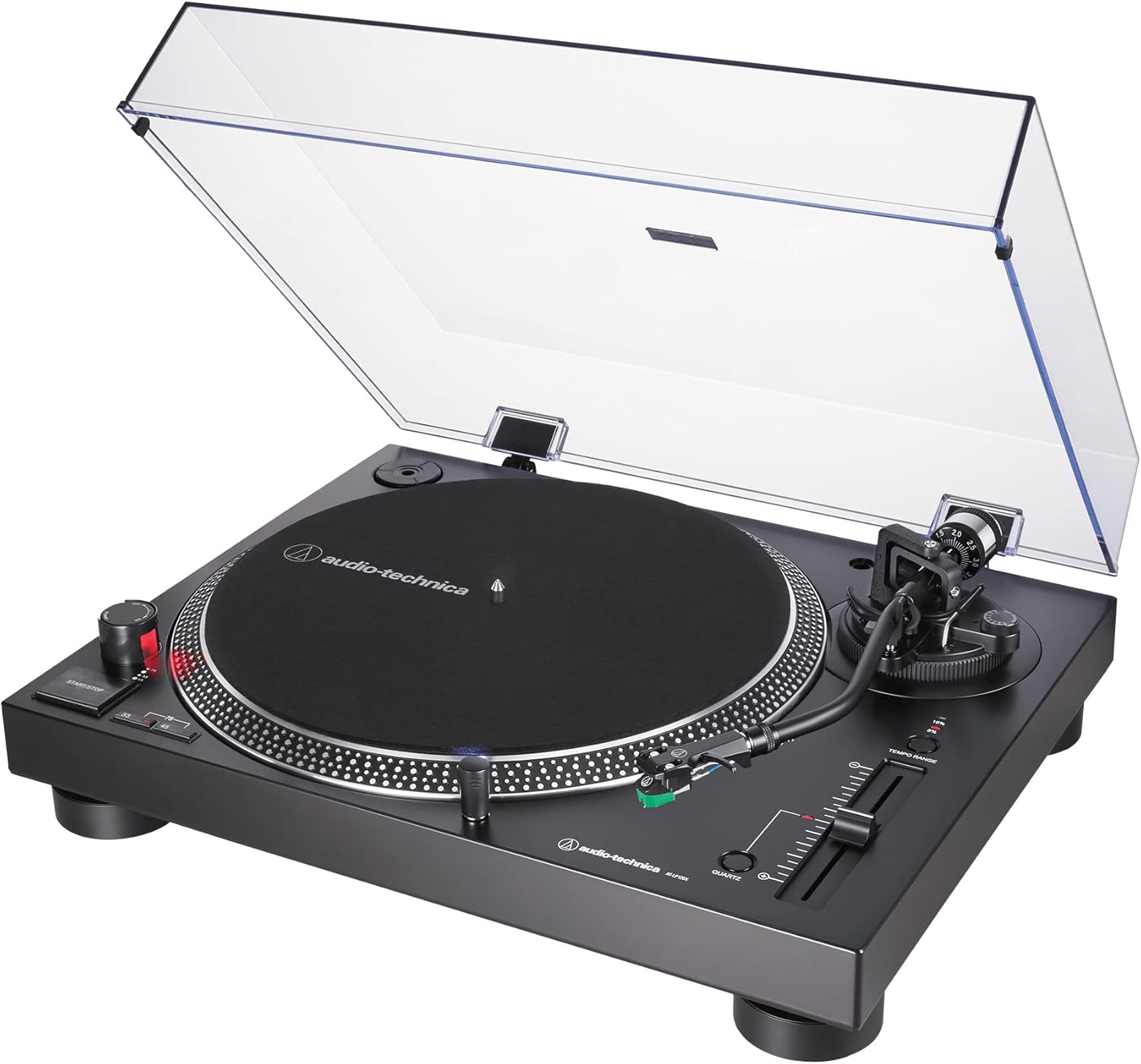
For listeners who want to grow into the hobby — digitizing records, experimenting with DJ basics, or eventually swapping cartridges — the Audio-Technica AT-LP120XUSB closes most of the gap at a higher price point. Analog Planet’s coverage in its “AT-LP120XUSB Review and Overview” highlights two features that owners returning to vinyl after decades specifically call out: the USB output, which lets you connect the turntable to a computer and record your records as digital audio files, and sound quality that reviewers describe as crisp with good channel separation.
It’s also a direct-drive table — one of the few in its price class that earns consistent praise from the listening community rather than just the DJ community. The AT-LP120XUSB lands in a genuinely useful middle position: good enough for serious listening, capable enough for bedroom DJ practice, and priced where the decision doesn’t feel irreversible. It ships with a removable headshell, making cartridge swaps straightforward for those who eventually want to experiment with different stylus options.
Analog Planet’s coverage of entry-level turntables consistently makes the point that built-in preamp quality varies significantly and is rarely discussed honestly in spec sheets. The practical advice: if you’re buying a table under $200 with a built-in preamp, plan to eventually replace it with a dedicated unit — budget $80–$150 for a standalone preamp — if you develop a serious listening habit. The AT-LP120XUSB’s switchable built-in preamp lets you do exactly that transition without replacing the whole table.
Audio-Technica
$179.00
In stock on Amazon
Check price on AmazonPremium Pick: When Aesthetics and Feel Matter as Much as Specs
For the buyer who wants a premium-feeling object on the shelf — and for whom the visual warmth of a listening setup matters as much as the audio specification — the QLEARSOUL SoulBox S1 earns its place at this tier. Owners highlight the walnut wood finish and built-in preamp as the combination that makes it feel premium for its price, and one owner logged over 300 albums played without incident — a meaningful data point for a table at this level. The warm wood aesthetic that the disco and vintage-audio audience cares about is genuinely present here in a way that plastic-chassis competitors don’t offer.
Sound On Sound’s “Choosing a Turntable: A Practical Guide” notes that the preamp question is one of the most common points of confusion for new buyers. The SoulBox S1 handles this with a switchable built-in preamp: it works immediately out of the box with any powered speaker or modern receiver, but you can bypass the internal preamp and connect a dedicated external unit when you’re ready to upgrade. If aesthetics and a premium-feeling first experience matter to you alongside genuinely good audio performance, this is the pick.
Audio-Technica
$399.00
In stock on Amazon
Check price on AmazonThe DJ Case: Why Direct-Drive Is Non-Negotiable
DJing with vinyl — specifically the techniques of beatmatching (manually adjusting record speed to synchronize two songs), scratching (moving a record back and forth under the needle rhythmically), and backspinning (manually reverse-spinning a record) — requires a motor that can handle physical intervention without stalling and that returns to correct speed immediately after you release the platter. Belt-drive tables fail this test not because they’re poorly made but because rubber belts aren’t designed to absorb that kind of repeated mechanical stress. The belt stretches, slips, or snaps.
Stereophile’s “Turntable Setup and Cartridge Alignment Guide” explains the torque advantage of direct-drive: the motor in a quality direct-drive table is engineered to maintain target speed (33⅓ RPM for LPs, 45 RPM for singles) under load. That specification — called torque, measured in kilogram-centimeters — is the number DJ-focused buyers should look at first. The Technics SL-1200 series, the professional standard for club and touring DJs for five decades, is spec-rated at 1.5 kg·cm of starting torque. Entry-level tables typically fall in the 0.3–0.5 kg·cm range, which is sufficient for light DJ practice but not sustained professional use.
For someone building DJ skills at home, the AT-LP120XUSB again earns its place: it’s direct-drive, it ships with a removable headshell, and its price point means a learning-curve mishap isn’t catastrophic.
All-in-One Players: Convenience vs. Ceiling
A category worth addressing honestly: all-in-one record players with built-in speakers serve a real purpose for casual listening but come with a ceiling that serious listeners eventually hit. The QLEARSOUL ONE-S represents this category at its better end. Owners praise its Bluetooth flexibility — you can connect it to wireless speakers you already own, which genuinely expands its usefulness beyond the built-in drivers — and highlight responsive customer service as a factor in their satisfaction.
The caution worth stating plainly: the all-in-one design limits future connections to external speaker systems. The internal amplifier and speaker configuration aren’t designed to hand off a clean signal to a separate stereo receiver or powered monitors. If you think your listening interest might deepen — if you’re the kind of person who starts with one shelf of records and ends up with three crates — an all-in-one is a pleasant start but an expensive restart. The ONE-S works well within its design limits; just go in knowing those limits exist.
Frequently Asked Questions
Does the AT-LP60X work with Bluetooth speakers? The standard AT-LP60X does not include Bluetooth. Audio-Technica produces the AT-LP60XBT, a variant specifically designed with Bluetooth output. If wireless connection is your plan, confirm you’re buying the BT version before purchasing.
Can I play mini vinyl records on a fully automatic turntable? Generally not without manual intervention the mechanism wasn’t designed for. The AT-LP60X’s automatic stopper is calibrated for standard record sizes. Owners report that mini vinyl (3-inch or 5-inch novelty records) triggers the auto-stop before the record plays through. Manual-operation tables don’t have this limitation.
Do I need a separate preamp if my receiver doesn’t have a phono input? Yes — but most entry-level and mid-range turntables include a switchable built-in preamp that handles this. Check your receiver’s inputs first. If there’s no “Phono” label on the back panel, use the turntable’s built-in preamp to start. Budget $80–$150 for a dedicated external preamp when you’re ready to upgrade.
What is USB output on a turntable actually used for? USB output lets you connect the turntable directly to a computer and record your vinyl collection as digital audio files — typically WAV or MP3. It’s particularly useful for preserving records that aren’t available on streaming services or for archiving rare pressings. The AT-LP120XUSB is the clearest entry-level example of this feature done well.
Is an all-in-one record player with built-in speakers good enough for serious listening? For casual background listening, yes. For anything you’d call serious — hearing the full dynamic range of a well-pressed record, comparing cartridges, building a proper listening setup — no. The built-in amplifiers and speakers in all-in-one units are sized for convenience, not fidelity. They’re a genuine on-ramp; they’re not a destination.
The Decision Frame
If you’re buying your first turntable for home listening and want zero setup anxiety: the AT-LP60X is the right call. Fully automatic, 20-minute setup, built-in preamp, proven reliability.
If you want to grow into the hobby — digitize your records, experiment with DJ basics, or eventually swap cartridges: the AT-LP120XUSB earns the step-up price. Direct-drive, USB out, manual operation that teaches you the mechanics.
If aesthetics and a premium-feeling object matter as much as the audio spec: the QLEARSOUL SoulBox S1 is the pick, with the understanding that you’ll eventually want a standalone preamp to get the most from it.
If you’re drawn to all-in-one convenience and already own Bluetooth speakers: the QLEARSOUL ONE-S works well within its design limits. Just go in knowing those limits exist.
The belt vs. direct-drive question, ultimately, is a proxy for a simpler one: are you listening, or are you performing? Listeners can go either way. Performers need direct-drive. Everything else is details.